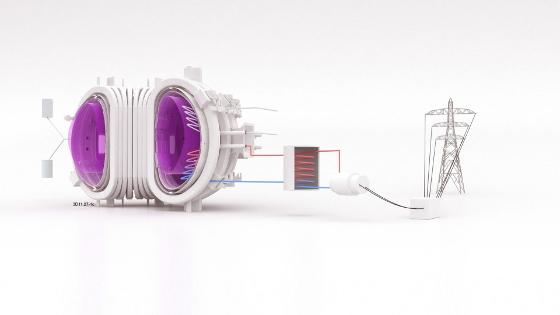
UiT has submitted a consultation response to the government report on nuclear power in Norway, calling for fusion energy to be included in the national effort to build expertise.
News archive
01.10.2026:
New publication in FUSENOW
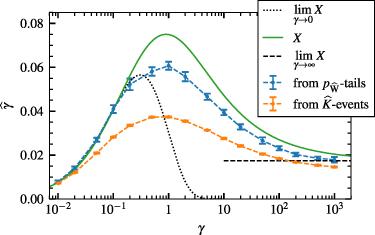
"Conditional sampling and averaging of overlapping pulses" by R. A. B. Nilsen et al.
29.09.2026:
New postdoc fellow in FUSENOW
Olga Paikina is hired in a postdoctoral fellowship position in FUSENOW

21.09.2026:
New postdoc fellow in FUSENOW
Synne Brynjulfsen is hired in a postdoctoral fellowship in FUSENOW

17.09.2026:
New doctoral fellow in FUSENOW
Sindre Eriksfallet is hired in a doctoral fellowship position in FUSENOW
04.09.2026:
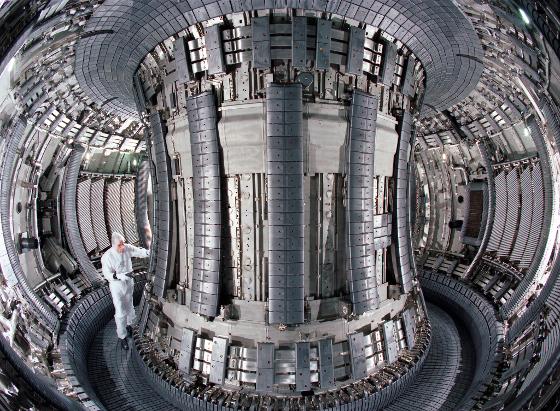
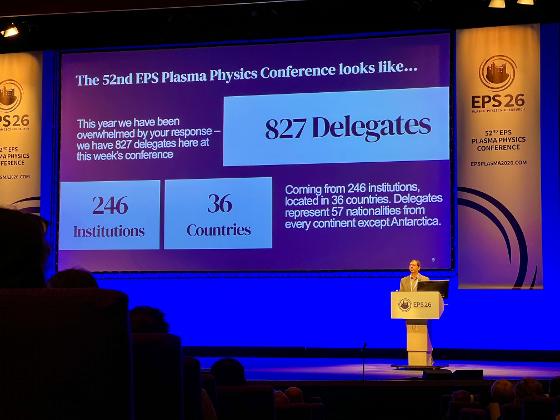
FUSENOW and UiT will host the 31st EU-US Transport Task Force Workshop
For the first time, the EU-US Transport Task Force Workshop will be arranged in Norway
31.08.2026:
New publication from FUSENOW
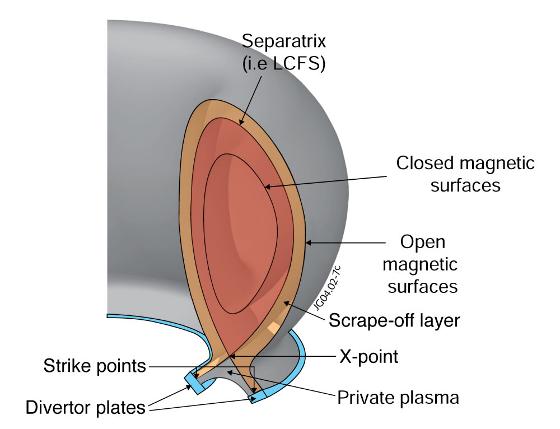
"Numerical simulations of scrape-off layer plasma turbulence: Role of parallel currents and sheath dissipation" by S. Brynjulfsen and O. E. Garcia
26.05.2026:
New publication from the FUSENOW center
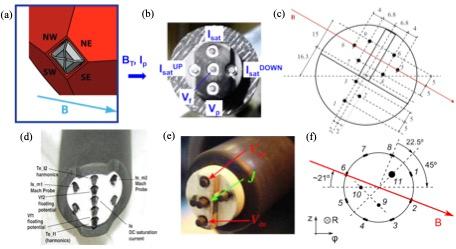
"Multimachine analysis of intermittent fluctuations in the scrape-off layer of magnetically confined fusion plasmas" by S. Ahmed et al.
20.05.2026:
FUSENOW participates at the 27th PSI conference
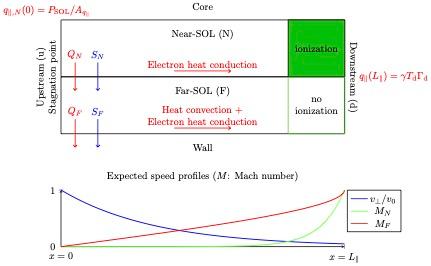
"Two-point model connecting near- and far-SOL" by A. Theodorsen and O. E. Garcia
11.05.2026:
New publication from the FUSENOW center
"Velocity scaling regimes for blob-like filaments in the Alcator C-Mod scrape-off layer" by O. E. Garcia et al.

29.04.2026:
Two PhD positions announced by the FUSENOW center
Fusion Research Center Norway (FUSENOW) has announced two PhD fellowship positions
14.04.2026:
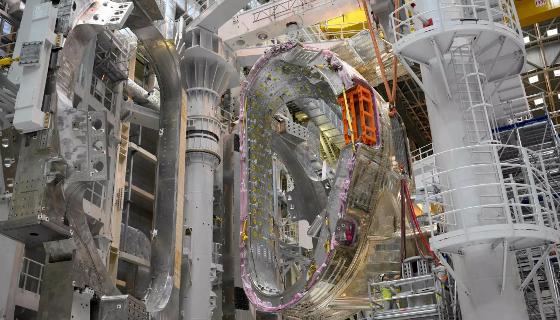
Op-ed on fusion in Norwegian assessment on nuclear power
Center leader Odd Erik Garcia publishes chronicle on the neglect of fusion energy in Norwegian assessment of nuclear power
09.04.2026:
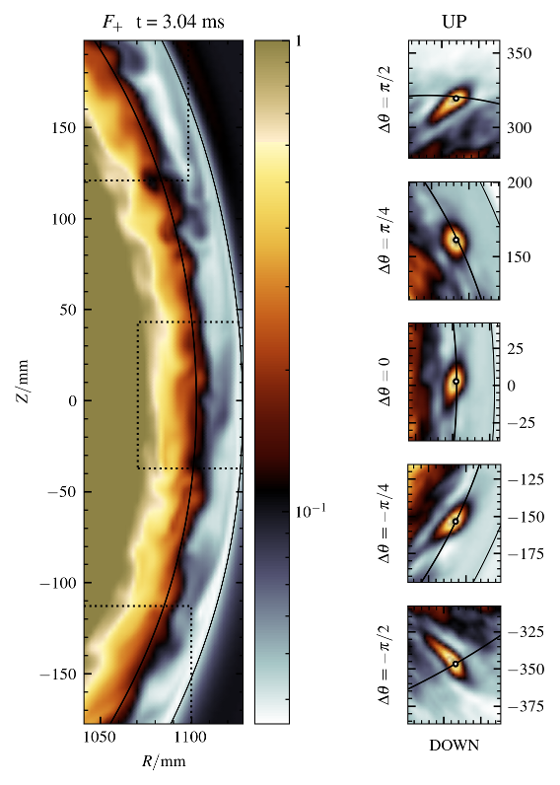
New publication from the FUSENOW center
"Fluctuation-driven cross-field plasma transport in FELTOR turbulence simulations of the TCV-X23 scenario" by S. Brynjulfsen and O. E. Garcia
23.03.2026:
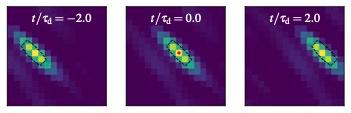
New publication from the FUSENOW centre
"A two-dimensional conditional averaging method for velocity estimation immune to the barber pole effect" by J. M. Losada and O. E. Garcia
15.03.2026:
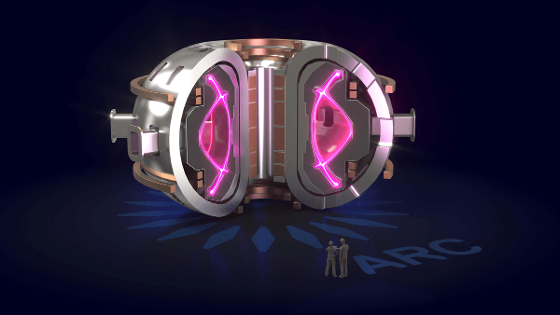
Media coverage of the formal opening of FUSENOW
On Thursday March 12, the formal opening of the FUSENOW center was marked with a seminar in Tromsø. In this connection, abcnyheter has published a news article about the quest for fusion power and the FUSENOW center (in Norwegian).
02.02.2026:
New publication from the FUSENOW centre
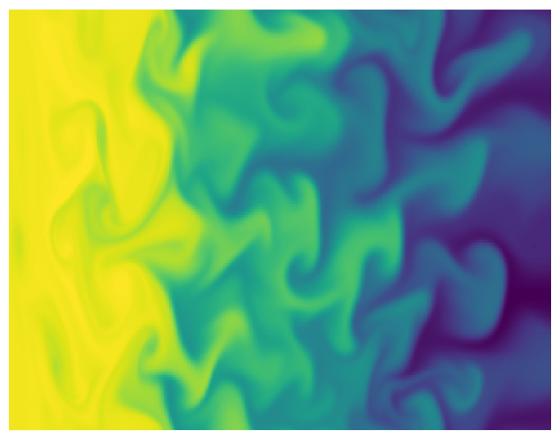
"Numerical simulations of scrape-off layer plasma turbulence: Role of parallel transport and particle losses" by S. Brynjulfsen and O. E. Garcia
07.01.2026:
First publication from FUSENOW
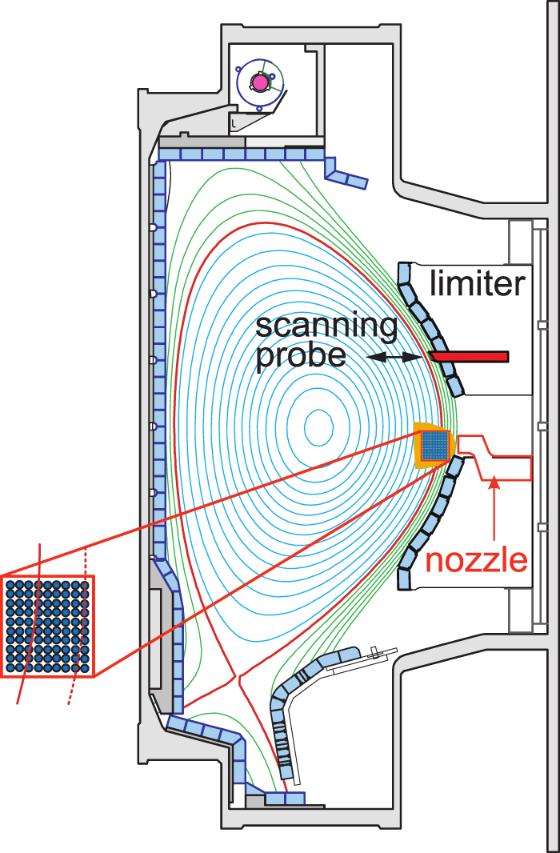
"Blob motion and flattened far-SOL profiles in Alcator C-Mod: evidence in support of stochastic modeling" by O. E. Garcia et al.
01.10.2025:
Postdoctoral research fellow position on laser fusion announced at UiB
At the Department of Physics and Technology, University of Bergen, there is a vacancy for a postdoctoral research position within experimental quantum technologies for laser fusion experiments within the NAPLIFE collaboration. The position is for a fixed term of 3 years and is financed by the ongoing Fusion Research Center Norway (FUSENOW) supported by the Trond
Mohn Research Foundation.
01.07.2025:
NAPLIFE news updates
26.05.2025:
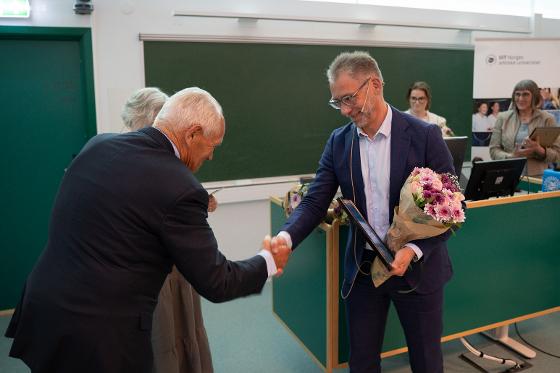
Tromsø Science Foundation / Trond Mohn Research Foundation funds Norwegian research center on fusion energy
First ever research center on fusion energy established in Norway