News
Iveta Nováková Presents Research at Moderní betony a kompozity 2026
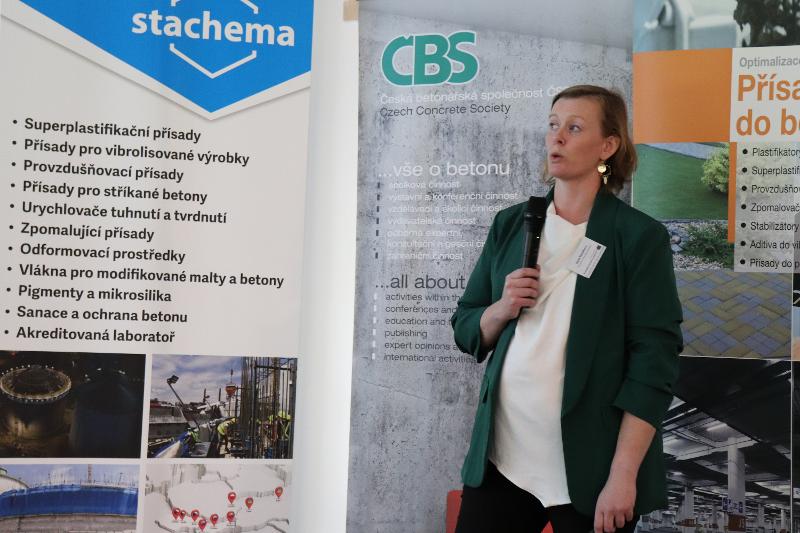
Iveta Nováková gave a presentation at the Moderní betony a kompozity 2026 conference in the Czech Republic. Her presentation, titled “Využití recyklovaného kameniva na výzkumné a průmyslové úrovni” (“The Use of Recycled Aggregates at the Research and Industrial Levels”), attracted considerable attention from the audience.
The fifth edition of the international conference continued the tradition of an event organised by the Faculty of Civil Engineering at the Czech Technical University in Prague. The conference focuses on sharing information and knowledge about new and emerging technologies, materials, measurement methods, and design approaches applicable to the construction sector and the development of new composite materials. Its long-term aim is to strengthen cooperation between the academic and industrial sectors.
Thanks to the presentation programme and the well-organised social events, it was easy to establish new contacts with representatives from both industry and academia. New connections were made with admixture suppliers Stachema and MC-Bauchemie, both of which operate on the Czech market. Their materials could also be beneficially used in Norway, particularly the innovative AirTech technology for introducing air-entraining admixtures, presented by Michal Kellner from MC-Bauchemie. The administrative and legal aspects of concrete containing recycled aggregates were also discussed in depth with Iveta Hájková, who holds positions at Brno University of Technology and the concrete producer ZAPA beton.
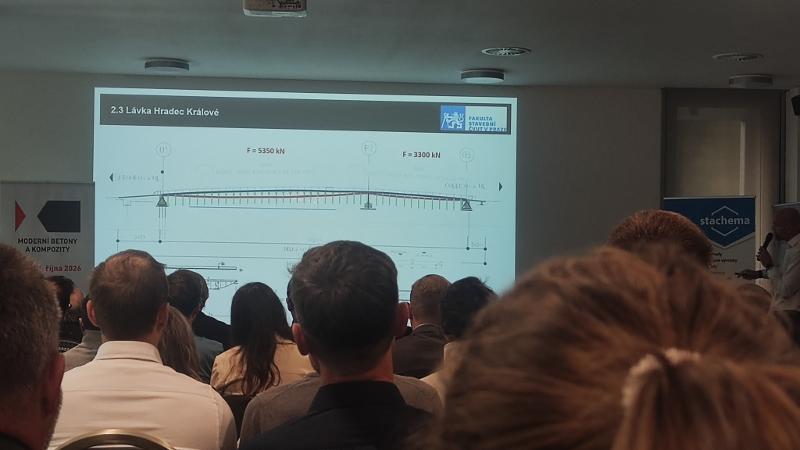
Concrete durability, and freeze–thaw resistance in particular, has been discussed and researched for decades. This topic was presented by Petr Mišák from Brno University of Technology and could provide a good basis for future cooperation. Another potential area of collaboration emerged during a discussion with Tereza Pavlů about laboratory equipment and a new device for testing the alkali–silica reaction.
Skanska CZ and BEST AS were among the main sponsors of the event and were represented by a large number of participants. One of the topics discussed was the use of Environmental Product Declarations (EPDs) for concrete and concrete products, an area in which Norway has considerable experience. At the same time, specific issues—such as the calculation of EPDs for recycled aggregates—were highly valuable to everyone involved in the discussion.
Overall, the conference was an enjoyable event with a friendly atmosphere and a wide range of discussions, covering both practical challenges and highly scientific topics related to microstructure and innovative testing methods.
Published: 20.10.2026
Link to this page
CircBoost visit to Les docks circulaires in Gennevilliers
CIRC-BOOST on site in Paris!
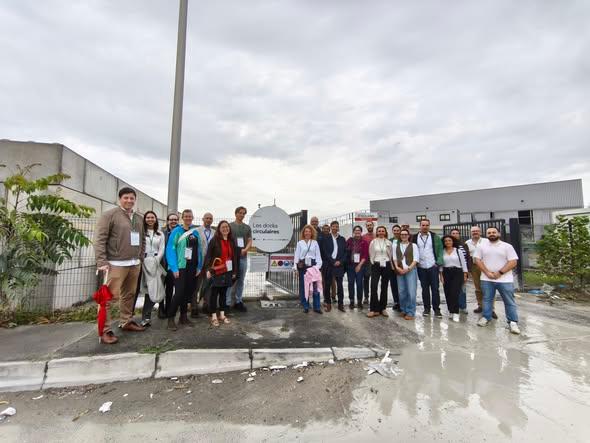
We kicked off our General Assembly week with yesterdays visit to the Eiffage Génie Civil platform in Gennevilliers.
 For a project working to bring circular solutions closer to real construction practice, visits like this matter: they give us a chance to connect our research and pilot activities with what is already happening on the ground, exchange perspectives with industry, and discuss the practical challenges behind greater material reuse and circularity.
 A great way to start three busy days in Paris - next up: the CIRC-BOOST General Assembly and “Advancing Circular Construction Together” workshop!
 Swipe through for a glimpse of our visit to Gennevilliers.
Published: 05.10.2026
Link to this page