The Man in the Bog
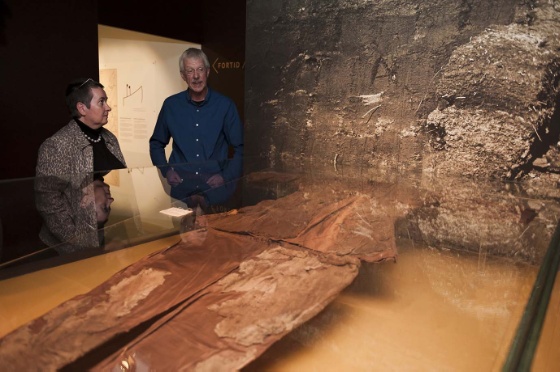
Temporary exhibitionSometime in the 11th century, at the transition between the Viking Age and Middle Ages, a person was buried in a bog at Skjoldehamn in Vesterålen. In 1936 the grave was exposed during turf extraction. The deceased was dressed in a number of wool garments, which proved to be the oldest complete costume in Northern Europe.
At Skjoldehamn by the southern tip of Andøya island in Vesterålen, the remains of a dressed person was discovered in a bog. The clothes were taken up and examined, and assumed to be a man’s outfit from the 15th Century. More recent research has shown that the garments are much older, in fact some 1,000 years old.
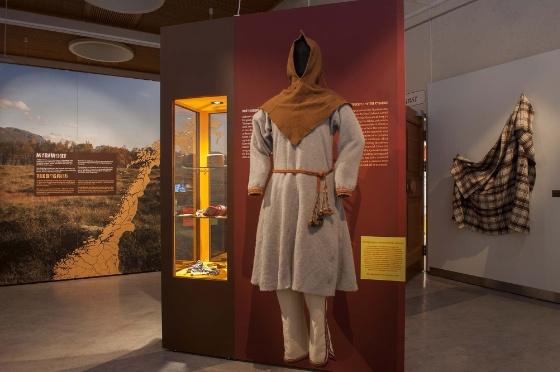
This makes the Skjoldehamn costume the oldest preserved complete outfit in Northern Europe. Now, the complete costume goes on display for the first time.
The find from Skjoldehamn combines Norse and Sámi traits and is a good example of cultural interaction and ethnic diversity in the North. The favorable preservation conditions in the bog have also resulted in a unique research material.
This exhibition presents both previous and present research on this find, which still is holding some secrets from us.
The exhibition is open until February 15, 2016.
Who was “he”?
Ever since the grave in the bog was discovered in 1936, the question of who the buried person was has fascinated both researchers and the local inhabitants.
Over time, a number of different conclusions have been reached concerning the sex, ethnicity and social status of the buried individual.
It is still uncertain whether the buried person was a man or woman. The find has long been interpreted as a Norse poor man’s grave, a criminal who was dumped in the bog. But both the costume and grave construction bear witness to a considerate burial.
It has only recently been acknowledged that the find must also be seen in a Sámi context, with costume details from the Sámi handcraft tradition (duodji).