GLIMT 2026 – Det Lille Kulturhus
Temporary exhibitionGLIMT is The Arctic University Museum of Norway’s polar-night exhibition, displayed on an exterior wall throughout the polar night in Tromsø. This year’s GLIMT presents a selection from an extensive photographic documentation of life at Det Lille Kulturhus in Tromsø during the 1990s and 2000s.
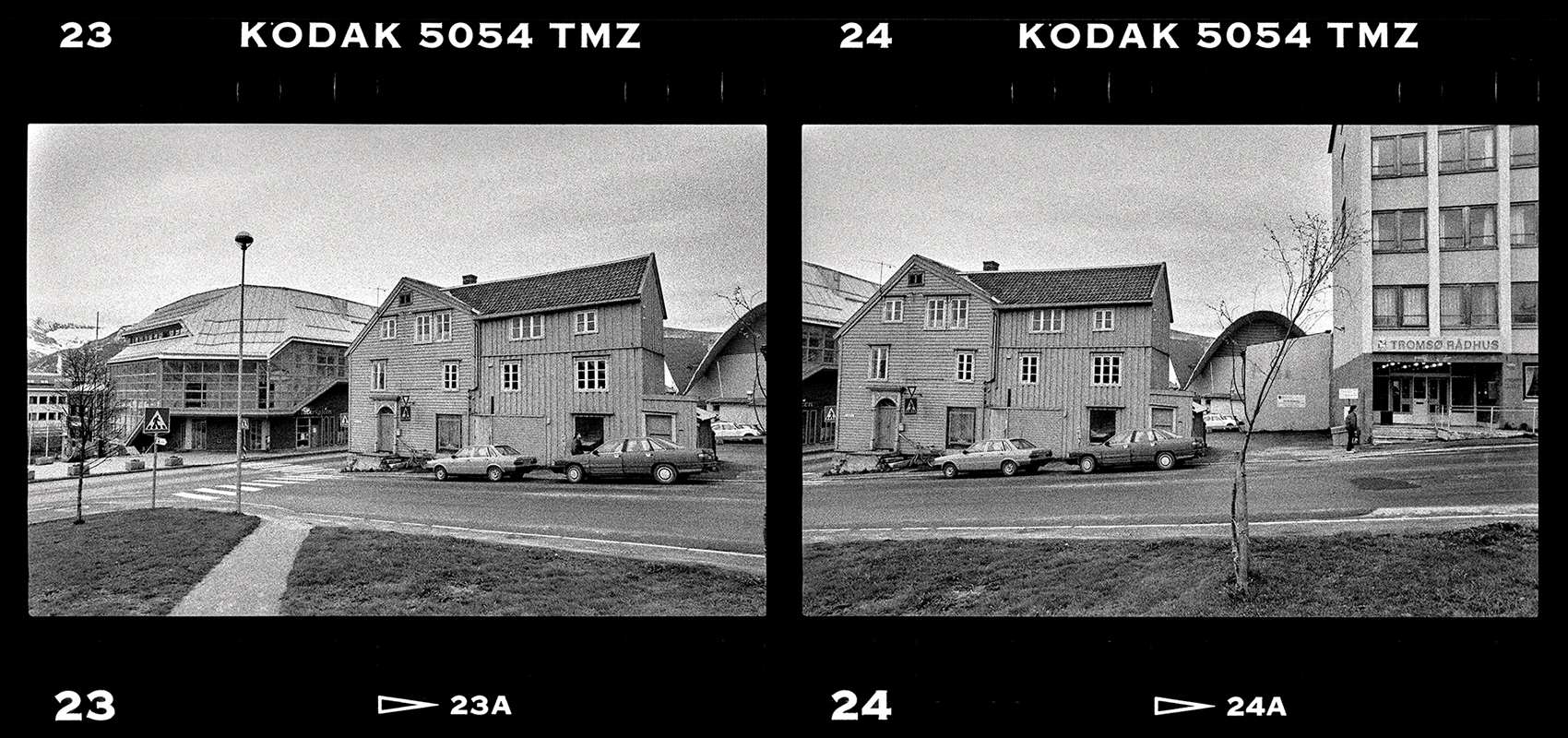
Grønnegata 104, which stood on the corner facing Torgallmenningen, where the City Hall was later built, has a long history. Its story began in the late 1830s as a residence for a master tailor. Many owners and activities have been associated with the building, but it was only after the house had passed its 140th anniversary that it was “immortalised.” The Municipality of Tromsø had owned the property since 1961 and rented it out. By the late 1970s, it stood empty, and from 1979 it provided space for various youth activities. After the amateur theatre groups “Raska på” and “Acrylteateret” moved in in 1981, the house was given the name “Det Lille Kulturhus” (“The Little Cultural Centre”) by the mayor at the time, Erlend Rian. This marked the beginning of a cultural hub for young people.
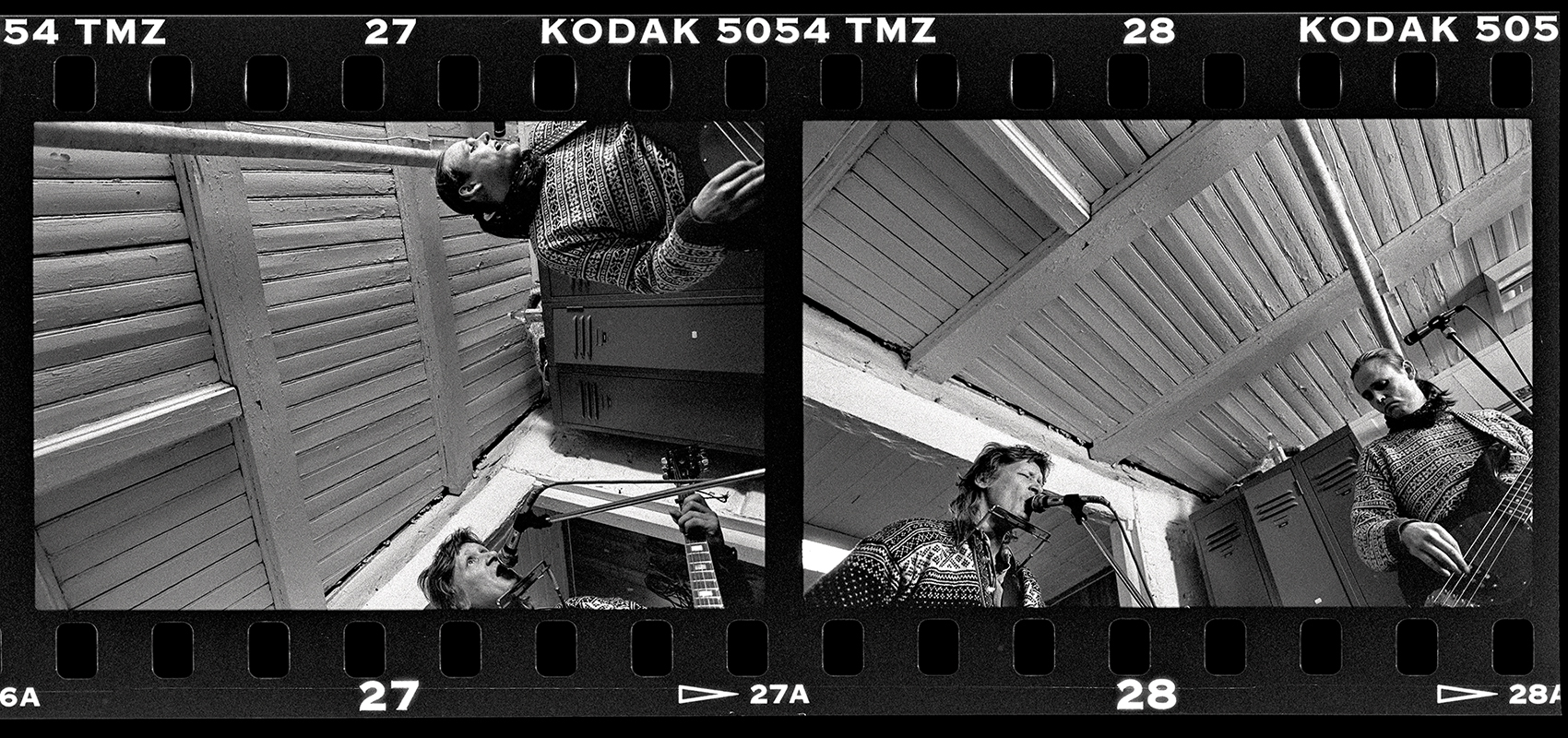
Several amateur theatre groups and young rock bands moved in. When the municipality announced plans to demolish the house in 1988, 50 people were using the building every day. Another new occupant was Rød Valgallianse, which had established an office there. “We won’t give up without a fight,” was the users’ message to the municipality in response to the demolition proposal. The political activism represented by Rød Valgallianse was highly important in this struggle. The users organised themselves through the foundation “Det Lille Kulturhus.”
It became a struggle for a place to be, but also a struggle to preserve a part of old Tromsø.
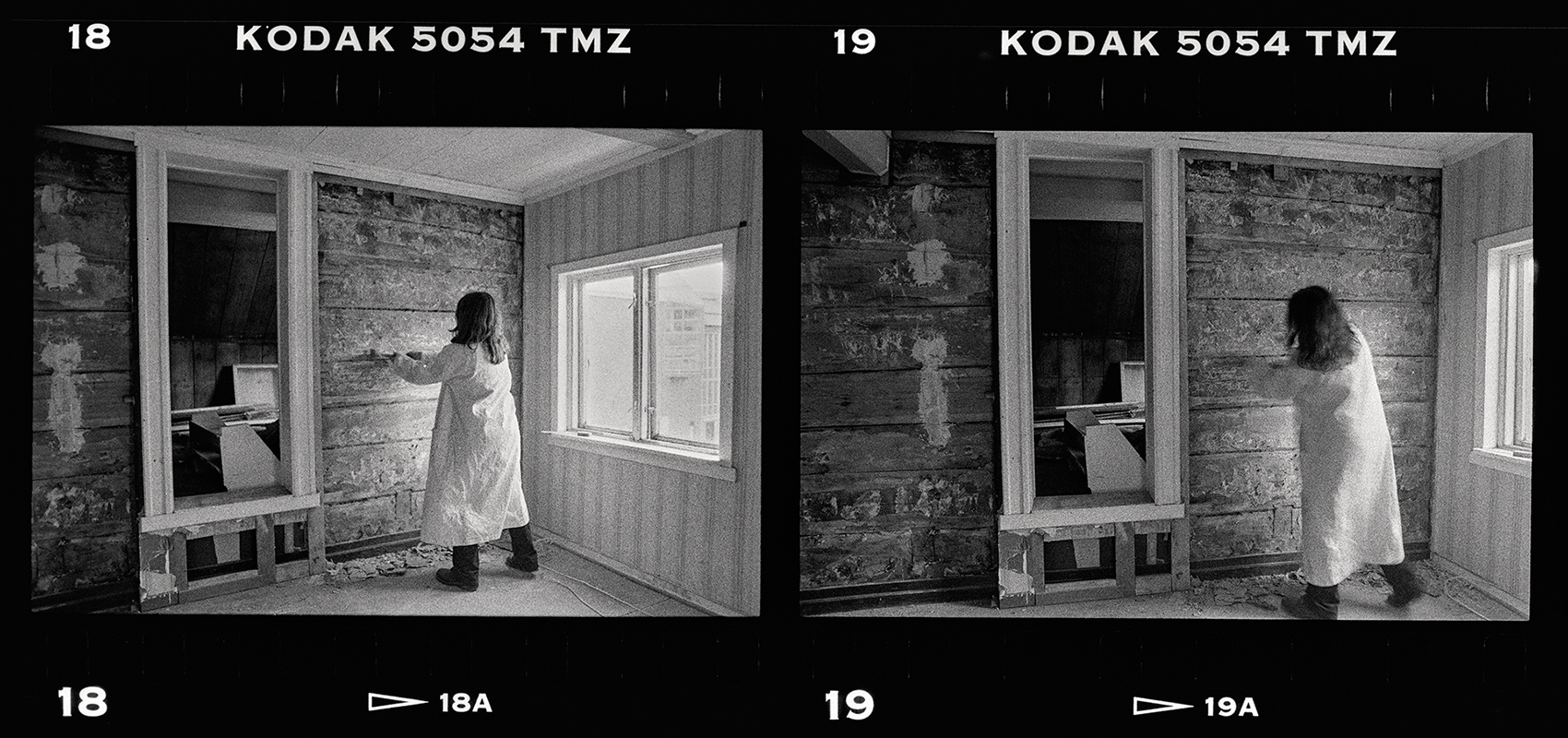
The young people began renovating the building without the municipality’s permission. Chief Municipal Executive Mats Sandeman reacted strongly and called it “the house of shame.” Banners attached to the scaffolding read: “We don’t care what Sandeman says. Rock’n’Roll is here to stay.” and “Don’t demolish our history.” The campaign attracted national attention, and parallels were drawn with Blitz in Oslo. The politicians changed their position, and the foundation was granted a formal lease—free of charge.
Activities increased, and the following year eight bands, theatre groups and artists—more than 70 people—were regular users. The renovation continued, and the building’s users, together with musicians from outside, organised a series of benefit concerts to finance the work.
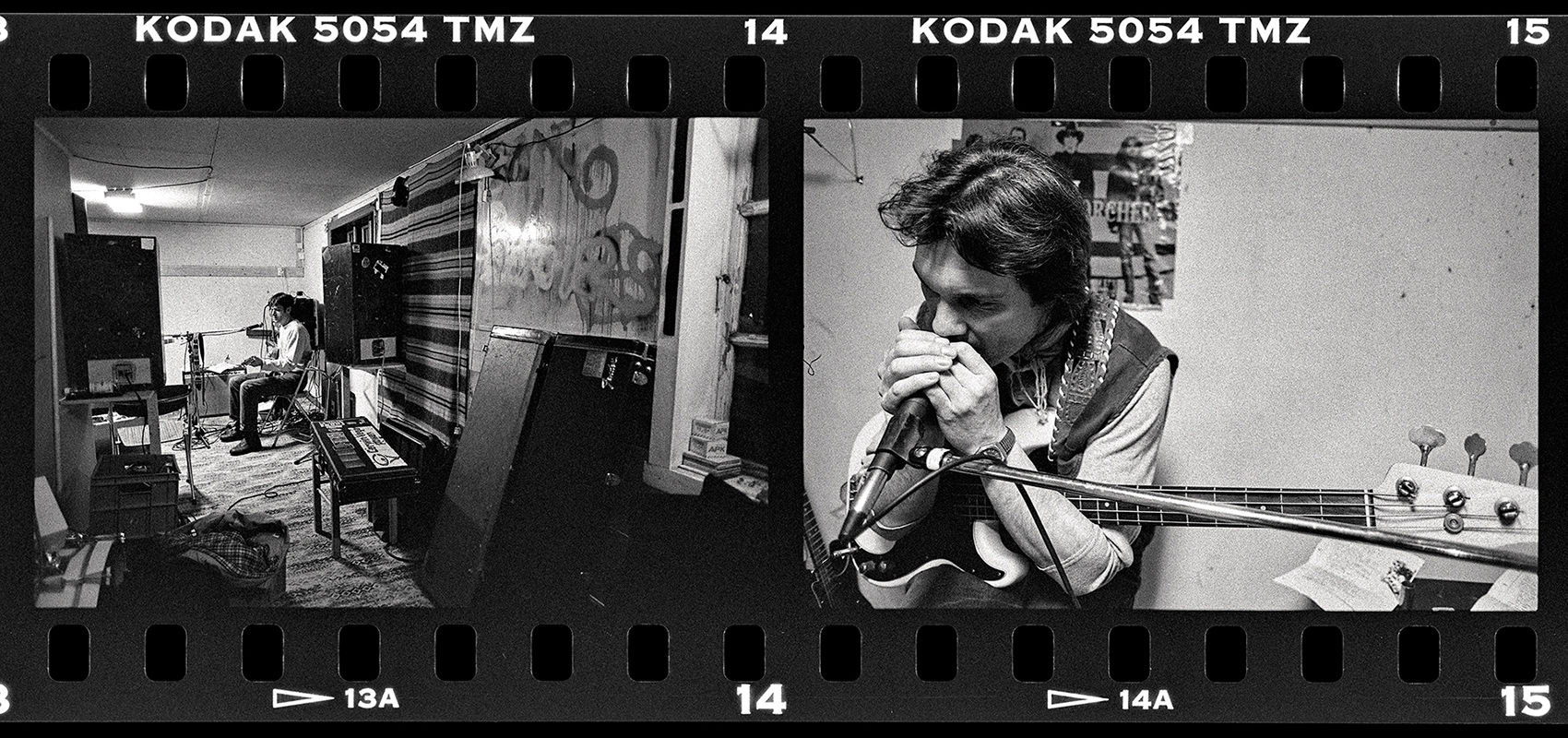
Throughout the 1990s, the community flourished. A recording studio, LilleStudio, was established, along with a technical workshop and an information office for bands. Activities reached a peak, with as many as 12 bands associated with the house. Choirs, jazz musicians and classical musicians also rehearsed there. The Arts Council Norway awarded NOK 100,000 to the recording studio.
A long-running conflict arose after plans were made to build a new City Hall in the area. Once again, Det Lille Kulturhus was required to vacate the building. The matter was resolved in 2002, when the municipality offered new and larger premises at Mellomvegen 31, known as “Musikkens hus” (“The House of Music”).
Det Lille Kulturhus was first moved to Rådhusparken in 2002. Three years later, it was moved to Verftet, and after a further two years it was relocated to its present site at Skansen, where it houses Norges Miljøvernforbund (The Green Warriors of Norway).
In 1996, 1997, 2000 and 2005, Tromsø Museum (The Arctic University Museum of Norway) made extensive photographic documentation of life at Det Lille Kulturhus. A selection of these photographs is being shown at this year’s GLIMT.
Photographer: Mari Karlstad
Text: Sveinulf Hegstad (translated from Norwegian to English using AI)
GLIMT is The Arctic University Museum of Norway’s polar-night exhibition. It is displayed on an exterior wall measuring 11 metres in width. The photographs are shown daily from 07:00–10:00 and 14:00–22:00, from 28 November 2026 to 21 January 2027.
Photographs on top:
Det Lille Kulturhus, Tromsø 1996 (TSFF1996-37_23-24). Photo: Mari Karlstad, The Arctic University Museum of Norway