News


CCA RG member presented climate change adaptation research for future aquaculture at FHF dialog meeting
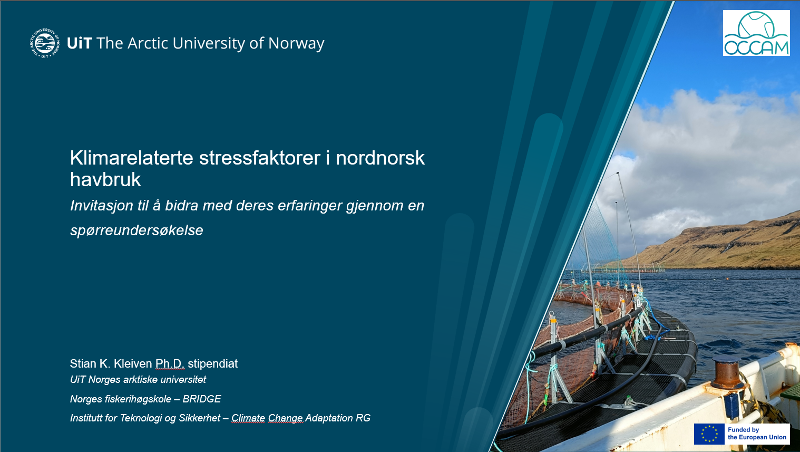
Norwegian aquaculture faces increasing challenges linked to climate change, including rising sea temperatures, marine heatwaves, harmful algal blooms, parasites, and pathogens. At the FHF dialogue meeting “Klimatilpasninger for fremtidens havbruk”, CCA Research Group member Stian K. Kleiven presented ongoing work examining climate-related stressors in Northern Norwegian aquaculture and highlighted the importance of industry involvement in shaping future climate adaptation research.
CCA Research Group member Stian K. Kleiven participated in the national dialogue meeting “Klimatilpasninger for fremtidens havbruk” organized by FHF (The Norwegian Seafood Research Fund) at Gardermoen on May 5th, 2026. The meeting gathered representatives from industry, research, and management sectors to discuss how Norwegian aquaculture can adapt to increasing climate-related challenges.
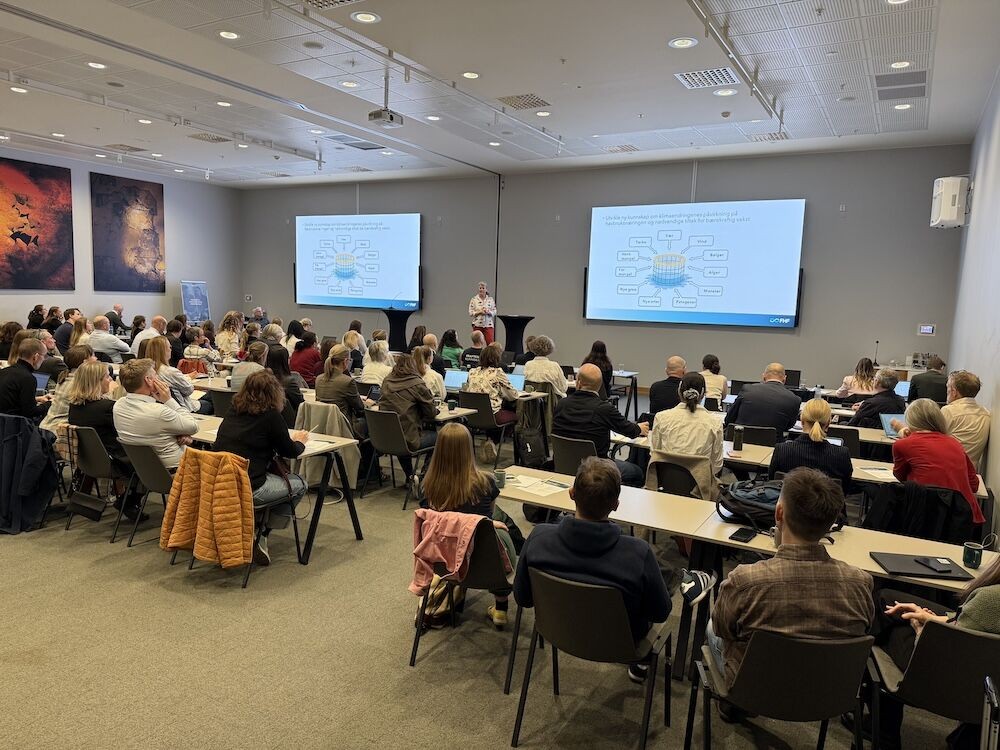
Kleiven presented ongoing work related to climate-related stressors in Northern Norwegian aquaculture, focusing on how industry perspectives can help identify important future climate risks and adaptation needs. The presentation introduced an ongoing survey examining how the aquaculture sector perceives current and future climate stressors, including rising sea temperatures, marine heatwaves, harmful algal blooms, salmon lice, and pathogens.
The presentation also emphasized the importance of integrating industry experiences into future research planning and climate adaptation strategies. One of the aims of the work is to support more targeted research and improve preparedness for climate-related impacts on aquaculture production systems.
The dialogue meeting featured contributions from researchers, aquaculture companies, feed producers, and technology developers, addressing topics related to climate adaptation, fish welfare, infrastructure resilience, and future management strategies for the aquaculture sector.
Stakeholders related to the aquaculture sector (aquaculture farmers, researchers, consultants, and more) are encouraged to participate in the ongoing survey on climate-related stressors and adaptation strategies in Northern Norwegian aquaculture. The survey aims to strengthen collaboration between industry and research communities and help guide future climate adaptation research priorities.

Published: 05.05.2026
Link to this page
The CliCNord Special issue on Place attachment and climate-related hazard
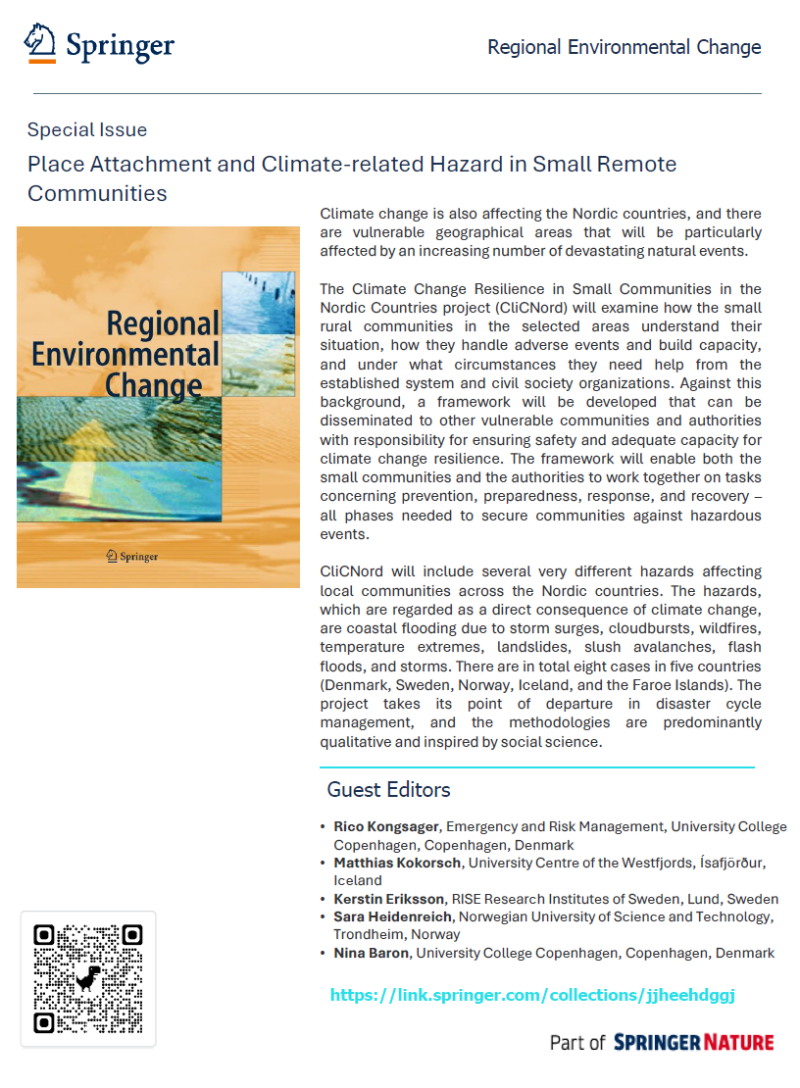
The Special Issue Place Attachment and Climate-related Hazard in Small Remote Communities by The Climate Change Resilience in Small Communities in the Nordic Countries project (CliCNord) is finally out!
Published in Regional Environmental Change, this issue explores how small, remote communities in the Nordic region perceive and respond to climate-related hazards, including wildfires, floods, avalanches, and storms.
Published: 05.11.2025
Link to this page
Experiences onboard the Arctic Future Pathfinders – One Ocean Expedition II course.
During August 2025, PhD candidate Laurien de Korte was part of the crew onboard the tall ship Statsraad Lehmkuhl, which attempted to sail through the Northwest Passage. During the journey, Laurien participated in the course “Arctic Future Pathfinders – A journey through the Northwest Passage” hosted by UiT- The Arctic University of Norway.
While sailing through Baffin Bay, it was decided to turn around, as the ice conditions make it unsafe to continue through the Northwest passage.
Why did we change course?
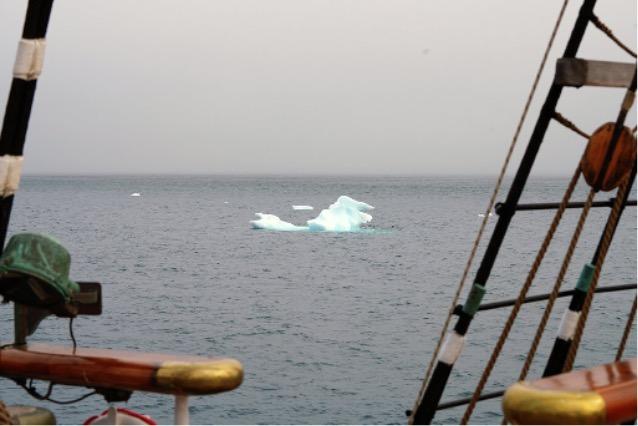
Due to climate change more ice is melting from our glaciers, resulting in an increase in icebergs at sea, this can be very dangerous for ships trying to navigate Arctic waters. When the ship reached the latitude of Pont Inlet it became clear that there was too much ice in the Northwest passage to ensure a safe journey. The crew therefore decided to turn back and redirected our course to St. Johns, Canada. This change shortened the voyage by about a week, leaving us with three weeks onboard Statsraad Lehmkuhl.
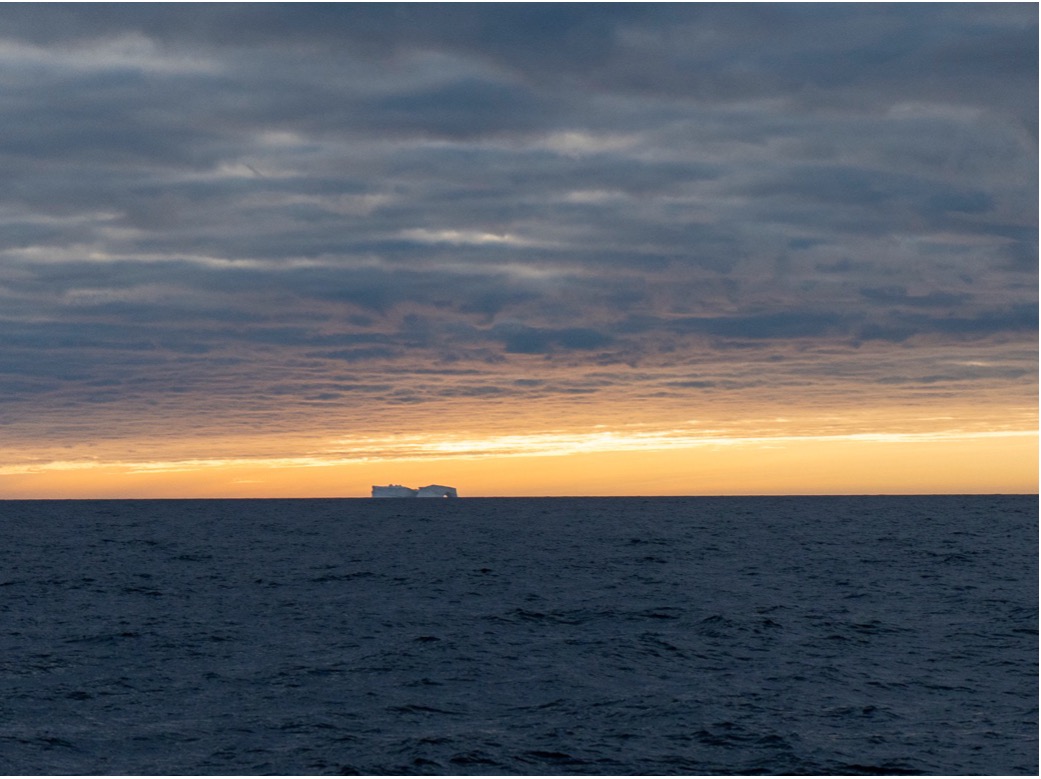 Photo credits Andreas Altenburger Foto: xxx
How was the experience on board?
During the voyage, we were far out at sea, which meant there was no internet access onboard – except for the permanent crew to safely navigate the ship. The lack of internet and the close quarters of the ship fostered a strong sense of community and many lasting friendships. Without the distractions of daily life, participants had the time to exchange ideas about their research and discuss visions for a sustainable Arctic future.
Because students, lecturers, professors, and researchers all lived and worked together the voyage created a unique environment for deep, cross-disciplinary conversations.
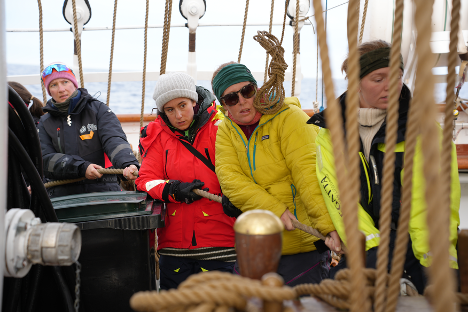
Life onboard followed a routine of sailing shifts (four hours on, eight hours off), lectures, group activities, meals and rest. A key element of the course was its focus on indigenous perspectives and knowledge, with several indigenous knowledge-holders joining the expedition. This offered students a valuable opportunity to learn directly from indigenous experts about arctic environments, experiences and worldviews.
If you like to read more about the course, visit: https://en.uit.no/arctic-future-pathfinders
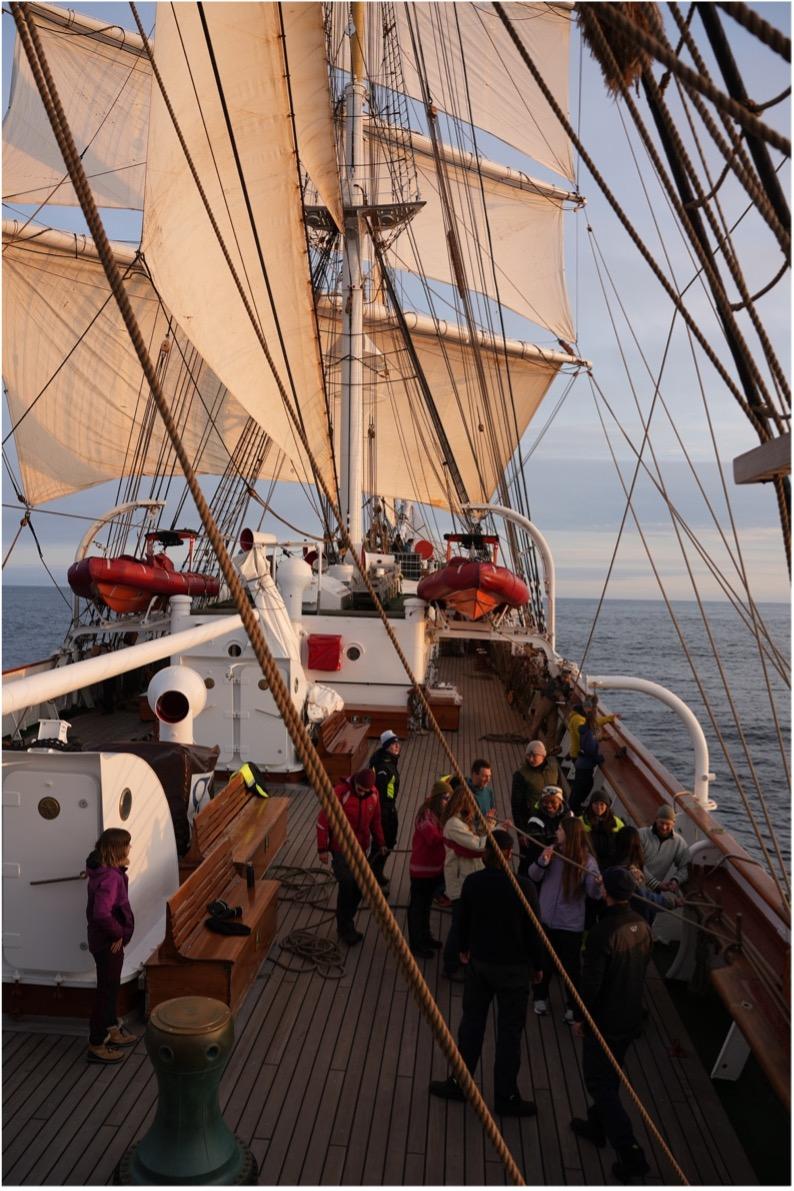
What is the One Ocean Expedition?
The One Ocean expedition is a 12-month circumnavigation aimed at raising awareness of the future of our oceans. Throughout the voyage scientific research is conducted onboard, and during various legs of the journey, students join to take part in university leg courses hosted by Norwegian institutions. To learn more, visit: https://www.oneoceanexpedition.com/https://www.oneoceanexpedition.com/
Published: 30.10.2025
Link to this page