C-LaBL
Center for Language, Brain & Learning
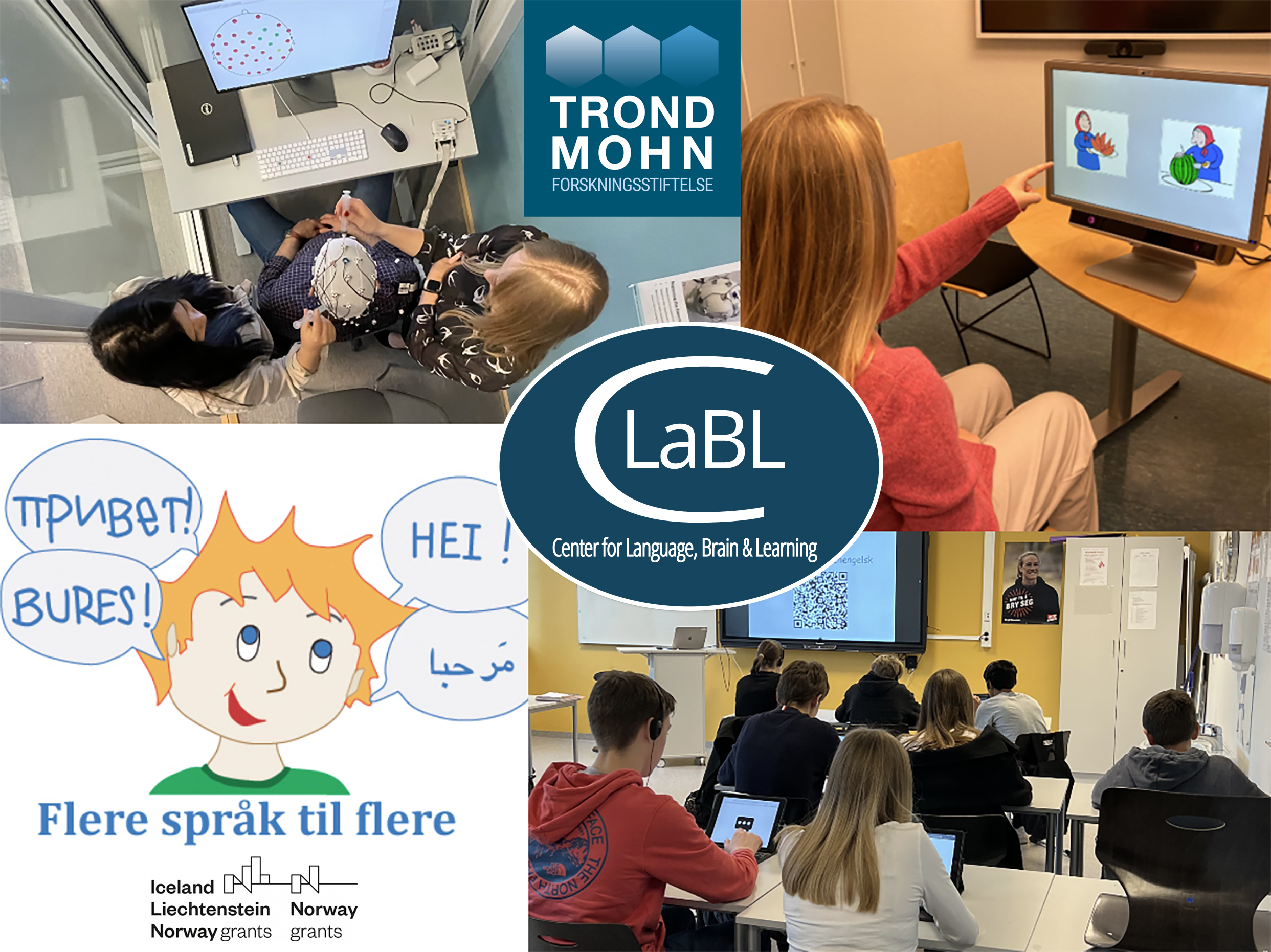
Research at the Center for Language, Brain and Learning (C-LaBL) investigates how multiple languages interact in the mind/brain. By fostering collaborative research across linguistic theories, neuroscience, and language acquisition/processing, we focus on the effects of multilingualism – for the languages involved, for the brains that house them, and for the learning and teaching of multiple languages.
C-LaBL is divided into three domains of study (Language, Brain, and Learning) that are linked by a cross-cutting research theme focusing on Linguistic Distance. The core work of C-LaBL investigates the interaction of multiple grammars in the multilingual mind/brain, with a main focus on the significance of linguistic distance (similarities/differences between languages) for: (1) development, (2) crosslinguistic influence, (3) neurocognitive adaptations in the brain as a result of multilingual experience, and (4) instructed additional language learning.
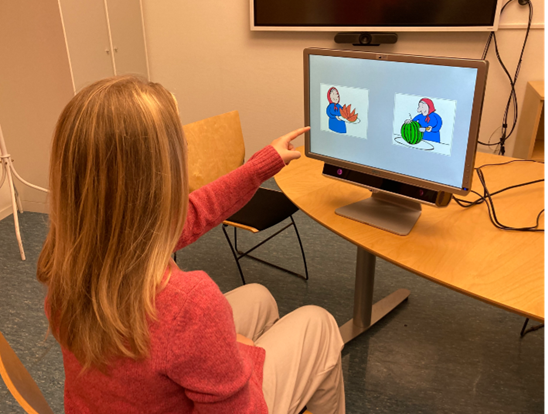
Our work is theoretically motivated and uses a variety of research methods, including offline behavioral experiments, eye-tracking, electroencephalography (EEG), and Magnetic Resonance Imaging (MRI).
The center is funded by the Trond Mohn Foundation and UiT The Arctic University of Norway 2024-2030. C-LaBL builds on and expands research done in the AcqVA Aurora center, which is funded by the Aurora Center Program at UiT, 2020-2026.
For events at the center, see Events.
C-LaBL consists of three domains, Language, Brain and Learning, which are by design tightly connected and feed into each other through an overarching research theme: Linguistic Distance.
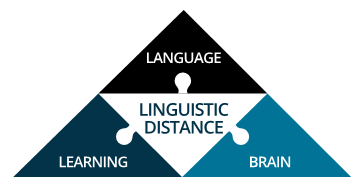
Click on the domains below to read more.
CIs: Natalia Mitrofanova & Sergey Minor
Professor IIs: Ludovica Serratrice, Terje Lohndal & Marit Westergaard

CI: Vincent DeLuca
Professor IIs: Jubin Abutalebi & Jason Rothman

CI: Merete Brendeford Anderssen
Professor IIs: Victoria Murphy, Roumyana Slabakova & Anne Dahl
C-LaBL is supported by two complementary laboratories that offer the necessary infrastructure to conduct high-end linguistic research. Click the buttons below to visit their websites.
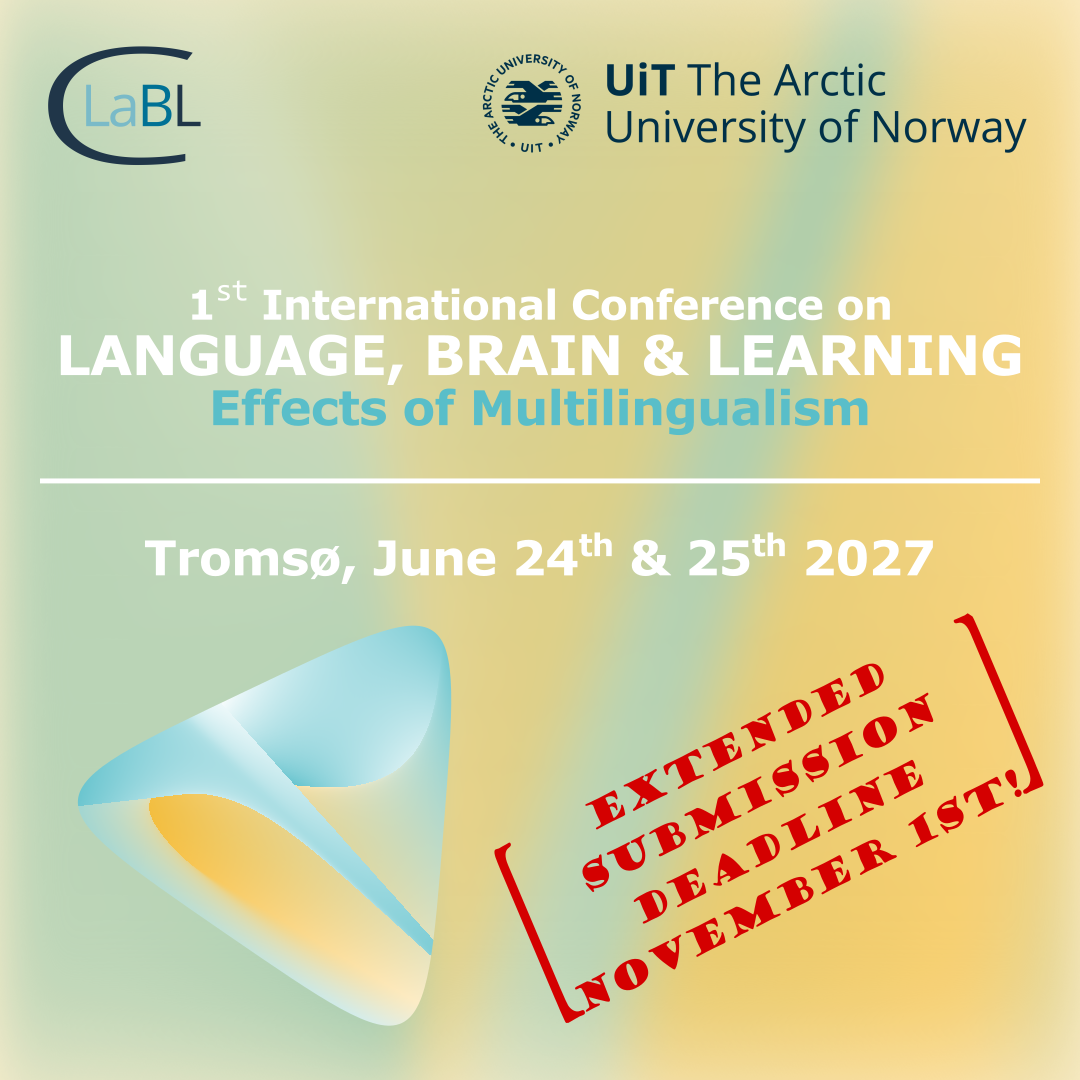
Our featured conference on language, brain and learning.
To receive updates on our activities and invitations to seminars, we recommend joining our mailing list.
C-LaBL is active on LinkedIn, Bluesky, and Facebook.
We also have a YouTube channel.
21 OCT 2026
MC/BRAIN DOMAIN SEMINAR
Inhibitory Control as a Driver of Emotional Dampening in the Second Language
Rafał Jończyk (Adam Mickiewicz University)
23 OCT 2026
PHONOLOGY GROUP PRESENTATION
Factorial Typology in Stratal OT
Nick Kalivoda
Spring lunch seminar organizers: Jenna Conklin & Katie Sendek Spring guest lecture organizers: Divyanshi Shaktawat, Anders Gabrielsen, and Anne Mette Sunde2026
October
September
June
May
April
March
February
2025
December
November
October
September
June
May
April
March
February
January
2024
December
November
October
September
May
April
March
February
Contact-Induced Linguistic Adaptation among Ukrainian Refugees
Anna Branets
Language Domain
Project duration: March 2026 - March 2029
Processing tone-suffix interactions
Nina Hagen Kaldhol
Language Domain
Project duration: September 2025 - September 2028
Aperiodic shifts in EEG as an indicator of neurocognitive adaptation in multilinguals
Katie Sendek
Brain Domain
Project duration: October 2025 - October 2028
Bidirectional CLI due to L3 acquisition in two sociolinguistic contexts
Divyanshi Shaktawat
Language Domain
Project duration: September 2024 - August 2027
The Neurocognitive Adaptations and Impact of Multilingualism and Linguistic Distance
Anders Gabrielsen
Brain Domain
Project duration: September 2024 - September 2027
Acquisition of English from 1. to 5. grade
Anne Mette Sunde
Learning Domain
Project duration: September 2024 - September 2027
Multilingual repertoires in forced migration: Language practices, ideology and integration in the Ukrainian Diaspora across the United States, Norway, and Germany
Yulia Rodina
Project duration: 2026 - 2027
Funding: UCLA Global
Similarity in phonological theory (SYMPHONY)
Deepthi Gopal
Project duration: 1 March 2026 - 29 February 2028
Funding: European Commission
Sustaining National Minorities in Education: Kven/Norwegian Finnish and Forest Finnish Experiences and Needs in Mainstream Schools (NAMED)
Leena Maria Heikkola
Project duration: 1 January 2026 - 30 June 2030
Funding: Research Council of Norway
How ethnic contexts affect Sámi and Kven children and adolescents' Identity, Language use and well-being in Life (SKILL)
Kristine Bentzen
Project duration: 1 January 2026 - 30 June 2032
Funding: Research Council of Norway

Neurocognitive Outcomes of Bilingualism and Effects on Language Learning (NOBELL)
Vincent DeLuca
Project duration: 1 January 2026 - 31 July 2029
Funding: Research Council of Norway
Sámi Aphasia and Morphology Initiative – Comprehensive Aphasia Testing
Monica I. Norvik
Project duration: 1 January 2026 - 30 June 2032
Funding: Research Council of Norway
Multilingual Onset, Variation & Attrition (MOVA): Language Development and Language Preservation of Ukrainian Refugee Children in Europe
Natalia Mitrofanova
Project duration: 1 January 2026 - 31 December 2030
Funding: Research Council of Norway
NABOR - Native vs. Borrowed Morphologies: The Case of Trojan Horse Participles in Senhaja Amazigh (Berber)
Evgeniya Gutova
Project duration: 1 September 2025 - 31 August 2027
Funding: European Commission
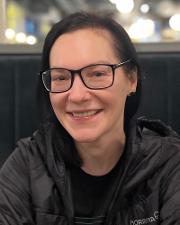
Linguistic Integration of Refugee Children and their Families (LINC)
Olga Urek
Project duration: 3 January 2025 - 31 August 2028
Funding: Nordforsk
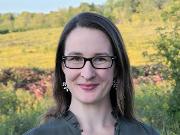
Modeling Artificial language data to extend the Typology of vowel and Consonant Harmony (MATCH)
Jenna Conklin
Project duration: August 2025 - August 2028
Funding: UiT Talent
Syllabification in Greek: Αn experimental investigation of how orthography messes with abstract representations (SIGMA)
Eirini Apostolopoulou
Project duration: 1 September 2024 - 31 December 2026
Funding: European Commission
Using Diversity in Multilingual Experience as a Model to Study Neural Plasticity
Vincent DeLuca
Project duration: 2024 - 2026
Funding: Centre for Advanced Study (CAS) at The Norwegian Academy of Science and Letters
Multilingual Minds: grammar interaction in multilingual acquisition (MuMin)
Natalia Mitrofanova
Project duration: 1 January 2021 - 12 June 2027
Funding: Research Council of Norway
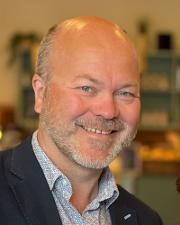
Multilectal Literacy in Education (MultiLit)
Øystein Alexander Vangsnes
Project duration: 1 January 2021 - 31 December 2026
Funding: Research Council of Norway
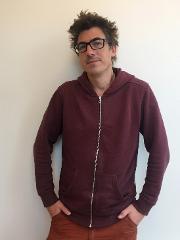
Experimental Approaches to Syntactic Optionality (ExSynOp)
Björn Lundquist
Project duration: 1 January 2020 - 31 December 2027
Funding: Research Council of Norway

Grammar, syntax, morphology, syntactic variation, North Germanic languages and dialects, language variation, multilingualism, bidialectalism, language acquisition, cognitive development, language attitudes
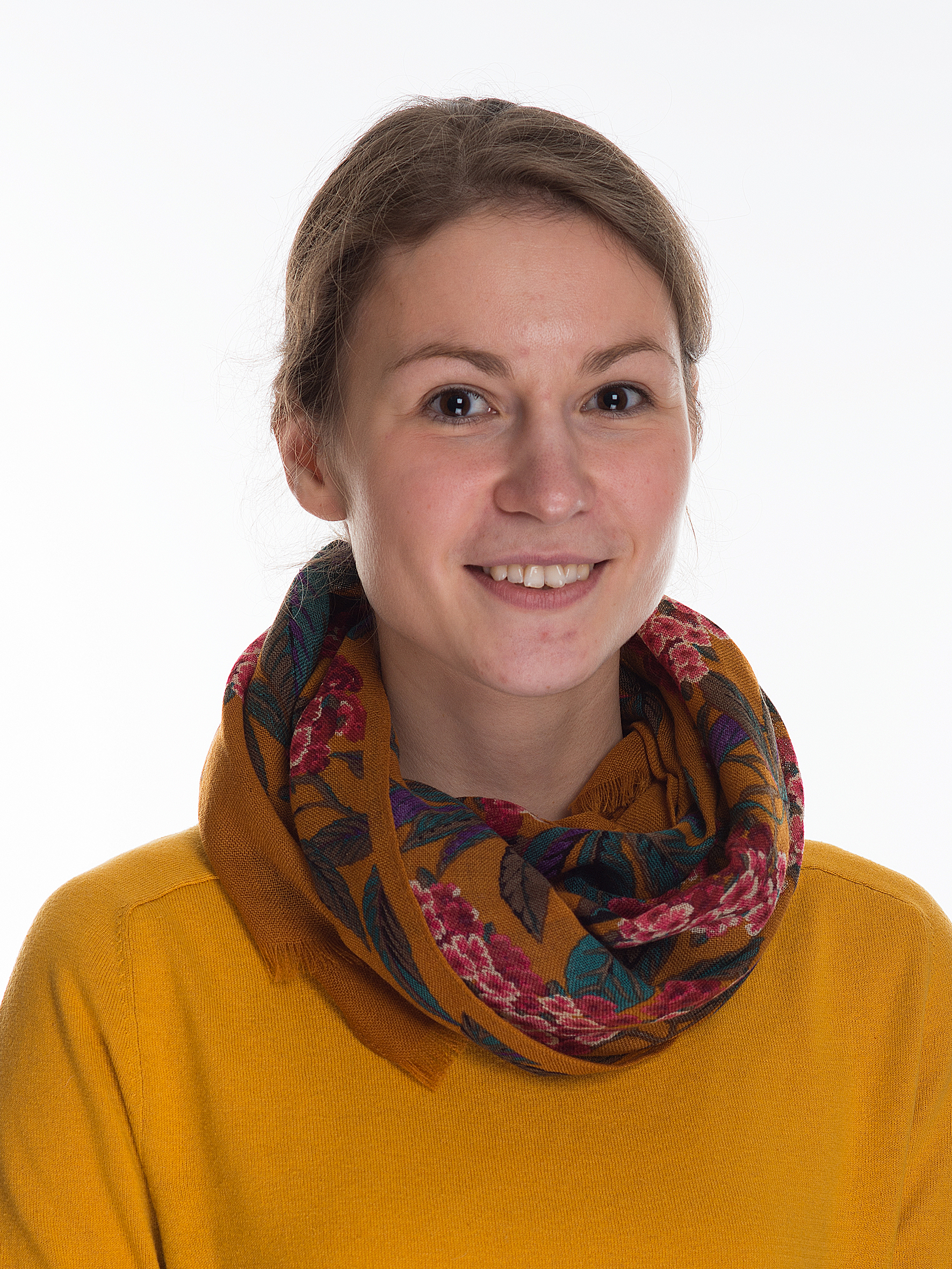
I'm driven by the question of how people - children and adults - acquire, use and maintain knowledge across one or multiple languages. I combine real‑time methods (Visual World eye‑tracking, self‑paced reading, EEG, pupillometry) with elicited production and judgment tasks to tease apart when and how the languages influence each other. Working with primarily Slavic (Ukrainian, Russian, Polish and Czech), Germanic (German, Norwegian, and English), and Romance (Spanish and Catalan) combinations, I track how input and learner‑internal factors interact to shape representations and processing, and how these insights can inform theories of multilingualism and to how we could support learners in the classroom and beyond.

My research primarily focuses on how different aspects of bilingual language experience variably impact brain structure, function, and several cognitive processes. I study how these neural and cognitive adaptations dynamically shift over time and with changes to patterns of language use.
In short, I’m interested in first, second, third and multilingual acquisition, syntactic variation in adult and child language, language attrition/heritage languages, and especially how the languages of multilinguals affect one another.
My background is mainly within syntactic theory and monolingual first language acquisition. For my PhD, I investigated the structure of the Norwegian noun phrase, as well as how it is acquired. I collected a longitudinal corpus with three monolingual children between the ages of 1;9-3. In the study I accounted for the semantics, syntactic structure and the prosodic characteristics of early uses of articles and determiners. My main focus was on the phenomenon known as double definiteness. Following on from this, I worked a lot on word order variation, specifically on what determines the choice of word order when such variation is permitted, and how this is acquired. This included work on subject and object shift, double objects, and possessives, which in Norwegian may be pre- or postnominal. Many of these studies were based on elicited production data.
In recent years, I have expanded my work on the acquisition of noun phrases and word order variation to bilingual acquisition and heritage languages, in addition to continuing my work on monolingual children and adults. A lot of my work on multilinguals has focused on how structural similarity may result in crosslinguistic influence, and how it may be a factor not only in language acquisition, but also in heritage languages and language attrition. For example, I have studied subject shift and object shift in Norwegian heritage speakers in the US and L2 learners of Norwegian.
In the future, I want to continue working on multilinguals, including second and third language acquisition and heritage language more generally. So far my studies of heritage languages has been based on the elderly speakers in the Corpus of American Nordic Speakers (CANS) and on various bilingual child language corpora. Thus, so far I have worked with very young and very old heritage speakers. In the future my ambition is to study heritage speakers of varying ages. I am also planning a project on the effect of the word order similarities between English and Norwegian in different populations, including heritage speakers of different ages.


I investigate how children and adults acquire and use multiple languages. My research has focused on first, second and third language acquisition as well as on child bilingualism and language attrition, mostly using a psycholinguistic experimental approach.
Important keywords are
Research projects


My research is grounded in generative linguistic theory and explores the second language and additional (L2/Ln) acquisition process. My theoretical focus is the acquisition of grammatical structure and its interaction with meaning. I use online and offline psycholinguistic methodologies to investigate the following theoretical issues:
* What is the linguistic nature of the bilingual and multilingual grammar?
* Are there some properties of language (e.g. words, sounds, sentence structure) that are easier to acquire than others (e.g., functional morphemes, grammatical meanings)? Are there are some properties, such as pragmatic universals, that will come for free in the grammar of the learner?
* Can lexical, phrasal and sentence meaning be acquired in the additional language? How does the interface between form and meaning affect the L2/Ln acquisition of meaning?
* What is the effect of the native language in the acquisition of an additional language? What are the effects of the native and the second language in the acquisition of a third language?
* How does linguistic and processing complexity affect knowledge of meaning in the L2/Ln? How do children acquiring their native language and adult L2/Ln learners compare in this respect? * How can knowledge of additional language acquisition improve classroom learning and instruction?

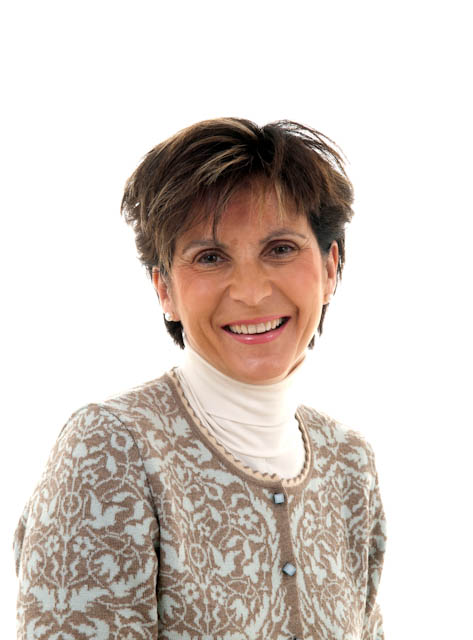
First, second/third, and bilingual language acquisition, syntactic variation, heritage languages, language attrition, diachronic change, comparative syntax, word order, nominal structure (grammatical gender, definiteness, possessives), English, Norwegian (especially North Norwegian dialects), Russian, German
Personal website: https://site.uit.no/maritwestergaard/


I am an Adjunct Professor in linguistics in the Department of Language and Culture at UiT The Arctic University of Norway, and also Professor of English linguistics in the Department of Language and Literature at NTNU Norwegian University of Science and Technology. My PhD is from the University of Maryland (2012).
Research interests include: Comparative grammar, multilingualism, heritage languages, language acquisition, language change, grammatical gender, architecture of grammar, history of linguistics.
Awards and memberships
For more details, please consult my NTNU website.

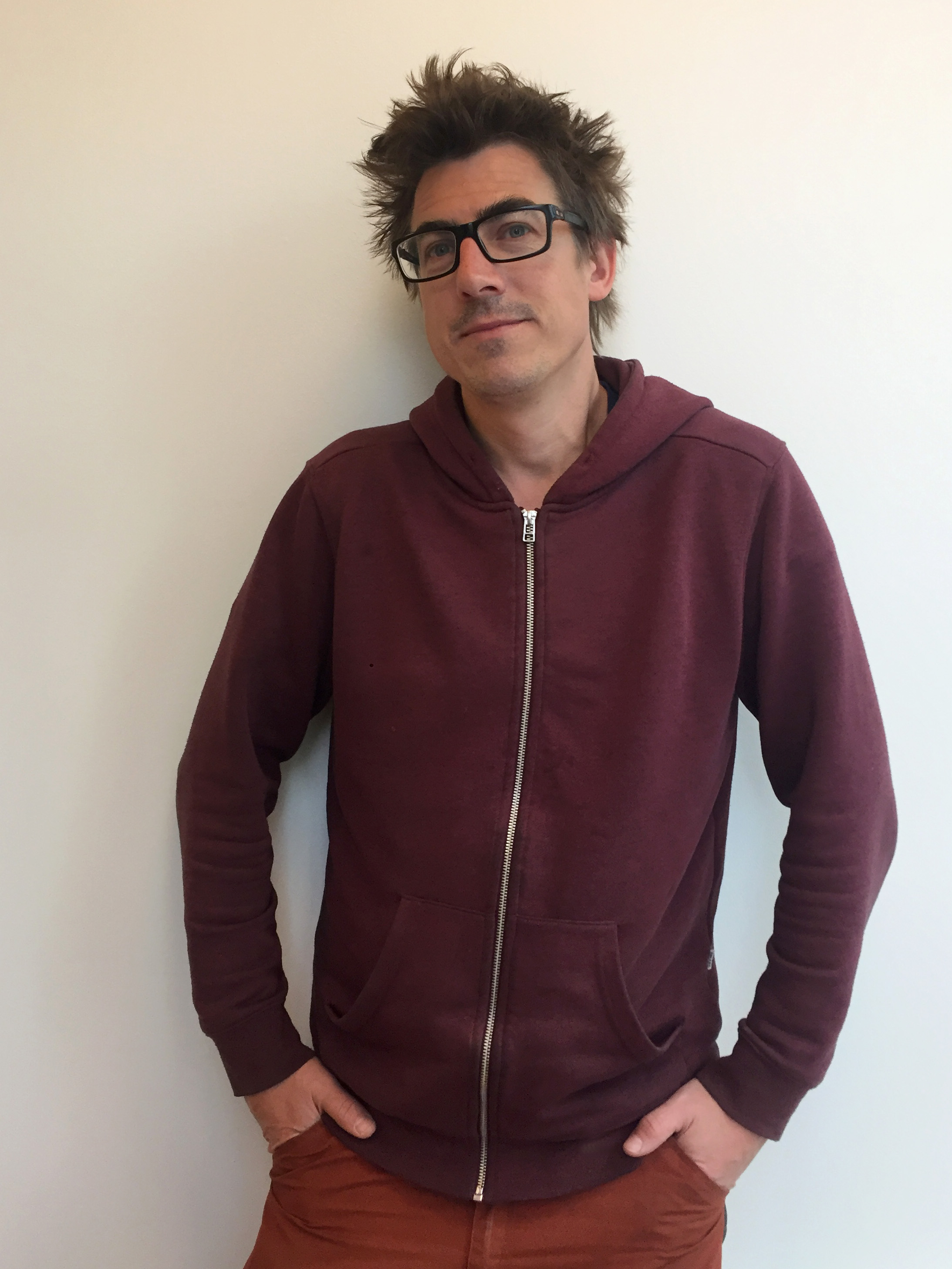
My background is in threoretical linguistics, with a focus on the syntax-semantics interface. My research interests today are fairly broad, spanning argument strucutre alternations, language processing, dialect variation and change, the syntax-prosody interface, language attrition and language acquisition, but all my research aims at gaining a better understanding of the architecture of the human language faculty.
I'm currently involved in several projects, with local, national and international collaborators. I'll present some ongoing and recent projects/studies below, organized thematically.
Eye tracking, Language change and the processing of Grammarical Gender in Norwegian
Over the last couple of years (2015-2018), we have been using psycholinguistic metohds, mainly eye tracking, to understand the current ongoing change in the Norwegian grammatical gender system. This research involves collablorations with Irina Sekerina (CUNY), Marit Westergaard, Yulia Rodina, Rachel Klassen and Øystein Vangsnes. Here is some of the output and current research:
Language separation in bidialectal speakers: evidence from eye tracking - (With Øystein Vangsnes. Recently submitted article about gender processing, grammar separation and language change.)
Grammatical gender in the mental lexicon: Insights from L1 language change (With Rachel Klassen, abstract, presented orally at the TheGEN workshop, erlin 14-15 June 2016, Berlin. This is mainly Rachel's work, building on reaction time data collected through IbexFarm. Hopefully, we will collect more data over the coming months and write it up as an article - the results are really cool!)
Dialect leveling as large scale mild language attrition (With Øystein Vangsnes. Poster presented at the CUNY colloquium 2017, covers partly the same data as the article 1 above.)
Gender Change in Norwegian Dialects: Comprehension is affected before Production (2016, with Yulia Rodina, Irina Sekerina and Marit Westergaard, article published in Linguistics Vanguard, special CUNY issue)
Featurally underspecified forms are not treated as informative cues, even when they are sufficiently contrastive in the available context Evidence from the Visual World Paradigm (2016, Poster presented at AMLaP 2016, Bilbao)
Other stuff related to Gender in the Mainland Scandinavian languages, from a more theoretical and typological angle, see the following recent abstract: Gender syncretism as a result of overspecification, not underspecification and an old slideshow: Adjectival inflection in Mainland Scandinavian: Subset vs. Superset (2010 - 2011).
The transitivity alternation project
From 2013 to 2016 I was a reseracher (50%) in the Transitivity Alternation Project. The project was managed by Gillian Ramchand, and other collaborators included Antonella Sorace (Edinburgh) , Martin Corley (Edinburgh) and Mai Tungseth (UiT). We are still running some follow-up studies, now in collaboration with Eva Wittenberg (UCL, San Diego). Find more information about the project on Gillian's project page. Some of the output with links to articles, posters and presentations are listed below.
Adventures in Structural Priming - The search for effects of Argument Structure. Argument Structure and Linguistic Processing (presentation at the Ars-Ling workshop at the 28th Colloquium of Generative Grammar, Tarragona, 2018, the whole slideshow is available here). A follow-up study was presented AMLaP 2019 (with Corley and Wittenberg), find slideshow here .
Anticausatives are semantically reflexive in Norwegian, but not in English (Article in Glossa, 2016, with Tungseth, Corley, Sorace and Ramchand)
Transitivity Alternations in English: Processing Subcategorization frames (Poster, AMLaP 2014, Ramchand, Lundquist, Tungseth, Corley and Sorace)
Word order variation in North Germanic synchronically and diachronically
Over the last couple of years I have been collaborating with Ida Larsson (UiO) on word order variation in Scandinavian, with a focus on particle placement, object shift and subject placement. Currently we are working within Ida's NFR-funded project Variation and Change in the Scandinavian Verb Phrase on building up a database of elicited production data, targetting variation with respect to consituent order in the Scandinavian languages. The elicitation method and the background research questions are described in the article The Nordic Word order Database: motivations, methods, material and infrastructure (accepted for publication). The database can also be browsed here: https://tekstlab.uio.no/nwd . Other related work is Ida's and my chapter on particle placement diachronally and synchronally in Swedish and Norwegian (again, only Swedish). For a more diachronic focus, see our poster from DiGS 2017: Argument Placement in Scandinavian - Stable Variation and Parametric Change. More news about the database to follow soon!
Second language acquistion
Since Aumtumn 2016, I have been involved in a couple L2 acquisition projects.
Testing the bottleneck hypothesis: acquisition of English morphology and word order by Norwegain students. (Collaboration with Isable Jensen, Roumyana Slabakova and Marit Westergaard: article under review - updates and links coming soon.)
Acquistion of word order in L2 Norwegian: Object Shift and Subject shift (Ongoing work with Merete Andersen, Kristine Bentzen, Guro Busterud (NTNU), Anne Dahl (NTNU) and Marit Westergaard, article under revision - updates and links coming soon)
Gender processing by Greek and Turkish L2 speakers of Norwegian (Since last year I've been helping out with an eye tracking study run at MultiLing in Oslo about Greek and Turkish L1 speakers' processing of gender in Norwegian. The first results were presented as a poster at AMLaP 2019. Find the poster here.
The syntax-prosody interface
The CASTL-fish research group at UiT had a strong focus on the syntax-prosody interface 2017-2018. Some of my work on the topic is listed below. My work on Scandinavian word order variation is recently also more oriented towards prosody. Some recent work below:
Mer om de preverbala adverbialens syntax, semantik och prosodi (2018, article in Norsk lingvistisk tidskrift about V3 in Swedish triggered by preverbal adverbs)
Morpho-syntactic restrictions on right- and left-headed maximal prosodic words in Mainland Scandinavian (2018, abstract for FINO workshop, find full slideshow here)
Norwegian heiritage speakers in America
Recently, I have been involved in two projects that build on the recordings of Norwegian heritage speakers, as collected in the CANS-corpus (Corpus of American Nordic Speech). The first one is a collaboration with Merete Anderssen and Marit Westergaard on noun phrase strucuture (possesives and definite expressions). This work centers around Merete and Marit's extensive research on the structure and acquisition of noun phrases in Norwegian. The article Crosslinguistic similarities and differences in bilingual acquisition and attrition: Possessives and double definiteness in Norwegian heritage language is now out in Binlingualism: Language and Cognitiion. The seocnd collaboration is with Terje Lohndal and Marit Westergaard on V2 in heritage Norwegian -- updates to follow soon!
Scandinavian dialect syntax
A lot of my research targets syntactic microvariation within and between the Scandinavian languages. I was a researcher in ScanDiaSyn/NorDiaCorp project 2010-2013, together with Kristine Bentzen, Piotr Garbacz, Janne Bondi Johannessen (project leader), Ida Larsson and Øystein Vangsnes (project leader). This resultet in volume 1 of Nordic Atlas of Language Structures (online), with more than 60 articles each targetting the dialect varation with respect to a specific syntactic phenomenon. My articles (17) mainly cover argument structure/verb phrase syntax (overview here) and binding/co-reference (see overview here). More about micro-variation with respect to binding can be found in my paper On inter-individual variation and mid-distance binding in Swedish (2013, Working paper in Scandinavian Syntax).
Voice, category change and argument structure
Most of my work earlier was centered around different types of passives and nominalizations. I'm still working modelling the choice of passive in Swedish (periphrastic or synthetic), and the relationship between argument structure and category (adjectival and verbal particles, "big" and "small" nominalizations). Some work that still bears some relevanc is listed below, with links to published or unpublished material.
The role of tense-copying and syncretism in the licesing of morphological passives in the Nordic languages (2015, Studia Linguistica)
The category of participles (2013, in chapter in Categorization and category change, which summarises my views on participles and nominalizations)
Double object passives, pseudo-passives and the complete loss of Case in Swedish (Extended handout from LAGB workshop on Double objects, 2015)
Noun-verb conversion without a generative lexicon (2009, in Nordlyd special issue on Nanosyntax).
Nominalizations and participles in Swedish (2008, PhD thesis from the University of Tromsø)
The locus of cross-linguistic variation
A common theme of my research is linguistic variation, both within and between languages and even speakers. Several of the publications above, e.g. the causative paper and the mid-distance reflexives paper. Other relevant work, with a focus on differences between Swedish and English, are listed below.
Objects as locations in English and Mainland Scandinavian (with Gillian Ramchand, article in Journal of Comparative Germanic Linguistics, 2013)
Localizing cross-linguistic variation in Tense systems: On telicity and stativity in Swedish and English (2012, in Nordic Journal of Linguistics, fulltext here)
Contact, Animacy, and Affectedness in Germanic (2012, with Gillian Ramchand, in Comparative Germanic Syntax: the state of the art, fulltext here)

My research deals with various aspects of second and third language acquisition, i.e., the acquisition of language(s) after early childhood. I'm interested in both theoretical and applied aspects of acquisition. In particular, I am interested in how languages influence each other in the multilingual mind and in the relationship between implicit and explicit learning. I am also interested in multilingualism in a broad sense, and in multilingualism and language acquisition in schools.

My research primarily focuses on how different aspects of bilingual language experience variably impact the brain and it´s assosciated cognitive processes. I study how these neural and cognitive adaptations dynamically shift over time and with changes to patterns of language use, using behavorial experiment designs and EEG

My research interests include multilingualism, language comprehension, language processing, and L3 acquisition. In my PhD research, I focused on mediated receptive multilingualism between Ukrainian and Estonian, examining the factors that facilitate successful language comprehension and learning. Currently, my research focuses on cross-linguistic influence between Ukrainian and the societal language in Ukrainian children. In my research, I use different experiemental methods, including the Implicit Association Test, Matched-Guise Test, C-test, communication experiments, the Visual World Paradigm with eye-tracking, and the Multilingual Assessment Instrument for Narratives (MAIN).
In terms of teaching experience, I taught Ukrainian at the University of Tartu for one year at the A1 and A2 proficiency levels. In addition, I co-taught the Multilingualism and Beyond course at the UniTartu Summer School for two consecutive years.

My research interests include multilingualism, language processing, and multilingualism-induced brain adaptation using EEG. I specifically focus on investigating an EEG method to better our understanding within these areas of research.


My primary research interest lies in the field of sociolinguistics, with a focus on the contemporary Ukrainian linguistic landscape. I aim to explore how individuals in a multilingual society – where Ukrainian, Russian, Surzhyk (a mixed language), and other languages are spoken – choose which language(s) to use and how these choices shape their identities, especially in the context of the ongoing war and Russia’s full-scale invasion of Ukraine. I seek to investigate what linguistic identity means for Ukrainians today, both for those who remain in Ukraine and for refugees navigating new societal languages while integrating into new cultural environments.
Additionally, I am interested in psycholinguistics, particularly in the area of multilingual language acquisition and attrition among Ukrainian refugee children. The focus is on how these children acquire new languages, whether structurally similar to their first language(s) or significantly different, and how their linguistic abilities evolve over time in their new environments.
Syntax and its interfaces with form (morphology-phonology) and meaning (semantics); linguistic theory.

My research interests lie in multilingualism and language acquisition in adults, with a particular focus on third language acquisition, parallel language acquisition, and crosslinguistic influence and language attrition.


My research interests include language acquisition and language processing by different groups of children and adults – monolingual, bilingual/multilingual and heritage language speakers – with a special focus on the acquisition and processing of Croatian in contact with other languages. I rely on experimental methods to study language, in particular the Visual World eye-tracking paradigm, WebGazer, eye-tracking during reading and behavioural tasks (e.g., elicited production, acceptability judgments). In my current and previous research, I have focused on various linguistic phenomena that I investigate from a cross-linguistic perspective, such as grammatical aspect and case, reference, anaphora resolution, implicit causality, negation, semantics of connectives, etc.


Research interests:
My research interests are broad, and include comparative linguistics, syntax, pragmatics and information structure, dialects syntax, child language, first and second language acquisition, bilingualism, language revitalization, and language disorders. I primarily work with the following languages: Norwegian (and Norwegian/Nordic dialects), Northern Sami, and English.
I have a background in theoretical syntax, in particular on the interface between syntax and information structure. For my PhD (2007) I investigated word order variation in embedded clauses in Northern Norwegian, and also compared this with other Scandinavian varieties. My thesis also included a chapter on the acquisition of word order in Northern Norwegian embedded clauses.
Since my PhD I have continued working on theoretical syntax and information structure, and on language acquisition.
I have also picked up again the topic from my Master’s thesis (2000), namely bilingual language acquisition and cross-linguistic influence.
Another research interest that has emerged over the years related to first language acquisition of Northern Sami. From 2011-2017 I was the leader of the project DASAGO (Davvisámigiel mánáid giellaovdáneapmi – North Sami child language acquisition), in which we adapted the MacArthur-Bates CDI (Communicative Development Inventory) into North Sami, collected child language corpora of Sami child language, and investigated various grammatical aspects in Sami child language. We are still working on material collected for this project.
Finally, I have recently decided to approach a topic I have long been fascinated by, namely language disorders. I am currently doing a Master’s degree on speech therapy, and hope to do some research into this area in the near future.
My current research interests include:
I’m involved in the following external projects:

My current research focuses on better understanding the formal and cognitive restrictions on harmony processes and expanding our understanding of the typology of harmony. To achieve this, I am using artificial grammar learning techniques to explore biases in learnability, cognition, and theoretical linguistcs that limit the range of possible harmony processes that can arise in natural language.
You can learn more about my work at https://jennatconklin.weebly.com/.

My research focuses on bilingual adaptation, investigating how cognitive processes adjust to different linguistic environments and how individuals navigate between languages.


Descriptive linguistics, field linguistics, language documentation, multilingualism, bilingualism, language contact, grammatical borrowing, morphological borrowing, linguistic typology, grammar writing, polylectal grammars, African linguistics, languages of the Middle East, Afro-Asiatic languages, Berber (Amazigh), Arabic, dialectology.

My research focuses on multilingualism, language learning, linguistically responsive teaching and the interface between language and cognition, especially in people with neurological disease.
2025–2026 I will work together with PhD Antti Saloranta (guest research in Kven language at UiT) to investigate the phonetic system of the Kven language by comparing archival and self-collected speech data. In addition, we will examine possible differences in the perception of the sound system and grammar in Kven and Finnish by using psychophysiological measurements.

My academic interests encompass speech and language therapy, multilingualism, and clinical linguistics. I primarily work with acquired disorders of language, speech, and communication, with a particular focus on exploring solutions for the assessment and treatment of multilingual individuals. Additionally, I am interested in how the management of multilingual individuals with aphasia and dementia can inform linguistic models of multilingual processing.
Historical linguistics and language variation
I have for many years been carrying out research within historical linguistics and language variation. My studies focus on the development of three different constructions: the ‑ly suffix, the progressive, and adverbial –ing clauses. I have studied these constructions from various perspectives, such as grammaticalization, subjectification, language contact, and sociolinguistics. Some of the studies are contrastive. I am currently doing research on the development of sentence adverbs in English. This is joint work with Prof. Dagmar Haumann at the University of Bergen.
I am a member of the research group Language Data and Language Change (LDLC) at the University of Bergen.
Language acquisition and didactics
In addition to my research on language change, I have in recent years carried out research on second language acquisition and language didactics. I am a member of the Center for Language, Brain & Learning (C-LaBL), where I am currently participating in the project Acquisition of English from 1st to 5th grade.
I am also involved in the project TALE (Teaching and Learning English), which is a joint project with colleagues at the Department of Education at UiT.


For a complete list of publications, please check the members’ webpages or individual research profiles in NVA (Current Research Information Repository). Publication highlights from previous years may be found on the AcqVA website.
 Flere språk til flere
Flere språk til flere (More languages to more people) is C-LaBL’s outreach service. We are a branch of the research and information center Bilingualism Matters, a global network of more than 25 universities working on multilingualism, founded by Prof. Antonella Sorace in 2008. Our goal is to communicate research findings on multilingualism and language learning to a broader public. We believe that everyone can enjoy the benefits of having more than one language.
Do you want to know more about multilingualism and language learning? Flere språk til flere can:
For further information, advice or to arrange a talk, please email us at Postboks-FSF@HSL.uit.no. You can follow us on Facebook or visit our website.
Flere språk til flere is directed by Yulia Rodina.
Er flerspråklighet en fordel? Og hvordan kan dagens banebrytende forskningsmetoder bidra til å forstå hvordan språk fungerer i hjernen? Dette og mye mer får du høre om under Språkdagen 25. september når du møter språkforskere fra C-LaBL – Senter for språk, hjerne og læring ved UiT.
Ved C-LaBL forsker vi på hvordan flere språk samhandler i hjernen samtidig. Vi ser blant annet på hvordan ulike språk i ett og samme hode påvirker hverandre og hvordan flerspråklighet påvirker evnen til å lære nye språk.
✨ Hva skjer på språkdagen?
🎯 Quiz med spennende spørsmål om flerspråklighet
🔬 Innsikt i pågående forskningsprosjekter og metoder
🧠 Demonstrasjon av elektroencefalografi (EEG) – en metode som måler hjernens elektriske aktivitet
Bli med og opplev hvordan språk og vitenskap møtes! Kanskje lærer du noe nytt om både hjernen og deg selv!