Arctic Future Pathfinders Adapts Journey to Newfoundland, Exploring Norse History
Cornel Borit, the senior academic librarian from UiT who is onboard Statsraad Lehmkuhl, sees the changing of the route as an opportunity to deepen the exploration of Arctic themes, indigenous cultures, and historical connections.
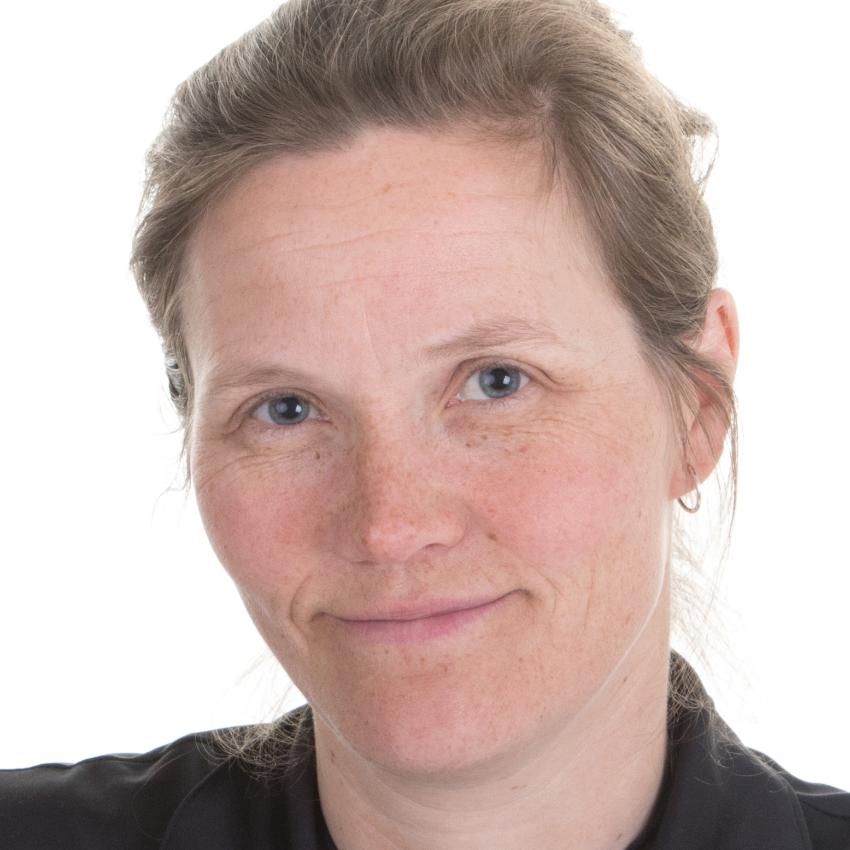
The course, which emphasizes the Arctic environment and its indigenous peoples, will now incorporate a historical dimension by exploring the Norse sagas and their ties to Newfoundland. A librarian on board shared his excitement about this unexpected addition to the curriculum.
“When we decided to disembark in Newfoundland, I immediately thought of the Norse sagas about Leiv Eiriksson and the settlements in Vinland,” Cornel Borit explained.
Exploring the Norse sagas
“I found some fascinating articles about the archaeological discoveries in L’Anse aux Meadows, which confirm that the sagas are rooted in historical truth. These articles are now available in the library for students to explore.”
The librarian highlighted the significance of these findings:
“The research from the 1960s proved that Norse settlements existed in Newfoundland, resembling those in Iceland and Norway. It’s incredible to think that the Vikings may have been the first Europeans to reach these shores.”
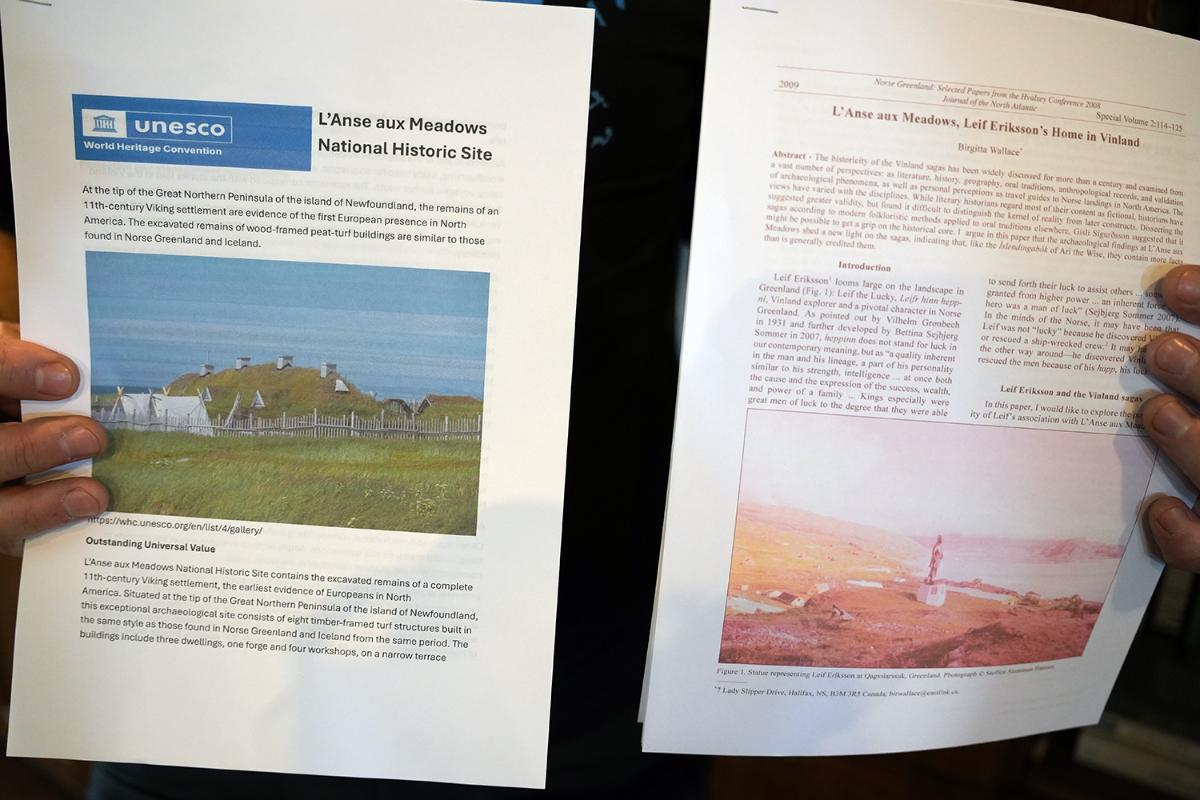
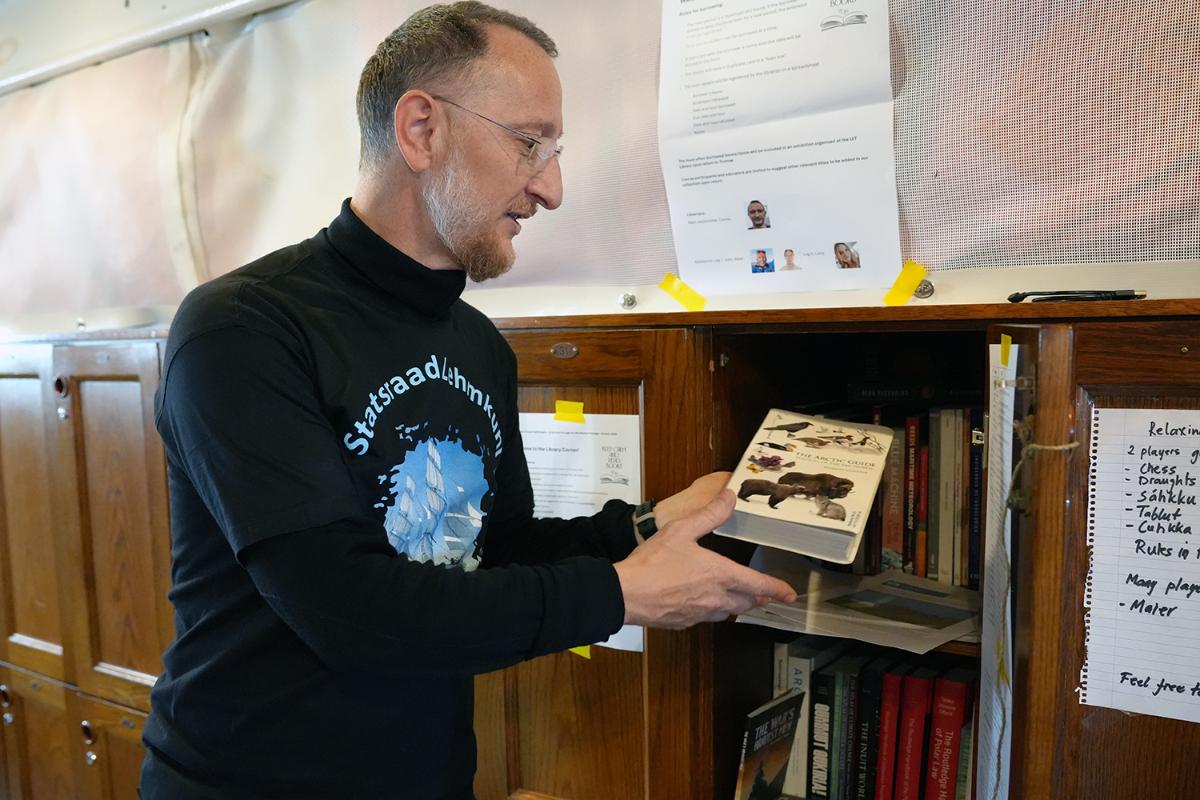
He has made the articles available for the students in the library, which is a closet in the mass of the ship, which is staffed half an hour per day. Books and articles from the library can be borrowed for two hours at a time.
"This book is the most read," said Borit, holding a book about wildlife in the Arctic in his hand.
Information Literacy in the Arctic Context
A key component of the course is a focus on Information Literacy, taught by the onboard librarian. He emphasized the importance of equipping students with the skills to navigate today’s overwhelming flow of information.
“We live in an information society where we face what some call an ‘infodemic,’” he said.
“There’s so much information out there—some of it toxic, irrelevant, or even deceitful. It’s crucial to develop the ability to discern fact from fiction and critically assess sources.”
The Arctic setting adds unique dimensions to these lessons.
“Since the course focuses on the Arctic, it’s important to understand the specific rules and principles for conducting research in this region,” he explained.
“I introduce students to the concept of Indigenous Information Literacy, which emphasizes relationality, reciprocity, and respect. Researchers must follow the CARE principles for indigenous data governance to ensure their work respects local communities and cultures.”
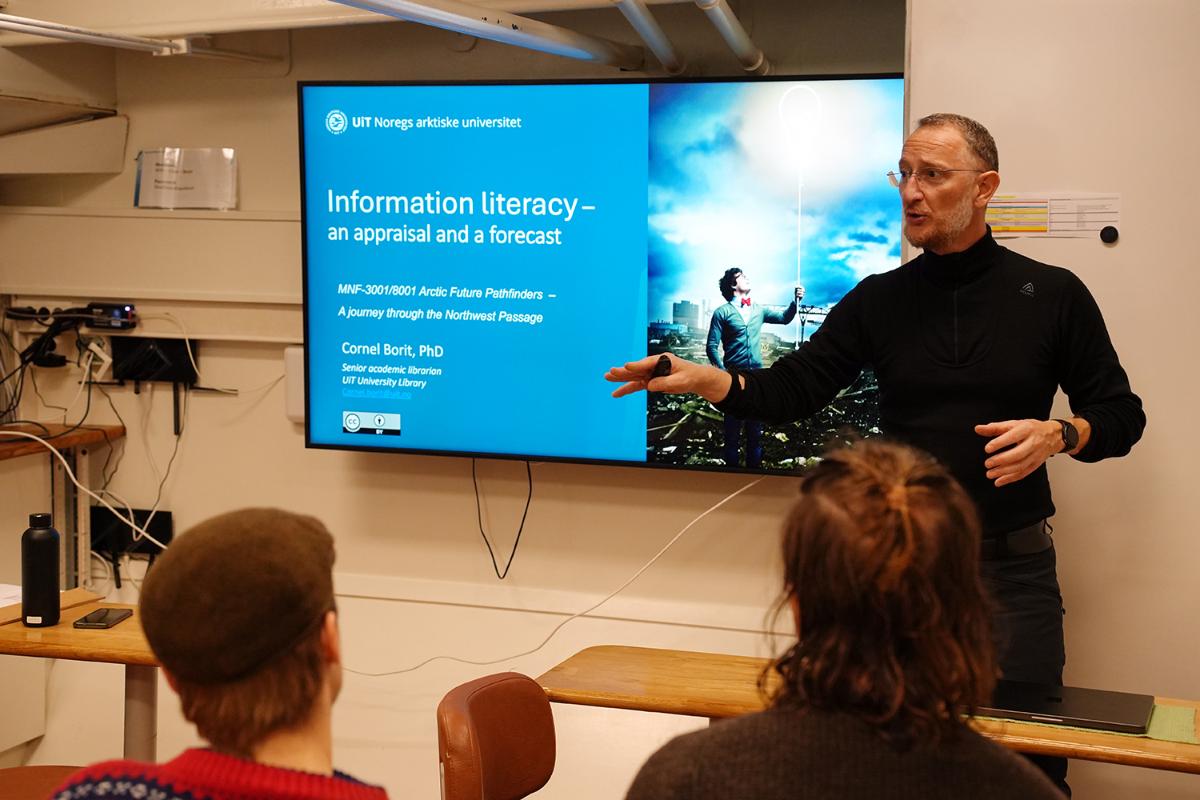
Imagining the Future of Information Literacy
As part of the course, students participated in a workshop envisioning the future of information literacy in the Arctic by 2050. Borit described the exercise as both thought-provoking and inspiring.
“I challenged the students to imagine how information will be stored, who will control it, and how it will be used in 25 years,” he said.
“Will it be used for utopian purposes to create a better society and heal nature, or will it fall into the hands of those who might use it to manipulate people? The students came up with some fascinating ideas.”
Borit added, “We also discussed how to prepare for these possible futures. What skills will we need to become information-literate citizens and researchers in a rapidly changing world? It was a very engaging discussion, and I look forward to analyzing the results of the workshop.”
A Journey of Discovery
The course’s unexpected detour to Newfoundland has been embraced as an opportunity to enrich the students’ learning experience.
“This visit will provide students with a tangible connection to the sagas and the historical narratives they’ve been studying,” Cornel said.
“It’s a perfect example of how we can use unexpected situations to find new material and create meaningful learning experiences.”
As the course nears its conclusion, the organizers and students are making the most of this unplanned destination.
“We’re adapting and trying to extract as much knowledge as possible from this opportunity,” he said.
“It’s been a fascinating journey, and I’m excited to see how it all comes together.”
-
Arkeologi - master
Varighet: 2 År -
Peace and Conflict Transformation - master
Varighet: 2 År -
Geosciences - master
Varighet: 2 År -
Biology - master
Varighet: 2 År -
Technology and Safety - master
Varighet: 2 År -
Law of the Sea - master
Varighet: 3 Semestre -
Biologi - bachelor
Varighet: 3 År -
Nordisk - årsstudium
Varighet: 1 År -
Luftfartsfag - bachelor
Varighet: 3 År -
Pedagogikk - bachelor
Varighet: 3 År -
Arkeologi - bachelor
Varighet: 3 År -
Likestilling og kjønn - årsstudium
Varighet: 1 År -
Historie - bachelor
Varighet: 3 År -
Geovitenskap- bachelor
Varighet: 3 År -
Samfunnssikkerhet - bachelor
Varighet: 3 År -
Samfunnssikkerhet - master
Varighet: 2 År -
Kunst - bachelor
Varighet: 3 År -
Kunsthistorie - master
Varighet: 2 År -
Religionsvitenskap - årsstudium
Varighet: 1 År -
Romfysikk, sivilingeniør - master
Varighet: 5 År -
Sosialantropologi - bachelor
Varighet: 3 År -
Historie - master
Varighet: 2 År -
Filosofi - bachelor
Varighet: 3 År -
Anvendt fysikk og matematikk, sivilingeniør - master
Varighet: 5 År -
Barnevernsarbeid - master
Varighet: 2 År -
Forfatterstudium 2 - årsstudium
Varighet: 1 År -
Fine Art - master
Varighet: 2 År -
Barnevern - bachelor
Varighet: 3 År -
Arctic Nature Guide - one year programme
Varighet: 1 År -
Sosialt arbeid - bachelor
Varighet: 3 År -
Arktisk friluftsliv og naturguiding - bachelor
Varighet: 3 År -
Arktisk friluftsliv - årsstudium
Varighet: 1 År -
Grunnskolelærerutdanning for 1.-7. trinn - master
Varighet: 5 År -
Kunsthistorie - årsstudium
Varighet: 1 År -
Governance and Entrepreneurship in Northern and Indigenous Areas - master
Varighet: 4 År -
Vernepleie - bachelor
Varighet: 3 År -
Internasjonal beredskap - bachelor
Varighet: 3 År -
Barnevern - bachelor
Varighet: 3 År -
Vernepleie - bachelor
Varighet: 4 År -
Landskapsarkitektur - master
Varighet: 5 År -
Grunnskolelærerutdanning for 5.-10. trinn - master
Varighet: 5 År -
Kvensk og finsk - bachelor
Varighet: 3 År -
Nordisk språk og litteratur - bachelor
Varighet: 3 År -
Russisk og russlandsstudier - bachelor
Varighet: 3 År -
Ph.d.-program i naturvitenskap
Varighet: 3 År -
Russisk og russlandsstudier - master
Varighet: 2 År -
Environmental Law - master
Varighet: 2 År -
Nordisk språk og litteratur - master
Varighet: 2 År -
Kvensk og finsk - master
Varighet: 3 År -
Ph.d.-program i realfag
Varighet: 3 År