Charting Arctic futures together
Interdisciplinary teaching, Indigenous perspectives, and integrative thinking prepare students for the challenges ahead.
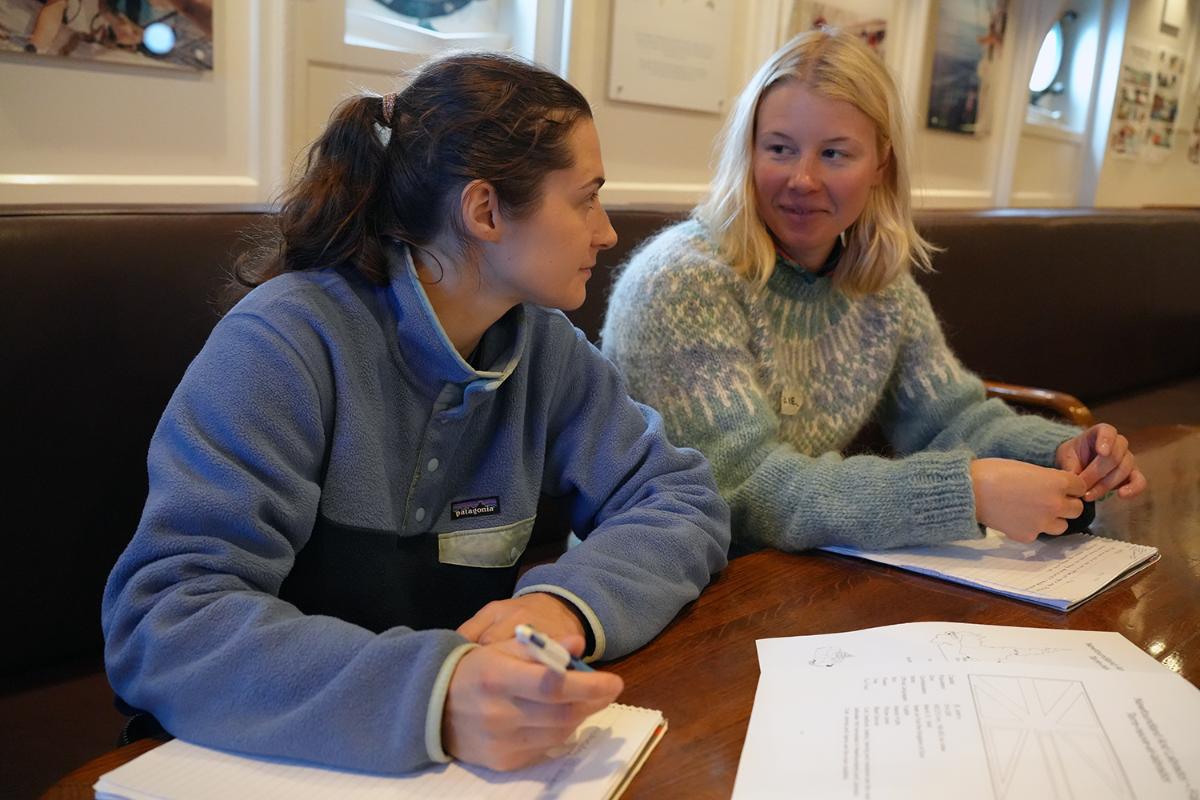
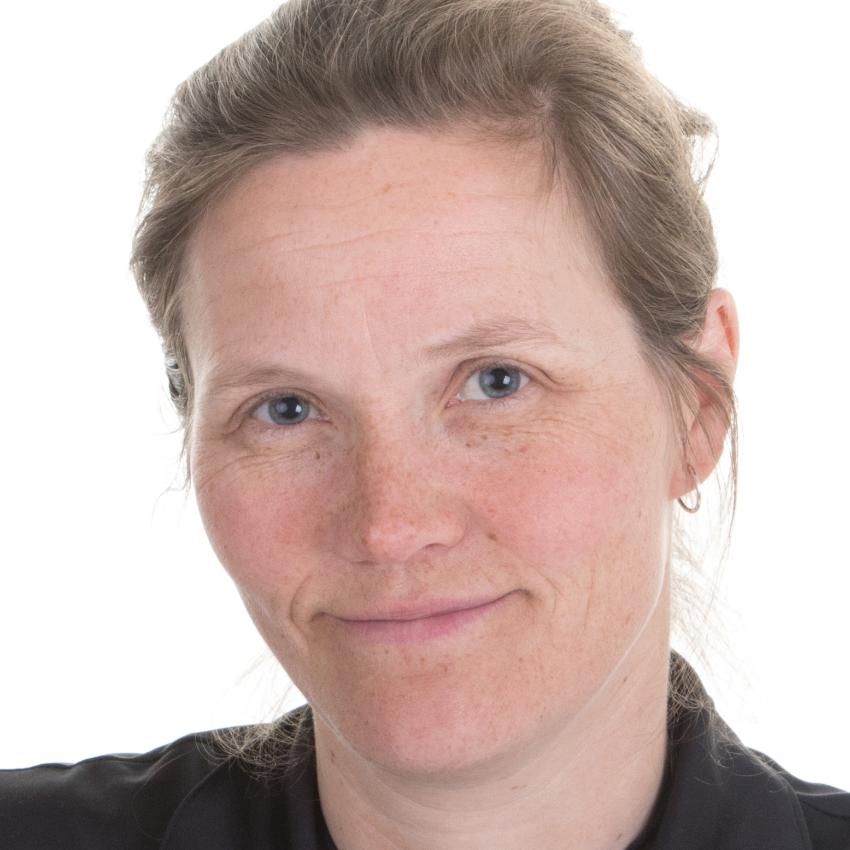
“We brought on board 15 educators from all UiT faculties and units. Each of their unique specialization is a thread then we weave together with perspectives of Indigenous Knowledge Holders (both Sami and Inuit), as well as with arts, crafts, and reflections into a holistic learning experience,” says Melania Borit, professor of knowledge integration and the coordinator of the Arctic Future Pathfinders course.
She coordinates the course alongside her colleague, Timo Szczepanska, expert in futures studies. Both are part of the research group CRAFT at the Norwegian College of Fisheries Science. Together, they ensure that, while gaining insights from various disciplines, course participants also conceptualize the Arctic as a social-ecological system under stress.
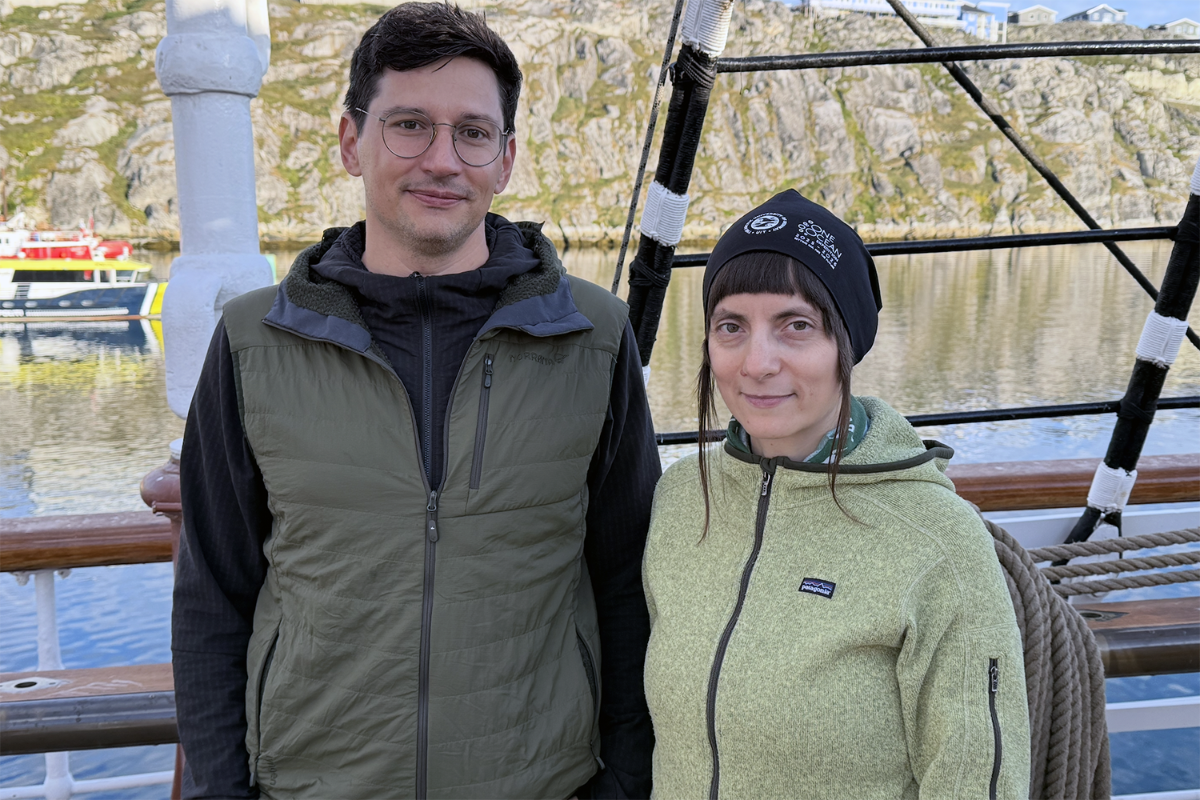
“The integrative moments are where the real magic happens,” says Borit.
“You might start the day learning about sea ice physics, and end it debating Arctic navigational regimes. Then suddenly you realise the two are inseparable.”
Why futures thinking matters
Climate change, shifting geopolitics, and new economic activities are rapidly transforming the Arctic. For Borit, a futures studies approach is absolutely necessary.
“We cannot just look at what is – we have to explore what could be and what we desire to be,” she explains.
Students are guided to imagine preferable futures, helping them prepare for challenges that cannot be solved by single disciplines alone. By exploring the current trends and drivers of change, as well as envisioning desired future states of the Arctic, course participants develop the ability to think strategically, work across disciplines, and create informed, forward-looking solutions to both current and future challenges.
“The future is not a static state of the world, waiting to happen. We are actively shaping it through our daily actions in the present”, explains Szczepanska.
Building capacity for a changing Arctic
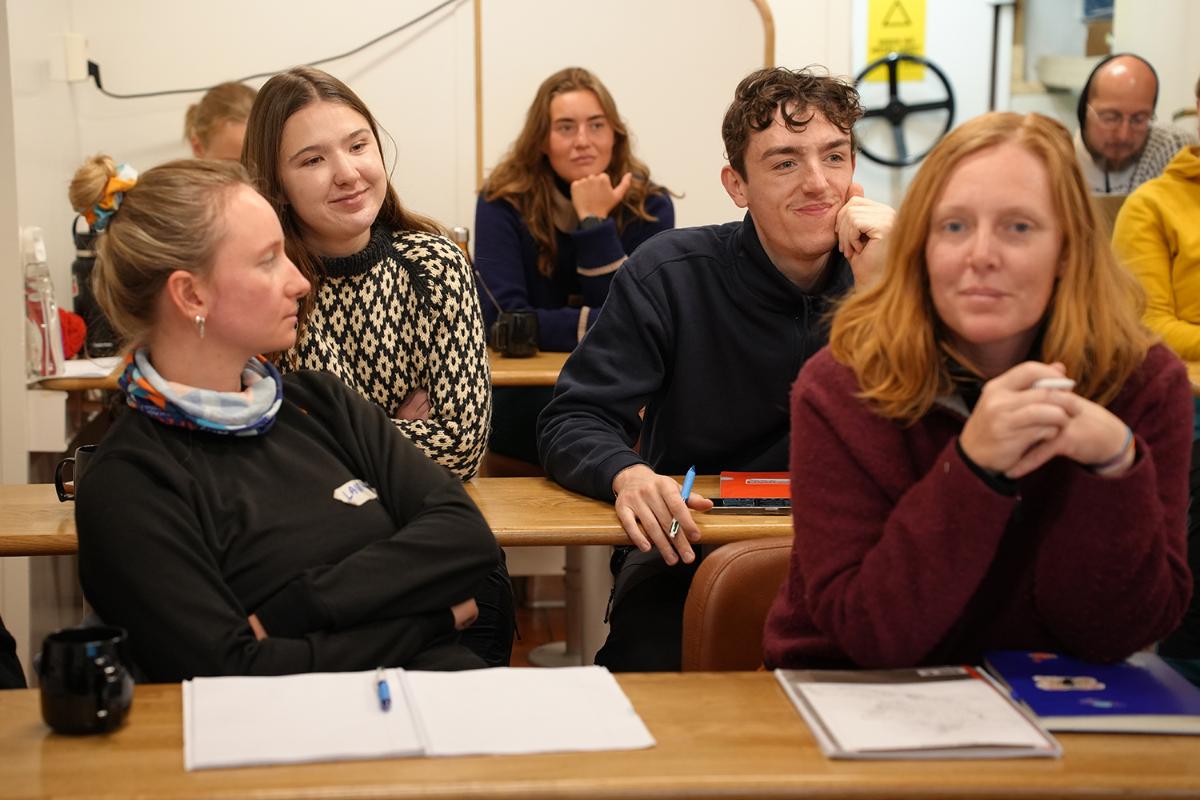
For Borit, the combination of practical seamanship, disciplinary awareness, Indigenous perspectives, personal reflections, and integrative futures thinking is transformative.
“It is not only a cruise – it is a demanding, collaborative experience. But it is also empowering,” she says.
“When students make the connections and start thinking long-term, they prepare to take meaningful action for a sustainable Arctic future.”
-
Arkeologi - master
Varighet: 2 År -
Peace and Conflict Transformation - master
Varighet: 2 År -
Geosciences - master
Varighet: 2 År -
Biology - master
Varighet: 2 År -
Technology and Safety - master
Varighet: 2 År -
Law of the Sea - master
Varighet: 3 Semestre -
Biologi - bachelor
Varighet: 3 År -
Nordisk - årsstudium
Varighet: 1 År -
Luftfartsfag - bachelor
Varighet: 3 År -
Pedagogikk - bachelor
Varighet: 3 År -
Arkeologi - bachelor
Varighet: 3 År -
Likestilling og kjønn - årsstudium
Varighet: 1 År -
Historie - bachelor
Varighet: 3 År -
Geovitenskap- bachelor
Varighet: 3 År -
Samfunnssikkerhet - bachelor
Varighet: 3 År -
Samfunnssikkerhet - master
Varighet: 2 År -
Kunst - bachelor
Varighet: 3 År -
Kunsthistorie - master
Varighet: 2 År -
Religionsvitenskap - årsstudium
Varighet: 1 År -
Romfysikk, sivilingeniør - master
Varighet: 5 År -
Sosialantropologi - bachelor
Varighet: 3 År -
Historie - master
Varighet: 2 År -
Barnehagelærer - bachelor
Varighet: 3 År -
Anvendt fysikk og matematikk, sivilingeniør - master
Varighet: 5 År -
Barnevernsarbeid - master
Varighet: 2 År -
Forfatterstudium 2 - årsstudium
Varighet: 1 År -
Organisasjon og ledelse for offentlig sektor - erfaringsbasert master
Varighet: 3 År -
Fine Art - master
Varighet: 2 År -
Barnevern - bachelor
Varighet: 3 År -
Arctic Nature Guide - one year programme
Varighet: 1 År -
Sosialt arbeid - bachelor
Varighet: 3 År -
Arktisk friluftsliv og naturguiding - bachelor
Varighet: 3 År -
Arktisk friluftsliv - årsstudium
Varighet: 1 År -
Grunnskolelærerutdanning for 1.-7. trinn - master
Varighet: 5 År -
Kunsthistorie - årsstudium
Varighet: 1 År -
Governance and Entrepreneurship in Northern and Indigenous Areas - master
Varighet: 4 År -
Vernepleie - bachelor
Varighet: 3 År -
Internasjonal beredskap - bachelor
Varighet: 3 År -
Barnevern - bachelor
Varighet: 3 År -
Vernepleie - bachelor
Varighet: 4 År -
Realfagskurs
Varighet: 1 Semestre -
Landskapsarkitektur - master
Varighet: 5 År -
Grunnskolelærerutdanning for 5.-10. trinn - master
Varighet: 5 År -
Kvensk og finsk - bachelor
Varighet: 3 År -
Nordisk språk og litteratur - bachelor
Varighet: 3 År -
Russisk og russlandsstudier - bachelor
Varighet: 3 År -
Ph.d.-program i naturvitenskap
Varighet: 3 År -
Russisk og russlandsstudier - master
Varighet: 2 År -
Environmental Law - master
Varighet: 2 År -
Nordisk språk og litteratur - master
Varighet: 2 År