The Importance of Straits: A Legal, Environmental, and Strategic Perspective
The significance of maritime straits is multifaceted, particularly regarding their commercial, environmental, and strategic dimensions.

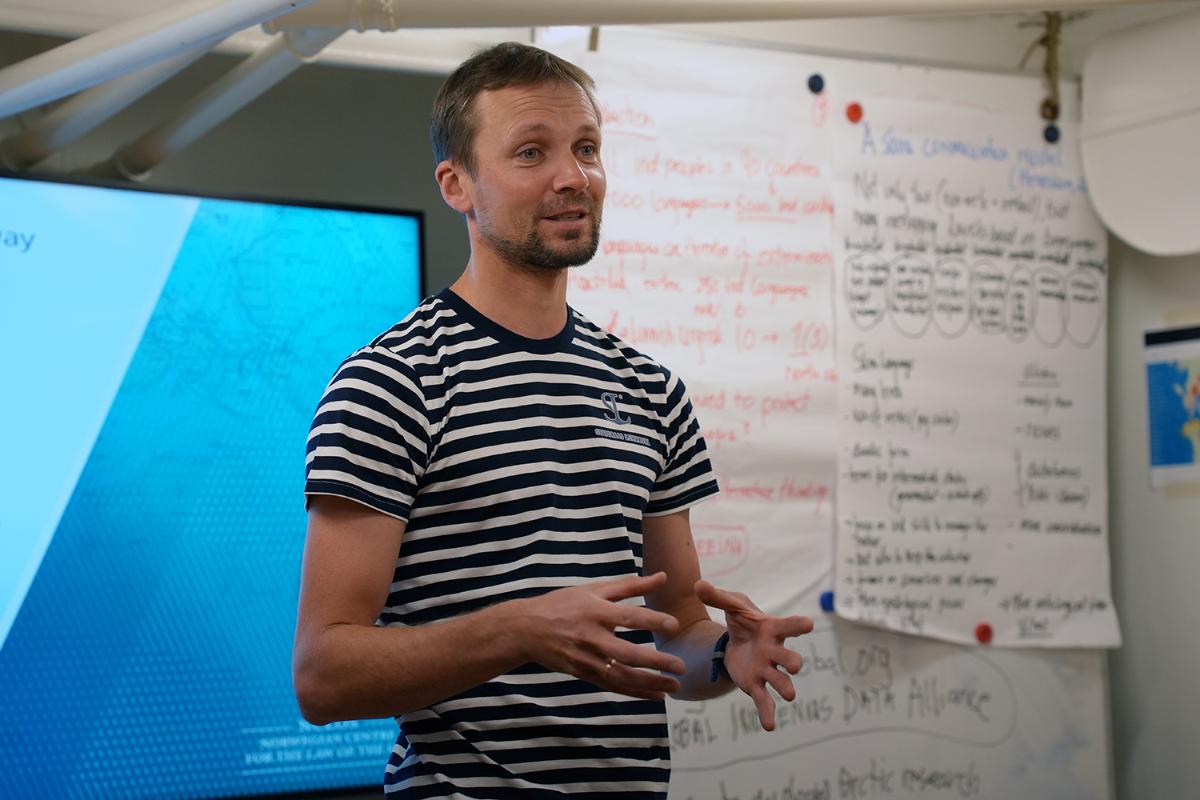
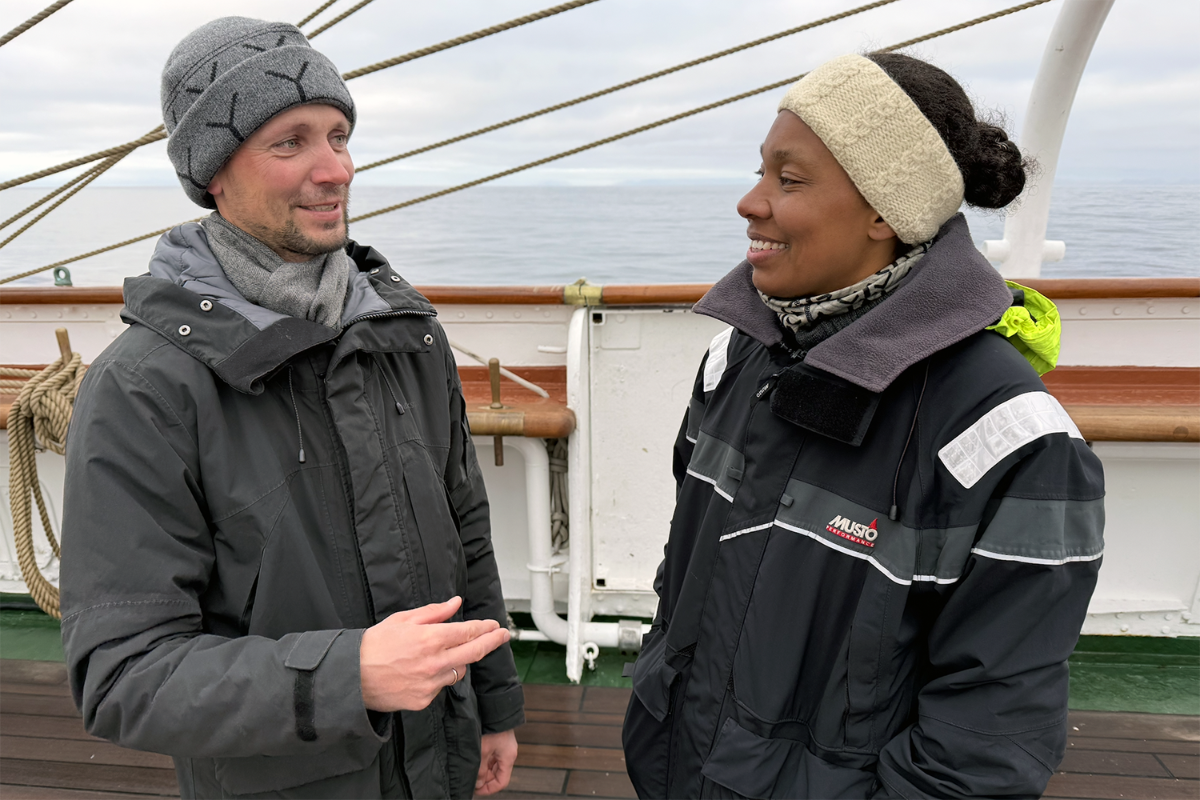
"Straits are the lifelines of international maritime trade. Over the past two decades, maritime trade has doubled, with much of this cargo passing through straits, the chokepoints of global navigation," Alexander Lott explained. He is a senior researcher at Norwegian Centre for the Law of the Sea (UiT), currently on board the sailing ship Statsraad Lehmkuhl to lecture in the course Arctic Future Pathfinders.
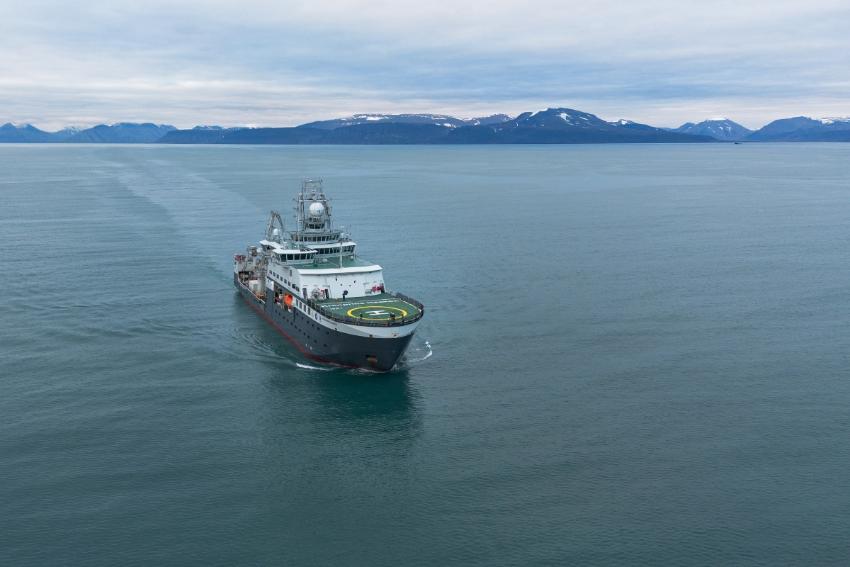
The sailing ship was originally supposed to go through the complex system of straits known as the Northwest Passage. Due to dangerous navigation conditions the Canadian authorities denied the ship permission to enter the Northwest Passage. In his session, Lott focused on the legal dimensions of Canada’s decision under the international law of the sea.

Lott also explored the complexities of navigation regimes and the broader implications for global trade, security, and marine ecosystems.
The Northwest Passage: A potential route
While straits like the Strait of Dover and the Strait of Malacca are among the busiest in the world, the Northwest Passage remains relatively underutilized, with only about 40 ships that cross the entire passageway annually.
"Even the Åland Strait, a minor strait at the entrance to the Gulf of Bothnia in the Baltic Sea, sees more daily traffic than the Northwest Passage does in a year," Lott noted.
However, aside its potential as a shorter trade route, the Northwest Passage holds also a unique strategic value.
"It provides a potential route for naval forces to move between the Atlantic, Arctic, and Pacific Oceans," Lott said.
Navigational Regimes: A Legal Labyrinth
The session delved into the legal intricacies of navigation regimes, which govern the movement of ships and aircraft through straits. These regimes include the right of innocent passage, transit passage, and freedom of navigation and overflight.
"Innocent passage applies within the territorial sea, allowing ships to navigate without prior authorization, provided their passage is not prejudicial to the peace, good order, or security of the coastal state," Lott explained.
"Transit passage, on the other hand, is specific to international straits and guarantees freedom of navigation and overflight."
The Northwest Passage, however, is subject to Canada's assertion that it constitutes "non-international straits," requiring prior authorization for passage.
"This creates a parallel legal regime, with Canada and the United States holding conflicting views on the applicable navigation rights," Lott noted.
"Such disputes have the potential to escalate into diplomatic or even kinetic conflicts, as we've seen in other parts of the world, like the Kerch Strait and the Strait of Hormuz."
Environmental Significance: A Forgotten Perspective
Lott also highlighted the often-overlooked environmental importance of straits.
"Straits are not just vital for human navigation; they are equally crucial for marine species. They serve as natural corridors connecting large marine ecosystems, facilitating the migration of fish, marine mammals, and birds," Lott emphasized.
However, human activities often disrupt these natural pathways.
"Physical barriers like causeways, acoustic pollution from naval operations, and artificial light pollution all impede the movement of marine species," Lott explained.
He also pointed to the impact of infrastructure on bird populations.
"Power lines over straits, such as those in the Bosporus and the Canso Strait, which is relatively close to our final destination in St John’s, are often invisible to birds, leading to fatal collisions," he said.
A Call for Balance
The workshop concluded with a call for a balanced approach to managing straits.
"Straits are at the intersection of trade, security, and environmental conservation. Understanding their legal regimes is essential for safeguarding navigation rights while protecting the fragile ecosystems they connect," Lott said.
As the Arctic continues to warm and maritime traffic increases, the importance of straits like the Northwest Passage will only grow.
"Whether for trade, security, or environmental reasons, straits are far more than just waterways—they are critical to the future of our interconnected world," Lott concluded.
-
Arkeologi - master
Varighet: 2 År -
Peace and Conflict Transformation - master
Varighet: 2 År -
Geosciences - master
Varighet: 2 År -
Biology - master
Varighet: 2 År -
Technology and Safety - master
Varighet: 2 År -
Law of the Sea - master
Varighet: 3 Semestre -
Biologi - bachelor
Varighet: 3 År -
Rettsvitenskap - master
Varighet: 5 År -
Nordisk - årsstudium
Varighet: 1 År -
Luftfartsfag - bachelor
Varighet: 3 År -
Pedagogikk - bachelor
Varighet: 3 År -
Arkeologi - bachelor
Varighet: 3 År -
Likestilling og kjønn - årsstudium
Varighet: 1 År -
Historie - bachelor
Varighet: 3 År -
Geovitenskap- bachelor
Varighet: 3 År -
Samfunnssikkerhet - bachelor
Varighet: 3 År -
Samfunnssikkerhet - master
Varighet: 2 År -
Kunst - bachelor
Varighet: 3 År -
Kunsthistorie - master
Varighet: 2 År -
Religionsvitenskap - årsstudium
Varighet: 1 År -
Romfysikk, sivilingeniør - master
Varighet: 5 År -
Sosialantropologi - bachelor
Varighet: 3 År -
Historie - master
Varighet: 2 År -
Anvendt fysikk og matematikk, sivilingeniør - master
Varighet: 5 År -
Barnevernsarbeid - master
Varighet: 2 År -
Forfatterstudium 2 - årsstudium
Varighet: 1 År -
Fine Art - master
Varighet: 2 År -
Barnevern - bachelor
Varighet: 3 År -
Arctic Nature Guide - one year programme
Varighet: 1 År -
Sosialt arbeid - bachelor
Varighet: 3 År -
Arktisk friluftsliv og naturguiding - bachelor
Varighet: 3 År -
Arktisk friluftsliv - årsstudium
Varighet: 1 År -
Grunnskolelærerutdanning for 1.-7. trinn - master
Varighet: 5 År -
Kunsthistorie - årsstudium
Varighet: 1 År -
Governance and Entrepreneurship in Northern and Indigenous Areas - master
Varighet: 4 År -
Vernepleie - bachelor
Varighet: 3 År -
Internasjonal beredskap - bachelor
Varighet: 3 År -
Barnevern - bachelor
Varighet: 3 År -
Vernepleie - bachelor
Varighet: 4 År -
Landskapsarkitektur - master
Varighet: 5 År -
Grunnskolelærerutdanning for 5.-10. trinn - master
Varighet: 5 År -
Kvensk og finsk - bachelor
Varighet: 3 År -
Nordisk språk og litteratur - bachelor
Varighet: 3 År -
Russisk og russlandsstudier - bachelor
Varighet: 3 År -
Ph.d.-program i naturvitenskap
Varighet: 3 År -
Russisk og russlandsstudier - master
Varighet: 2 År -
Environmental Law - master
Varighet: 2 År -
Nordisk språk og litteratur - master
Varighet: 2 År -
Kvensk og finsk - master
Varighet: 3 År -
Ph.d.-utdanning i rettsvitenskap
Varighet: 3 År