“Norway lacks a clear vision”
The development of wind power faces significant opposition in Norway, even though green energy can address major societal challenges. How to build mutual trust between the energy industry and local communities?

According to analyses from Statnett, Northern Norway could face a power deficit by 2050. At the same time, Norway has committed to reducing climate emissions by 55 per cent by 2030 and by 90–95 per cent by 2050.
How will these challenges affect Northern Norway? The population in Finnmark has long lived with a power supply that has significant limitations. One solution could be to develop more renewable energy in the form of wind power. However, finding solutions for the development of areas that do not displace the reindeer herding industry or compromise environmental considerations is, in many cases, challenging.
National policies and regional priorities should be coordinated, and the Norwegian government should develop a clear vision that transcends political agendas.
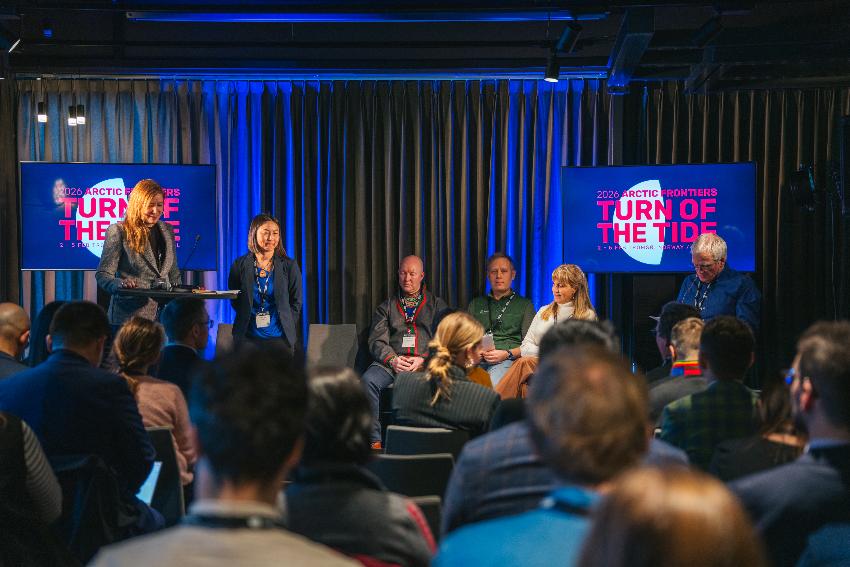
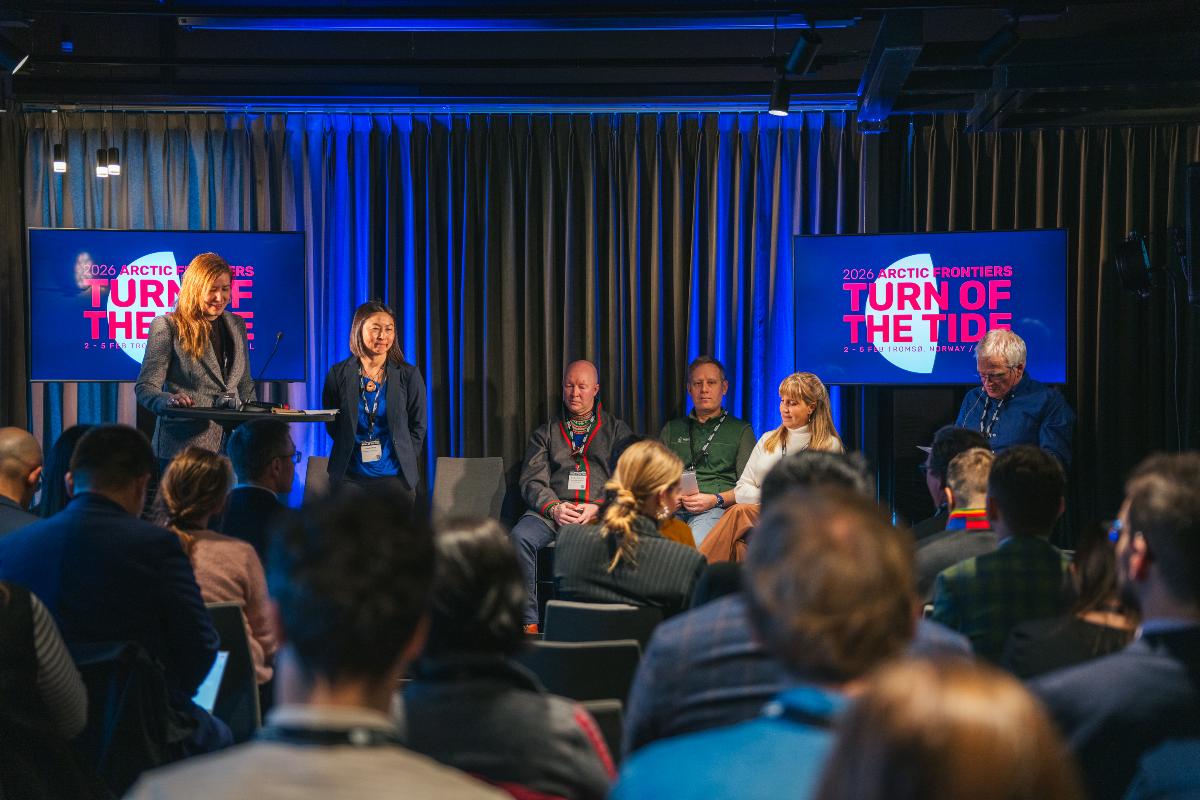
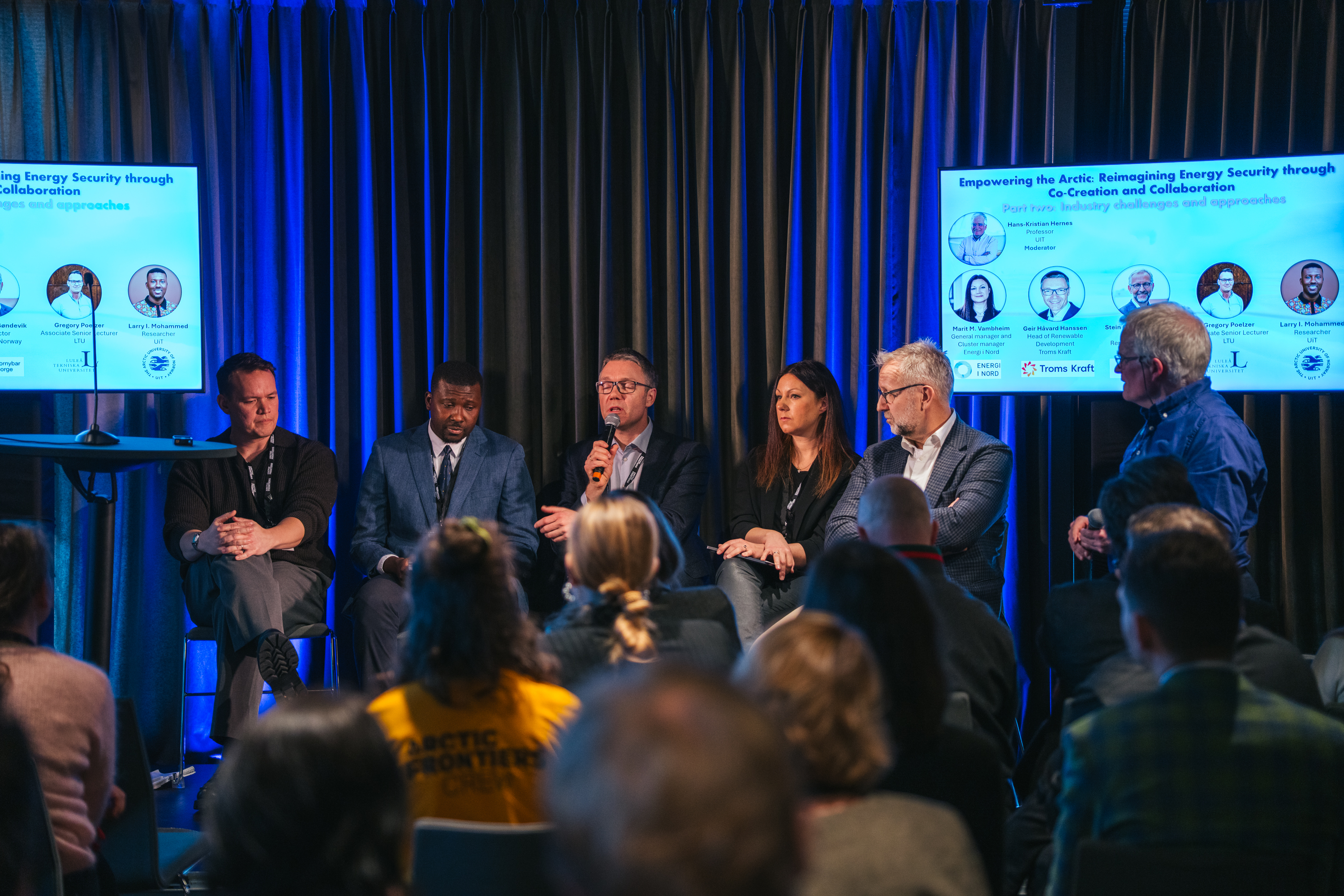
How we can find a way forward was the topic of a panel debate at the Arctic Frontiers conference titled Empowering the Arctic: Reimagining Energy Security through Co-Creation and Collaboration.
The panel included researchers from UiT and Luleå University of Technology (LTU), both of which are partners in The Arctic Six alliance. Their research partners in Canada and Alaska also participated in the panel. Others contributing their perspectives included representatives from the Sámi Parliament, Nibio, and energy industry players such as Troms Kraft, Renewable Norway, and Energi i Nord.
Conflicting Goals and Agendas
During the panel debate, researchers from UiT presented the Empower Arctic project. The project maps solutions for collaboration and dialogue between energy companies, municipalities, Sámi organisations, and environmental organisations on issues related to new energy projects.
Berit Kristoffersen, Associate Professor at UiT’s Department of Social Sciences, emphasised the importance of addressing what she describes as "policy gaps," which involve conflicting political goals and agendas.
“National policies and regional priorities should be coordinated, and the Norwegian government should develop a clear vision that transcends political agendas,” says Kristoffersen.
Dialogue and Trust
Her colleague, Claudia Cheng, a researcher at the same department, highlights that another key factor is meaningful dialogue and the building of mutual trust, which requires long timeframes. What such processes entail is being explored in the project through workshops and interviews in Finnmark. At the national level, master’s students are also participating in data collection.
“If Norway is to achieve its climate goals, we must reduce energy consumption, particularly the use of fossil fuels. New green industries can be developed to replace oil and gas well before the industry ceases production, and this should contribute to societal and industrial development in the north,” says Cheng.
However, she points out that access to hydropower is limited, making wind power the most realistic option for further development.
“Significant conflicts have arisen over which areas can or should be used. This doesn’t just concern reindeer herding, as wind power is not seen as socially acceptable in many local communities, and nationally, opposition has grown significantly. It is important to arrive at a common solution,” Cheng adds.
Innovative Approaches
Gregory Poeltzer, Associate Professor at Luleå University of Technology, also contributed new perspectives during the panel debate. In his view, there is much to learn from how the mining industry collaborates and maintains close dialogue with local communities.
He highlights Kirkenes as an example of how a local community can have a constructive partnership with a mining company. He believes this was evident when the company Sydvaranger Gruve AS operated with transparency about its activities. Both parties maintained a relationship characterised by mutual trust and understanding, even during economic downturns.
“There are many examples from the mining industry where authorities have created the right political frameworks, enabling companies to offer incentives to local communities. They collaborate with local communities in innovative ways. This could involve jointly steering new developments or facilitating economic or environmental benefits,” says Poeltzer.
In his view, revenues from mining operations should be used to build assets that are important for local communities. This could include education, language training, sports, or recreational activities.
The project Empower the Arctic
- An innovation project led by UiT researchers Claudia Cheng and Larry Mohammed.
- Maps new solutions for dialogue and problem-solving related to wind power development projects in Northern Norway.
- The goal of the project is to develop a toolkit to reduce conflict in such processes.
- The project will produce research-based recommendations on, among other things, when and how energy companies and municipalities should approach early involvement in energy processes.
One-Size-Fits-All Approach
Based on his research on the mining industry in Sweden, Poeltzer concludes that neither the political frameworks nor the legislation are sufficiently adaptable or flexible to build bridges between different rights holders and local communities.
“There needs to be room to come up with solutions that allow local communities to actually benefit from energy development in the way they want. I think this is one of the challenges when it comes to renewable energy. Decisions in this sector are largely made at the national level, which creates a "one-size-fits-all" approach,” he emphasises.
Look to Canada
Poeltzer believes Canada has made the most progress in shaping political and legal frameworks that enable companies to be innovative in the incentives they offer to local communities. In Canada, a mining company is required share revenues with local populations for welfare initiatives.
“In Sweden, we are still trying to learn from the Canadians, but we are not there yet. Companies and local communities always fall back on legislation. Problems and disagreements end up in the legal system instead of attempting to communicate about how to resolve them,” he concludes.
-
Fiskeri- og havbruksvitenskap - bachelor
Varighet: 3 År -
Fiskeri- og havbruksvitenskap - master
Varighet: 2 År -
Visual and Multimodal Anthropology - Master
Varighet: 2 År -
Arkeologi - master
Varighet: 2 År -
Peace and Conflict Transformation - master
Varighet: 2 År -
Indigenous Studies - master
Varighet: 2 År -
Geosciences - master
Varighet: 2 År -
Biology - master
Varighet: 2 År -
Technology and Safety - master
Varighet: 2 År -
Physics - master
Varighet: 2 År -
Law of the Sea - master
Varighet: 3 Semestre -
Biologi - bachelor
Varighet: 3 År -
Sosiologi - master
Varighet: 2 År -
Nordisk - årsstudium
Varighet: 1 År -
Strategisk ledelse og økonomi - erfaringsbasert master
Varighet: 5 Semestre -
Engelsk - årsstudium
Varighet: 1 År -
Luftfartsfag - bachelor
Varighet: 3 År -
Samfunnsplanlegging - bachelor
Varighet: 3 År -
Pedagogikk - bachelor
Varighet: 3 År -
Sosiologi - bachelor
Varighet: 3 År -
Arkeologi - bachelor
Varighet: 3 År -
Spansk - årsstudium
Varighet: 1 År -
Statsvitenskap - bachelor
Varighet: 3 År -
Pedagogikk - master
Varighet: 2 År -
Likestilling og kjønn - årsstudium
Varighet: 1 År -
Historie - bachelor
Varighet: 3 År -
Geovitenskap- bachelor
Varighet: 3 År -
Samfunnsplanlegging - master
Varighet: 2 År -
Økonomi og administrasjon - bachelor
Varighet: 3 År -
Samfunnssikkerhet - bachelor
Varighet: 3 År -
Økonomi og administrasjon, siviløkonom - master
Varighet: 2 År -
Ledelse, innovasjon og marked - bachelor
Varighet: 3 År -
Ergoterapi - bachelor
Varighet: 3 År -
Grunnskolelærerutdanning for 1.-7. trinn - master
Varighet: 5 År -
Grunnskolelærerutdanning for 5.-10. trinn - master
Varighet: 5 År -
Samfunnssikkerhet - master
Varighet: 2 År -
Kunst - bachelor
Varighet: 3 År -
Kunsthistorie - master
Varighet: 2 År -
Musikkutøving - bachelor
Varighet: 4 År -
Religionsvitenskap - årsstudium
Varighet: 1 År -
Russisk - årsstudium
Varighet: 1 År -
Romfysikk, sivilingeniør - master
Varighet: 5 År -
Samfunnsøkonomi med datavitenskap - bachelor
Varighet: 3 År -
Sosialantropologi - bachelor
Varighet: 3 År -
Bærekraftig teknologi, ingeniør - bachelor
Varighet: 3 År -
Organisasjonsdesign og ledelse - master
Varighet: 2 År -
Statsvitenskap - master
Varighet: 2 År -
Historie - master
Varighet: 2 År -
Kunsthistorie - bachelor
Varighet: 3 År -
Tysk - årsstudium
Varighet: 1 År