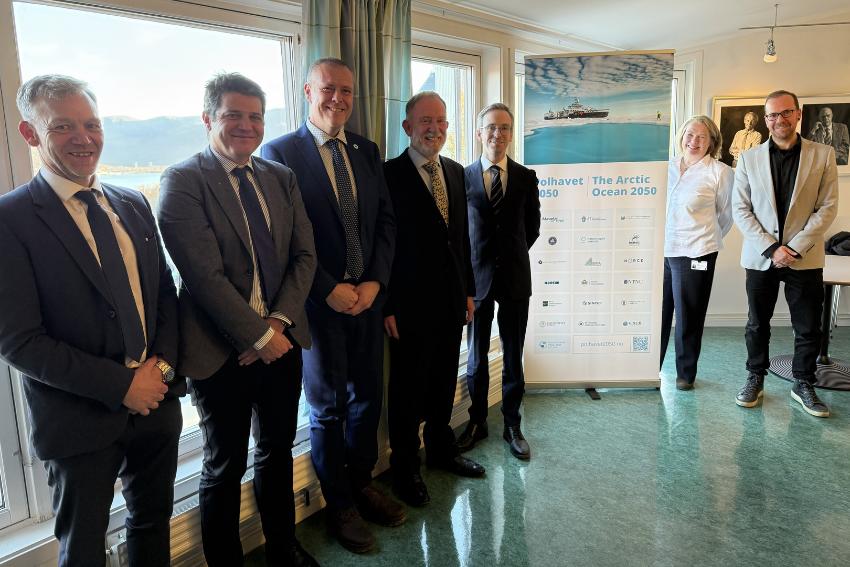
Expanding the scope for collaboration between UiT and the University of Cambridge
UiT and the Scott Polar Research Institute at the University of Cambridge have entered into an agreement aimed at strengthening polar research. It also opens up opportunities for new projects in technology development, energy security, sustainability, drones and aviation.
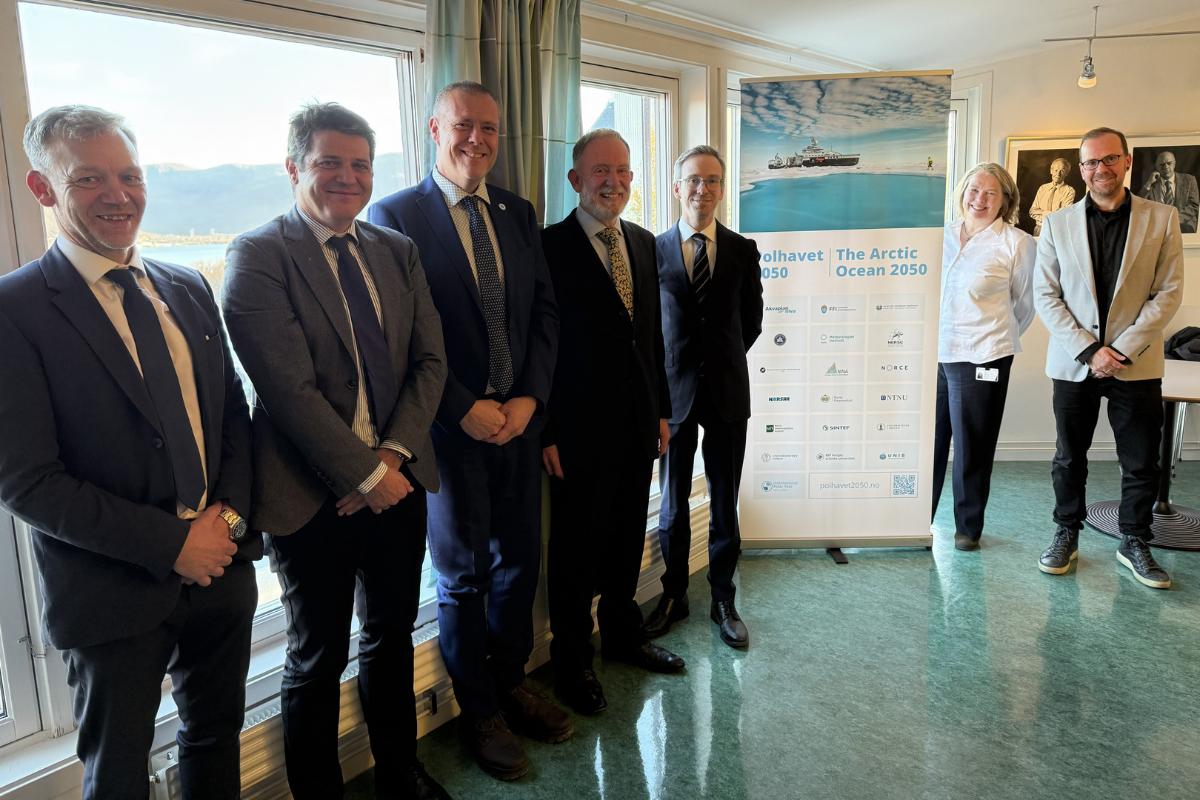

Like Norway, the United Kingdom has long traditions of both polar expeditions and polar research.
For UiT, this has provided an important foundation for building collaboration with the University of Cambridge, one of the UK’s leading academic institutions.
A recently signed memorandum of understanding (MoU) now opens up new opportunities for collaboration. It has been concluded between UiT and the Scott Polar Research Institute (SPRI) at the University of Cambridge.
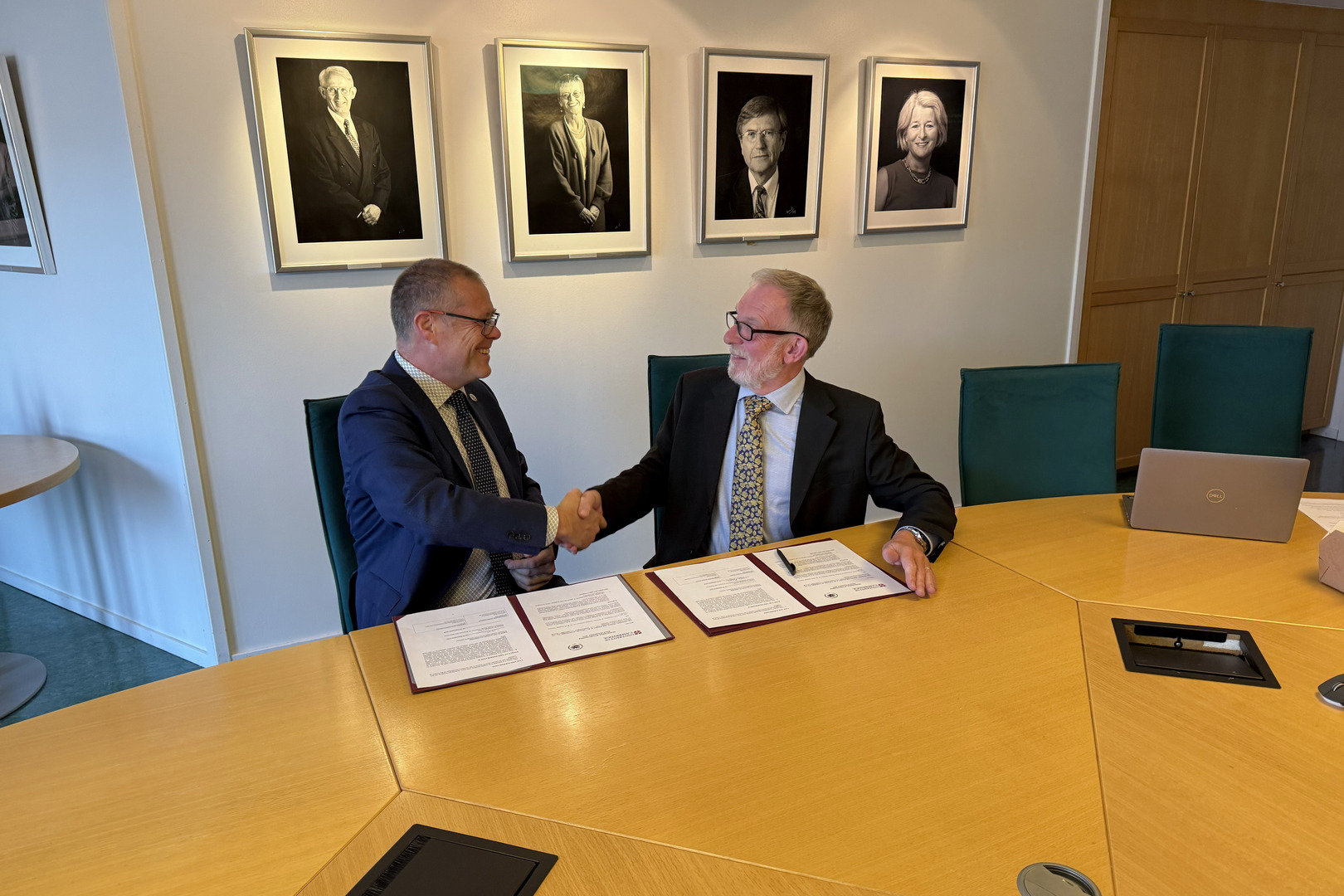
Strategically important collaboration
Jørgen Berge, Pro-Rector for Research and Innovation at UiT, believes that the agreement with SPRI provides an opportunity to build on a legacy in the history of science.
“Twenty-five years ago, the Cambridge research community was the hub of the International Polar Year, which was held in 2007–2008. As we now look ahead to the next International Polar Year in 2032–2033, Tromsø will take on the role that Cambridge had last time,” he says.
Berge considers the collaboration with Cambridge, led by the Scott Polar Research Institute, to be strategically important for UiT.
The University of Cambridge and the Scott Polar Research Institute (SPRI)
- The University of Cambridge was founded in 1209 and is among the world’s oldest and most prestigious universities.
- UiT has a close collaboration with the Scott Polar Research Institute (SPRI) at the University of Cambridge.
- SPRI was founded in 1920 in memory of the polar explorer Robert Falcon Scott and his four colleagues, who died during an expedition in Antarctica in 1912.
- SPRI has a world-renowned library and museum containing books, archives, photographs and collections relating to polar expeditions.
- The institute conducts research in natural sciences, social sciences, the humanities and the arts relevant to the Arctic and Antarctica.
- SPRI researchers specialise in climate change, ecology and the environment in the Arctic and Antarctica, satellite technology and Earth observation, Indigenous peoples, polar history, international law, governance and economics.
- The University of Cambridge also has extensive research capacity in aviation, including through the Aviation Impact Accelerator and the Whittle Laboratory.
- In addition, the University of Cambridge has strong research and innovation communities focused on sustainability and climate adaptation, brought together through the Cambridge Zero initiative.
“We are therefore pleased to be signing an agreement with SPRI. We want to view this in connection with both our role in IPY-5 and our role as leader of the major research programme Arctic Ocean 2050. Technology development, drones and aviation in particular are important areas of collaboration that we will continue to develop in the years ahead,” Berge emphasises.
Read more about UiT and IPY-5 here
Collaboration is an obvious choice
Professor Gareth Rees at SPRI believes that the agreement opens up many new opportunities.
“We are pleased to be able to sign the agreement. We have been working on this for two years. The great value of formalising our collaboration with UiT is that it lowers the threshold for building new relationships,” says Rees.
Rees expects the collaboration between the two universities to continue growing.
“It has enormous potential. UiT and Tromsø are very well known in the polar world. It is only natural that we should collaborate,” he adds.
Potential for greater impact
The new agreement builds on collaboration between UiT researchers and colleagues at SPRI dating back to the 1980s. The research collaboration includes aviation and drone technology, security studies, Arctic operations and Indigenous studies.
Bjørn-Morten Batalden, Dean of the Faculty of Science and Technology, points out that expanding the collaboration between UiT and the University of Cambridge could increase the chances of securing support for new projects.
“Our location and access to the Arctic, including our field stations and research vessels, are important resources for this collaboration. UiT also carries out full-scale flight operations in Northern Norway and uses drone technology that provides unique opportunities for data collection in the Arctic. Other important academic areas in which we complement one another include energy security and the green transition,” says Batalden.
He notes that the Arctic Centre for Sustainable Energy (ARC), together with UiT’s Faculty of Biosciences, Fisheries and Economics and Faculty of Science and Technology, can contribute important expertise in Arctic biomass, energy sources such as solar, wind and water, as well as energy storage.
“The agreement can provide a better basis for developing new research areas and launching pilot projects. Furthermore, the collaboration gives both universities better access to infrastructure and personnel,” Batalden concludes.
-
Fiskeri- og havbruksvitenskap - bachelor
Varighet: 3 År -
Fiskeri- og havbruksvitenskap - master
Varighet: 2 År -
Akvamedisin - master
Varighet: 5 År -
Bioteknologi - bachelor
Varighet: 3 År -
Arkeologi - master
Varighet: 2 År -
Musikkteknologi
Varighet: 1 År -
Peace and Conflict Transformation - master
Varighet: 2 År -
Computer Science - master
Varighet: 2 År -
Geosciences - master
Varighet: 2 År -
Biology - master
Varighet: 2 År -
Technology and Safety - master
Varighet: 2 År -
Physics - master
Varighet: 2 År -
Mathematical Sciences - master
Varighet: 2 År -
Computational chemistry - master
Varighet: 2 År -
Law of the Sea - master
Varighet: 3 Semestre -
Biologi - bachelor
Varighet: 3 År -
Nordisk - årsstudium
Varighet: 1 År -
Luftfartsfag - bachelor
Varighet: 3 År -
Pedagogikk - bachelor
Varighet: 3 År -
Arkeologi - bachelor
Varighet: 3 År -
Informatikk, datamaskinsystemer - bachelor
Varighet: 3 År -
Informatikk, sivilingeniør - master
Varighet: 5 År -
Likestilling og kjønn - årsstudium
Varighet: 1 År -
Historie - bachelor
Varighet: 3 År -
Geovitenskap- bachelor
Varighet: 3 År -
Samfunnssikkerhet - bachelor
Varighet: 3 År -
Automasjon, ingeniør - bachelor (ordinær, y-vei)
Varighet: 3 År -
Samfunnssikkerhet - master
Varighet: 2 År -
Kunst - bachelor
Varighet: 3 År -
Kunsthistorie - master
Varighet: 2 År -
Farmasi - master
Varighet: 2 År -
Religionsvitenskap - årsstudium
Varighet: 1 År -
Romfysikk, sivilingeniør - master
Varighet: 5 År -
Sosialantropologi - bachelor
Varighet: 3 År -
Bærekraftig teknologi, ingeniør - bachelor
Varighet: 3 År -
Forkurs for ingeniør- og sivilingeniørutdanning
Varighet: 1 År -
Historie - master
Varighet: 2 År -
Anvendt fysikk og matematikk, sivilingeniør - master
Varighet: 5 År -
Barnevernsarbeid - master
Varighet: 2 År -
Forfatterstudium 2 - årsstudium
Varighet: 1 År -
Fine Art - master
Varighet: 2 År -
Barnevern - bachelor
Varighet: 3 År -
Arctic Nature Guide - one year programme
Varighet: 1 År -
Sosialt arbeid - bachelor
Varighet: 3 År -
Arktisk friluftsliv og naturguiding - bachelor
Varighet: 3 År -
Arktisk friluftsliv - årsstudium
Varighet: 1 År -
Grunnskolelærerutdanning for 1.-7. trinn - master
Varighet: 5 År -
Kunsthistorie - årsstudium
Varighet: 1 År -
Governance and Entrepreneurship in Northern and Indigenous Areas - master
Varighet: 4 År -
Praktisk-pedagogisk utdanning for trinn 8-13 - årsstudium
Varighet: 2 År