A global effort to discover new answers about the Earth’s uncertain future
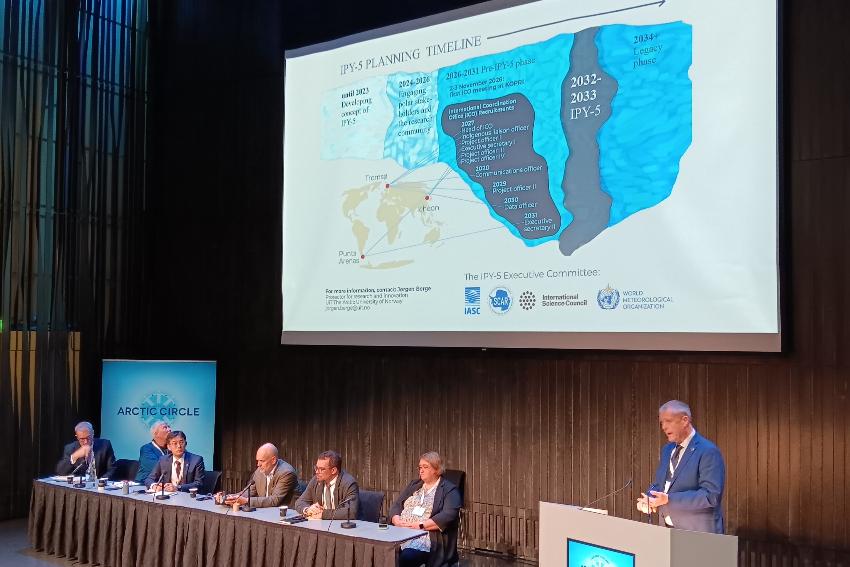
At the Arctic Circle Assembly in Iceland, UiT is presenting and discussing its plans for a global research effort examining the consequences of climate change in the polar regions. UiT will lead the secretariat for the Fifth International Polar Year in 2032–33.

UiT will play a key role in coordinating a global research effort to uncover how climate change in the Arctic and Antarctic affects the climate, society and future generations.
The melting of ice on both land and sea in the Arctic and Antarctic—which together account for 10 per cent of the Earth’s surface—will have a decisive impact on how the rest of the world is affected by climate change in the coming decades.
Climate change is already affecting sea-level rise, water security, food systems, biodiversity, infrastructure, economic development and human wellbeing.
However, the future consequences, and the risks and opportunities we face, remain largely unknown. Geopolitical tensions may make the situation even more complex.
Addressing this uncertainty through research-based knowledge is a task that researchers around the world will undertake during the Fifth International Polar Year 2032–33 (IPY-5).
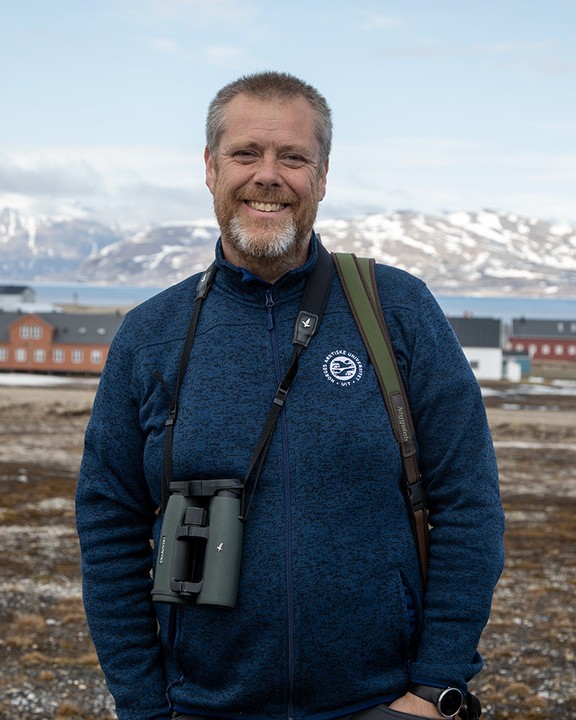
“The melting of the ice sheets in Greenland and Antarctica in particular has the potential to affect all life on Earth. The Fifth International Polar Year is now taking place just 25 years after the previous one. This reflects the importance of understanding how climate change is affecting ice melt—and, consequently, the entire planet,” says Jørgen Berge, Pro-Rector for Research and Innovation at UiT.
UiT in a leading role
The direction IPY-5 will take, and the main activities to be carried out, will be shaped largely by an international planning group. It comprises representatives of the scientific committees for research in the Arctic and Antarctic, respectively the International Arctic Science Committee (IASC) and the Scientific Committee on Antarctic Research (SCAR), the International Science Council (ISC) and the World Meteorological Organisation (WMO).
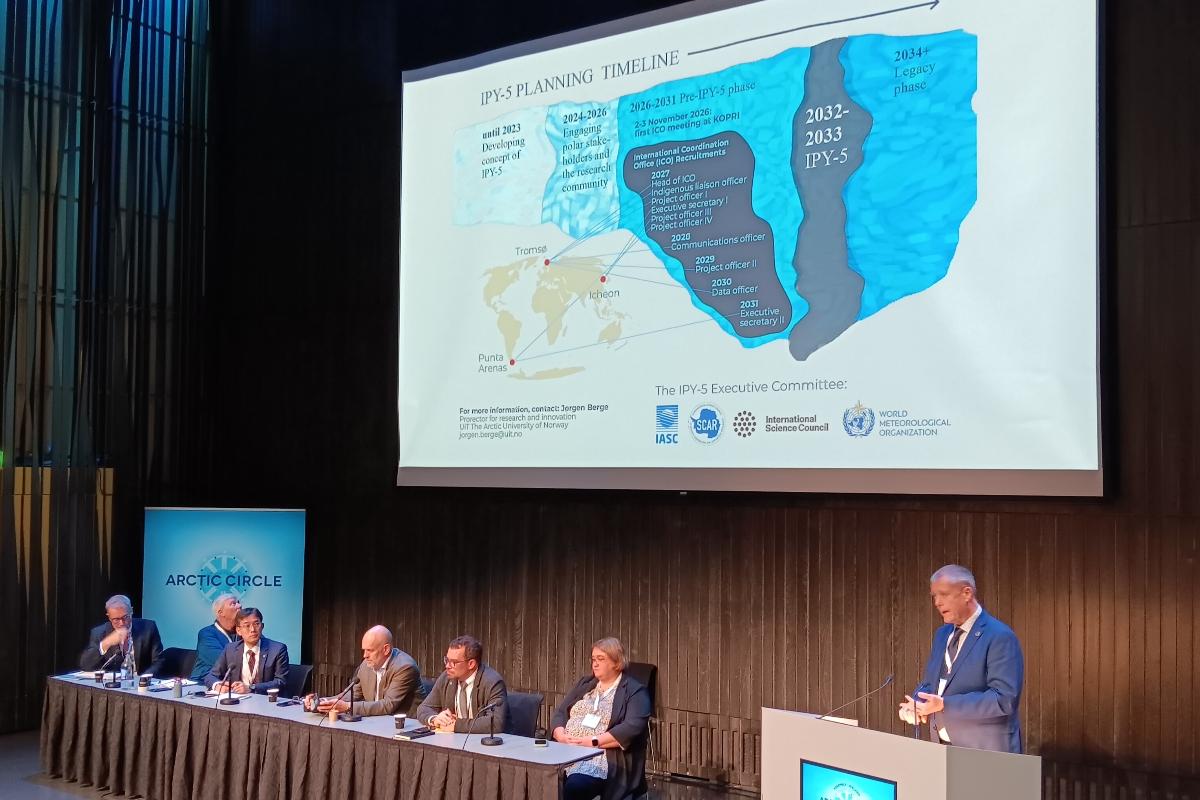
UiT has been given a central role by leading the International Coordination Office (ICO), the international secretariat for IPY-5. The secretariat’s main task is to support the planning and coordination of the full range of activities during the polar year. This includes research, education, outreach and engagement with society.
UiT will carry out this work in cooperation with the Korea Polar Research Institute (KOPRI) in South Korea, the Instituto Antártico Chileno (INACH) in Chile and the Norwegian Polar Institute (NP).
“We are delighted that the headquarters will be located in Tromsø—the world’s polar research capital. With the expertise we have built up in Tromsø and elsewhere in Norway, we believe that Norway is well equipped to take responsibility for coordinating the next polar year,” says Berge, who will lead the consortium behind the new coordinating IPY office.
During the Arctic Circle Assembly conference, which is being held in Iceland this week, the scope and objectives of IPY-5 were discussed during the panel discussion Building National Momentum for the International Polar Year, held on 8 October. In addition to Berge, representatives of the International Arctic Science Committee (IASC), the Natural Environment Research Council (NERC), the Norwegian Polar Institute, the Arctic Environmental Research Center and the Scientific Committee on Antarctic Research (SCAR) were also present.
The Fifth International Polar Year 2032–33 (IPY-5)
- The International Polar Year has been held four times since 1882.
- It has been organised under the auspices of leading international scientific organisations and other global bodies.
- The previous polar year took place in 2007–08.
- UiT will lead the secretariat for the Fifth International Polar Year.
- UiT will do so in cooperation with the Korea Polar Research Institute (KOPRI) in South Korea, the Instituto Antártico Chileno (INACH) in Chile and the Norwegian Polar Institute (NP).
- The ICO has a total budget of more than NOK 100 million.
- UiT will provide 80 per cent of the secretariat’s funding, while KOPRI and INACH will each contribute 10 per cent.
Expanding objectives and tasks
The previous polar year, which lasted from 2007 to 2008, comprised 250 international projects. Researchers from 63 countries collected large amounts of data on changes in the natural environment in both the Arctic and Antarctic.
During the forthcoming polar year, both the objectives and the tasks of the research programme will be expanded. This time, researchers will also help to improve our understanding of how we can prepare for climate change and create resilient societies.
IPY-5 will strengthen humanity’s ability to anticipate, understand and respond to rapid changes in the Earth’s systems, for the benefit of future generations.
“UiT will contribute across a wide range of areas during IPY-5, both through the specialist expertise of several of our research groups and through the unique breadth and position we have as Norway’s Arctic university,” Berge emphasises.
What the IPY-5 secretariat does
- Coordinates participating countries, research organisations and partners.
- Supports the development of objectives, governance structures and scientific priorities for IPY-5.
- Facilitates cooperation with Indigenous peoples and local communities.
- Takes responsibility for communications, meetings, outreach and information-sharing.
- Helps connect research with decision-makers and international bodies.
- Prepares the implementation of activities related to IPY-5.
The previous polar year also placed an emphasis on cooperation with Indigenous peoples in the Arctic. This aspect of the research effort will be strengthened during the forthcoming polar year. UiT can help ensure that research on Indigenous issues, traditional knowledge, and Indigenous observations and experiences are integrated into the International Polar Year.
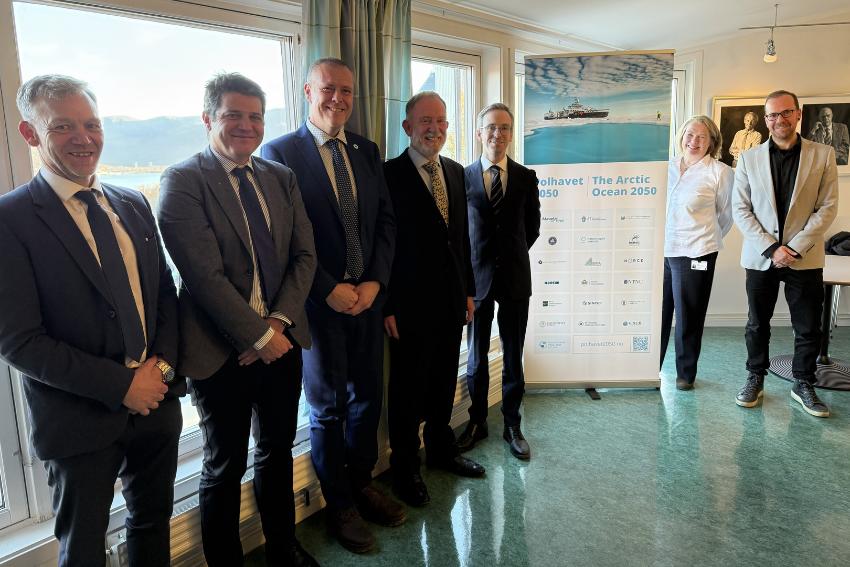
UiT can also contribute expertise and research resources to IPY-5 through the research programme Arctic Ocean 2050, which brings together 400 researchers from 18 Norwegian institutions.
By building on strong partnerships, researchers contributing to IPY-5 will be able to join an interdisciplinary community in which knowledge-sharing, the use of new technology and diverse knowledge systems are at the centre.
-
Fiskeri- og havbruksvitenskap - bachelor
Varighet: 3 År -
Fiskeri- og havbruksvitenskap - master
Varighet: 2 År -
Akvamedisin - master
Varighet: 5 År -
Bioteknologi - bachelor
Varighet: 3 År -
Arkeologi - master
Varighet: 2 År -
Geosciences - master
Varighet: 2 År -
Biology - master
Varighet: 2 År -
Physics - master
Varighet: 2 År -
Mathematical Sciences - master
Varighet: 2 År -
Biomedicine - master
Varighet: 2 År -
Computational chemistry - master
Varighet: 2 År -
Biologi - bachelor
Varighet: 3 År -
Medisin profesjonsstudium
Varighet: 6 År -
Luftfartsfag - bachelor
Varighet: 3 År -
Informatikk, datamaskinsystemer - bachelor
Varighet: 3 År -
Informatikk, sivilingeniør - master
Varighet: 5 År -
Geovitenskap- bachelor
Varighet: 3 År -
Biomedisin - bachelor
Varighet: 3 År -
Matematikk - årsstudium
Varighet: 1 År -
Ergoterapi - bachelor
Varighet: 3 År -
Fysioterapi - bachelor
Varighet: 3 År -
Radiografi - bachelor
Varighet: 3 År -
Farmasi - bachelor
Varighet: 3 År -
Farmasi - master
Varighet: 2 År -
Romfysikk, sivilingeniør - master
Varighet: 5 År -
Bærekraftig teknologi, ingeniør - bachelor
Varighet: 3 År -
Odontologi - master
Varighet: 5 År -
Anvendt fysikk og matematikk, sivilingeniør - master
Varighet: 5 År -
Praktisk-pedagogisk utdanning for trinn 8-13 - årsstudium
Varighet: 2 År -
Internasjonal beredskap - bachelor
Varighet: 3 År -
Ernæring - bachelor
Varighet: 3 År -
Ph.d.-program i naturvitenskap
Varighet: 3 År -
PhD Programme in Natural Science
Varighet: 3 År -
PhD Programme in Science
Varighet: 3 År -
Lektor i realfag trinn 8-13 - master
Varighet: 5 År -
Kunstig intelligens, sivilingeniør - master
Varighet: 5 År -
Fysikk og matematikk - bachelor
Varighet: 3 År -
Nautikk - bachelor
Varighet: 3 År -
Medisin profesjonsstudium - forskerlinje
Varighet: 7 År -
Havteknologi, ingeniør - bachelor (ordinær, y-vei)
Varighet: 3 År -
Informatikk, datafag - bachelor
Varighet: 3 År -
Computer Science - master
Varighet: 4 År -
Fornybar energi, sivilingeniør - master
Varighet: 5 År -
Bærekraftig kjemi og innovasjon, sivilingeniør - master
Varighet: 5 År -
Marine Biotechnology and Biological Chemistry - master
Varighet: 2 År -
Peace and Conflict Transformation - master
Varighet: 2 År -
Technology and Safety - master
Varighet: 2 År -
Law of the Sea - master
Varighet: 3 Semestre -
Nordisk - årsstudium
Varighet: 1 År -
Pedagogikk - bachelor
Varighet: 3 År