Researching a fisheries agreement that runs against the current
Although multilateral cooperation is in decline, the world’s major powers remain in agreement on the following: commercial fishing in the central Arctic Ocean is prohibited until 2037. In the meantime, research is being conducted into the extent of life beneath the ice and how it is affected by climate change.

Conditions in the waters around the North Pole are very different from those in the coastal areas of the Arctic Ocean. The sea is colder, it is covered by ice for much of the year, and in many places it is nutrient-poor. This does not mean, however, that the area is devoid of life; rather, the basis for marine life is more limited.
Consequently, there is currently little commercial fishing in the central Arctic Ocean. At the same time, a warmer climate is causing the ice cover to retreat. This is changing the availability of nutrients and allowing species to move further north. The question is what will happen if fish stocks that have so far remained in the marginal zones one day become established further towards the North Pole.
The Central Arctic Ocean Fisheries Agreement (CAOFA) takes account of such a scenario. It was signed in 2018 by the five Arctic states—Canada, Denmark, Norway, Russia and the United States—the four non-Arctic states of China, Iceland, South Korea and Japan, and the European Union.
The agreement entered into force in 2021 and ensures that the parties will not permit commercial fishing in the central Arctic Ocean until there is a sufficient scientific basis for assessing the consequences. The agreement entails a fishing ban for at least 16 years. During this period, researchers will map species, stocks and ecosystems and investigate how climate change is affecting the area.
Legal solutions offer advantages
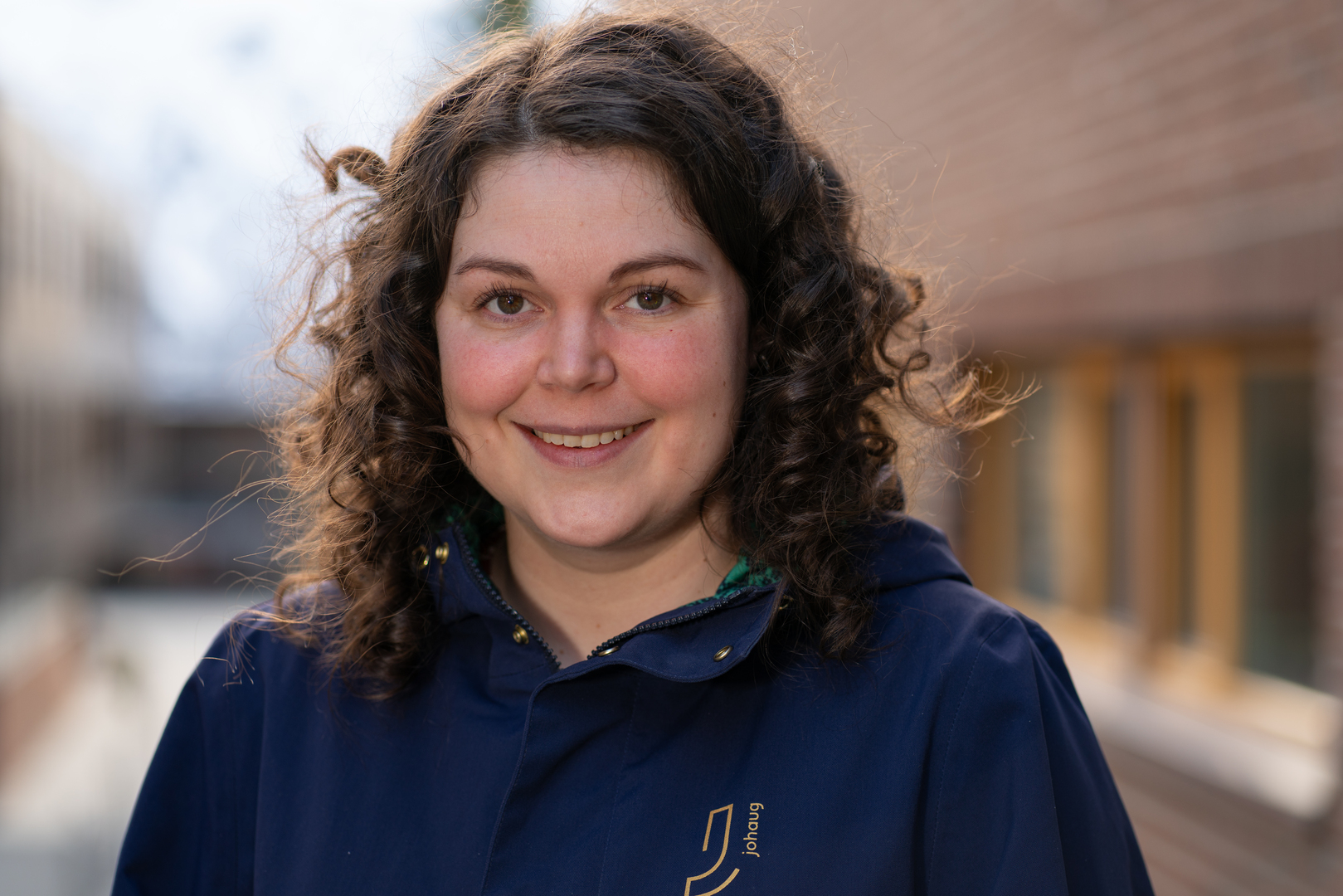
“ It is quite remarkable that countries such as the United States, China and Russia have signed such an agreement at a time when multilateral cooperation has been in decline,” emphasises Ingrid Solstad Andreassen, Vice-Dean at UiT’s Faculty of Law.
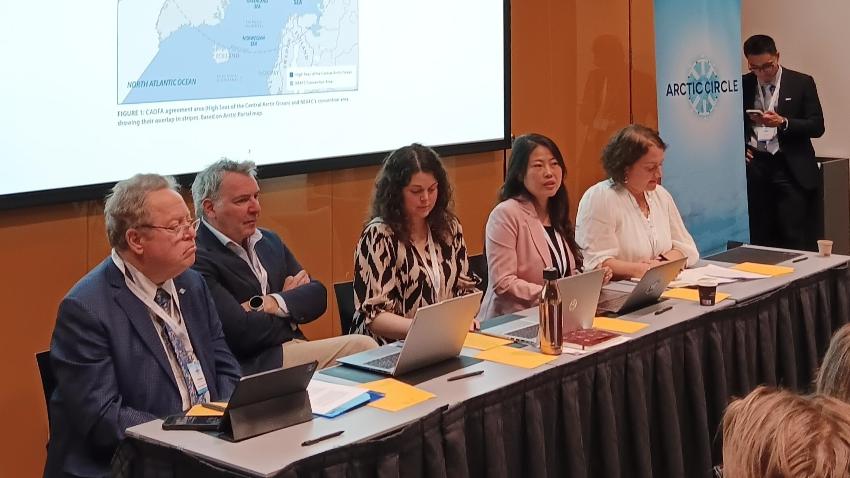
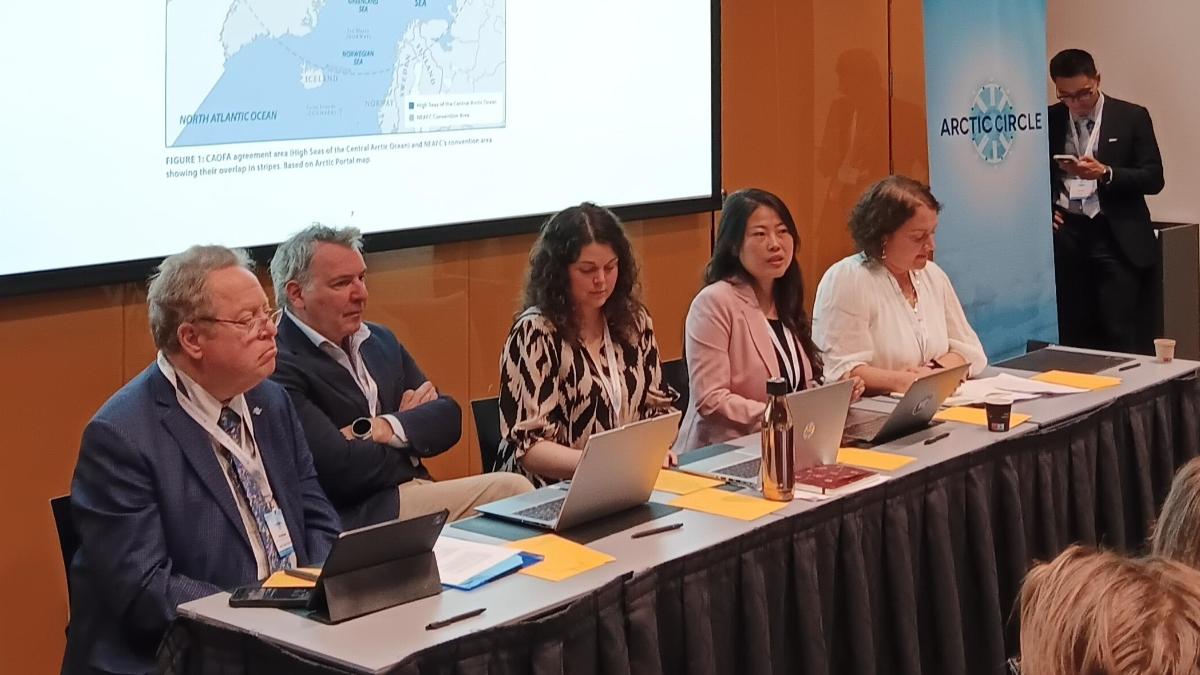
Recently, she and several colleagues from UiT took part in a panel discussion at the Arctic Circle Assembly in Iceland, where they discussed the way forward for CAOFA.
Andreassen believes that the agreement shows that states still see the value of diplomatic and legal solutions when their interests overlap.
“We can see that there is considerable interest in the Arctic, and that some parties consider it advantageous to be included in a legal framework. The agreement also allows other states to accede if they can argue that they have a legitimate interest in the area, or demonstrate that they conduct relevant activities there, for example in fisheries or research,” she says.
Non-Arctic states included for the first time
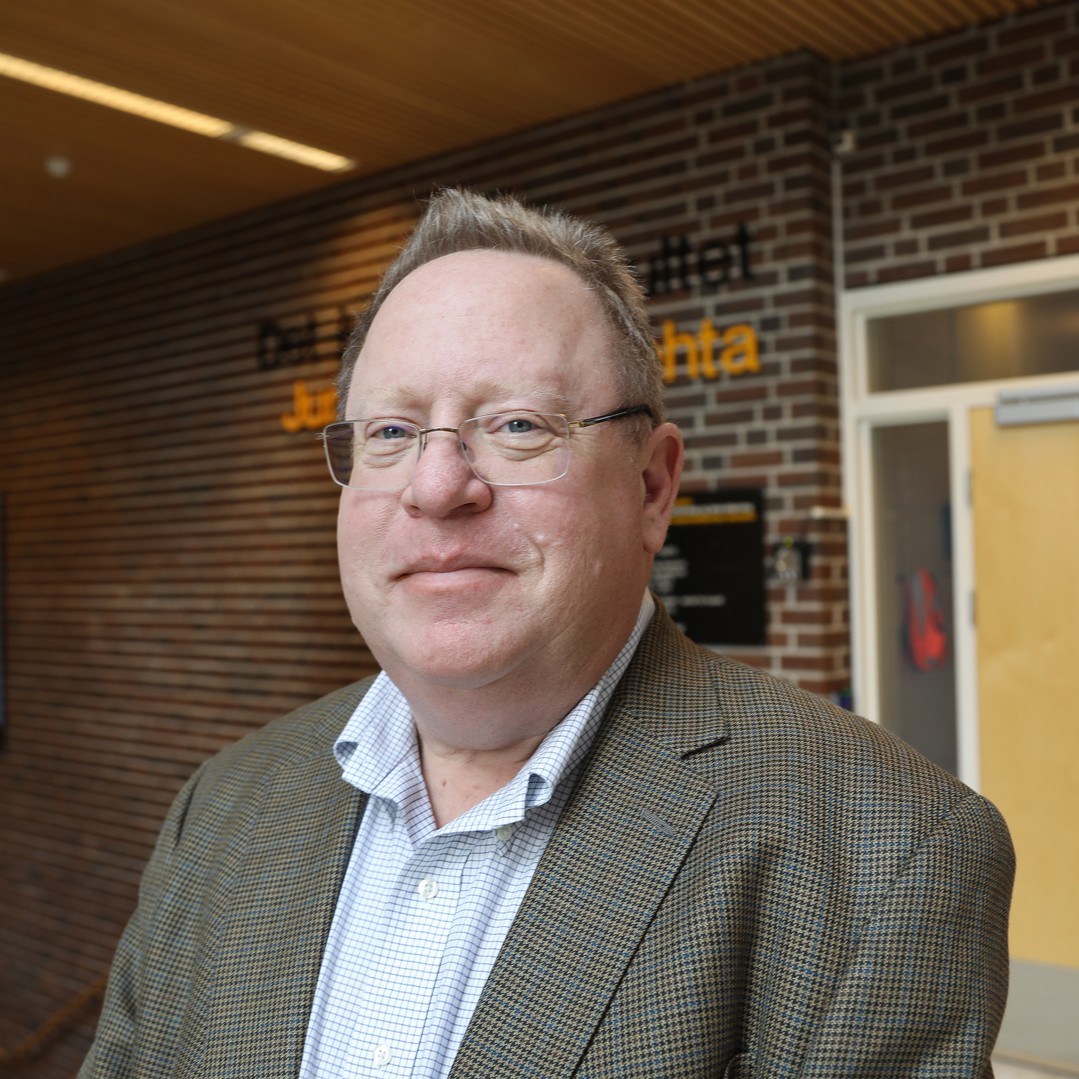
Evan Todd Bloom, Senior Adviser at UiT’s Centre for the Law of the Sea and the Arctic, agrees with his colleague Andreassen that the agreement stands out in today’s political climate.
“This agreement is the result of cooperation that works, unlike much of the other cooperation in the Arctic. It is the first time that non-Arctic states have been covered by an international agreement concerning the Arctic,” he says.
The agreement is based on the precautionary principle: before commercial fishing is permitted, research must provide a better understanding of which species are present, how they form part of the food chains, and how vulnerable the ecosystems are.
“As the Arctic gradually opens up, some of the more traditional diplomatic methods can be used. One of these is to base decisions on whether to commence fishing on research-based knowledge. This is why states with legitimate economic interests have also helped to finance and organise the gathering of knowledge,” Bloom points out.
Low risk of a race for resources
One challenge CAOFA may face in the future is that climate change could lead commercial interests to seek to exploit new fish stocks in the area.
“As soon as commercial fishing in the central Arctic Ocean becomes a possibility, it will be very difficult to argue that fishing should not take place there. In this respect, CAOFA could serve as a model for further cooperation. However, if this proves impossible, there are examples of other mechanisms that could be used to promote cooperation,” says Andreassen.
Bloom believes, however, that the agreement could reduce the risk of an unregulated race for new fisheries resources. He also rejects the idea that there are currently signs of major powers attempting to undermine the agreement.
“I believe the agreement reduces the risk of that happening. China, for example, is an active participant in research and decision-making processes relating to the further development of the agreement. I cannot see any signs that it is undermining the agreement or creating difficulties in this international maritime area,” he says.
Interdisciplinary research into the law of the sea
At UiT The Arctic University of Norway, researchers at the Norwegian Centre for the Law of the Sea (NCLOS) are preparing analyses of the extent to which CAOFA can be implemented in practice. They are also examining how the agreement can be adapted to the wider international regulatory framework for ocean and fisheries management. The work also forms part of a broader, interdisciplinary collaboration with researchers from other academic disciplines at UiT.
“We have a large number of researchers in the law of the sea and other fields working on issues including health, security and economic sustainability in the Arctic Ocean. UiT is a university that can offer leading expertise in these areas,” Bloom concludes.
-
Biologi - bachelor
Varighet: 3 År -
Rettsvitenskap - master
Varighet: 5 År -
Barnevern - bachelor
Varighet: 3 År -
Sosialt arbeid - bachelor
Varighet: 3 År -
Vernepleie - bachelor
Varighet: 3 År -
Barnevern - bachelor
Varighet: 3 År -
Vernepleie - bachelor
Varighet: 4 År -
Environmental Law - master
Varighet: 2 År -
Ph.d.-utdanning i rettsvitenskap
Varighet: 3 År -
Velferdsendring - erfaringsbasert master
Varighet: 4 År -
PhD Programme in Law Studies
Varighet: 3 År -
Ocean Leadership - Executive master
Varighet: 3 År -
Contemporary Risk and Crisis Management - master
Varighet: 2 År -
Sosialt arbeid - bachelor
Varighet: 3 År -
Arkeologi - master
Varighet: 2 År -
Peace and Conflict Transformation - master
Varighet: 2 År -
Geosciences - master
Varighet: 2 År -
Biology - master
Varighet: 2 År -
Technology and Safety - master
Varighet: 2 År -
Law of the Sea - master
Varighet: 3 Semestre -
Nordisk - årsstudium
Varighet: 1 År -
Luftfartsfag - bachelor
Varighet: 3 År -
Pedagogikk - bachelor
Varighet: 3 År -
Arkeologi - bachelor
Varighet: 3 År -
Likestilling og kjønn - årsstudium
Varighet: 1 År -
Historie - bachelor
Varighet: 3 År -
Geovitenskap- bachelor
Varighet: 3 År -
Samfunnssikkerhet - bachelor
Varighet: 3 År -
Samfunnssikkerhet - master
Varighet: 2 År -
Kunst - bachelor
Varighet: 3 År -
Kunsthistorie - master
Varighet: 2 År -
Religionsvitenskap - årsstudium
Varighet: 1 År -
Romfysikk, sivilingeniør - master
Varighet: 5 År -
Sosialantropologi - bachelor
Varighet: 3 År -
Historie - master
Varighet: 2 År -
Anvendt fysikk og matematikk, sivilingeniør - master
Varighet: 5 År -
Barnevernsarbeid - master
Varighet: 2 År -
Forfatterstudium 2 - årsstudium
Varighet: 1 År -
Fine Art - master
Varighet: 2 År -
Arctic Nature Guide - one year programme
Varighet: 1 År -
Arktisk friluftsliv og naturguiding - bachelor
Varighet: 3 År -
Arktisk friluftsliv - årsstudium
Varighet: 1 År -
Grunnskolelærerutdanning for 1.-7. trinn - master
Varighet: 5 År -
Kunsthistorie - årsstudium
Varighet: 1 År -
Governance and Entrepreneurship in Northern and Indigenous Areas - master
Varighet: 4 År -
Internasjonal beredskap - bachelor
Varighet: 3 År -
Landskapsarkitektur - master
Varighet: 5 År -
Grunnskolelærerutdanning for 5.-10. trinn - master
Varighet: 5 År -
Kvensk og finsk - bachelor
Varighet: 3 År -
Nordisk språk og litteratur - bachelor
Varighet: 3 År