First Arctic Ocean 2050 expedition on its way to the North Pole
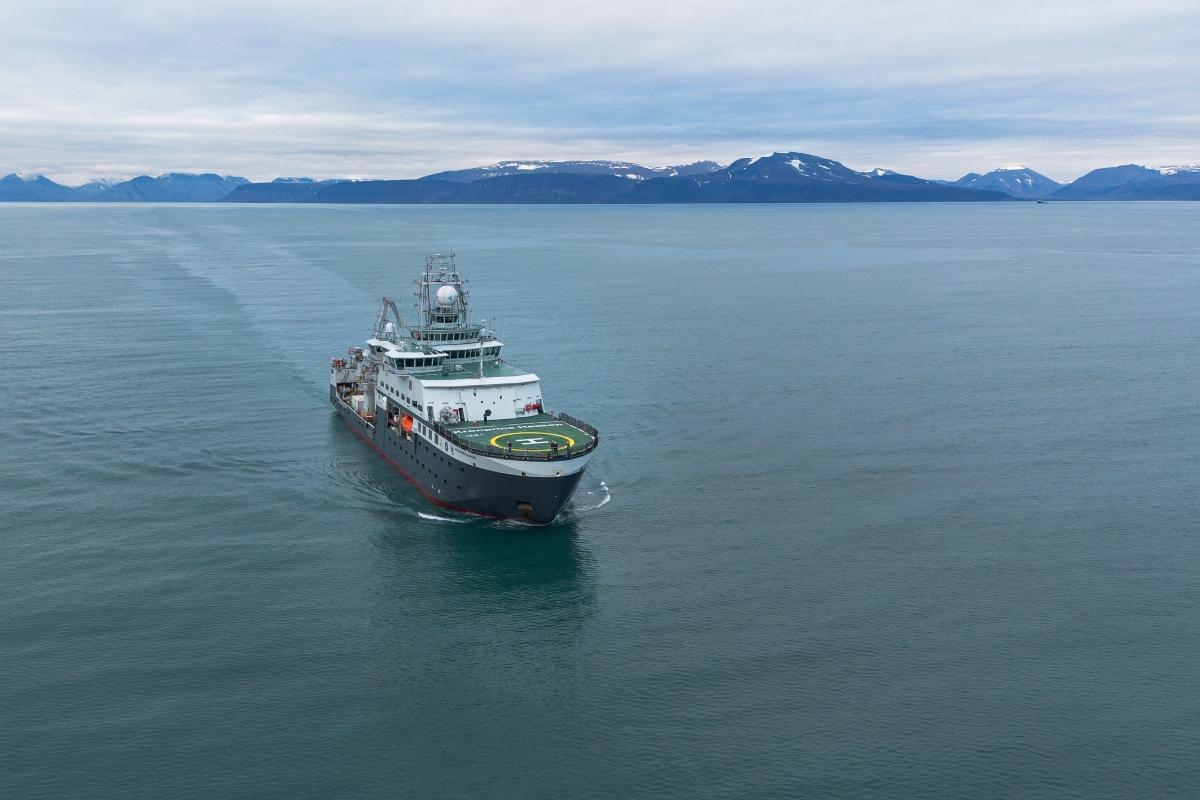
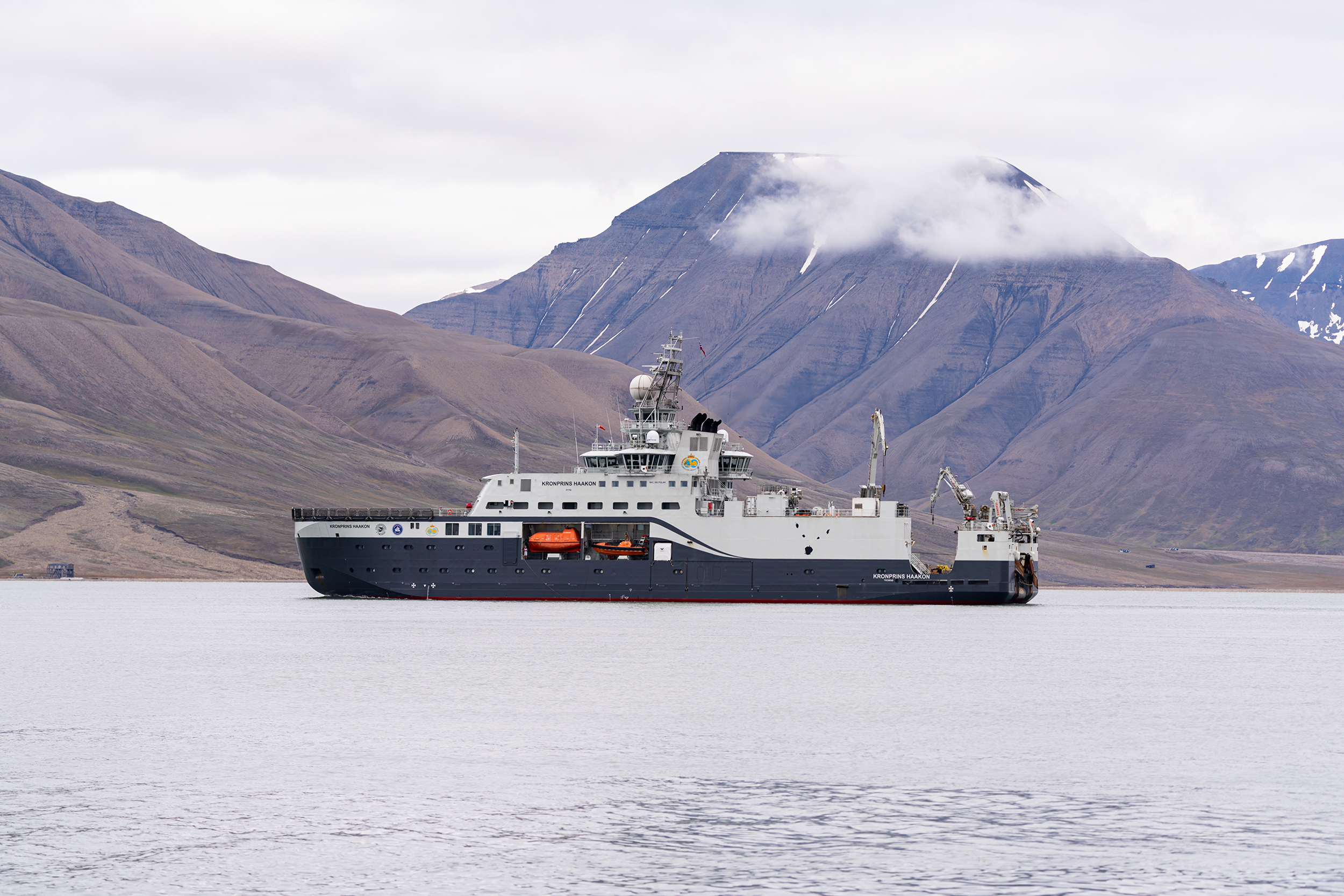
On 23 July, R/V Kronprins Haakon cast off from the coal quay in Longyearbyen. Around 30 researchers and 20 crew members will spend the next 50 days sailing towards the North Pole as part of the Polhavet 2050 research programme.
Satellite data show that the central Arctic Ocean is changing rapidly, from a white, ice-covered ocean to one that is increasingly blue and ice-free.
“The overall aim is to explain the consequences of the retreating ice, both in terms of biodiversity and future human activity,” says expedition leader Paul Dodd, who works as a researcher at the Norwegian Polar Institute.
As ocean areas open up, interest in exploiting resources that were previously inaccessible is also increasing. Warmer ocean currents may bring new Atlantic species northwards, while less sea ice may open up new shipping routes.
The Polhavet 2050 research programme brings together 18 Norwegian research institutions in a ten-year collaboration to generate new knowledge about a changing Arctic Ocean. The aim is to provide a better knowledge base for the future management of the Arctic.
“Timing is crucial. New international agreements on biodiversity in areas beyond national jurisdiction, and global targets to protect 30 per cent of the world’s oceans, require a robust scientific basis,” says Dodd.
The entire ecosystem to be investigated
A major task awaits the researchers and crew as the entire ecosystem is to be investigated. The expedition will travel further west than previous expeditions in order to collect physical, chemical and biological data that will provide new knowledge about the Arctic Ocean.
Five of the 30 researchers on board are from UiT, including the entire group working on sea-ice biology. The other researchers come from the Norwegian Polar Institute, the University of Bergen (UiB), the University of Oslo (UiO), the Norwegian University of Science and Technology (NTNU), and the University Centre in Svalbard (UNIS).
Among other things, the researchers will collect water samples, ice cores, sediment samples and plankton. Samples will be collected using both traditional methods, such as nets and trawls, and new technology, including autonomous samplers that gather data throughout the year, even when researchers cannot be present.
“We have traditionally studied the Arctic Ocean during the summer, but the major changes occur throughout the year. We therefore need measurements that monitor the ocean across all seasons,” explains Morven Muilwijk, a researcher at the Norwegian Polar Institute.
An important part of this year’s expedition is therefore to recover instrument moorings that have collected data continuously since 2024. At the same time, new moorings will be deployed so that the measurement series can continue in the coming years.
To understand changes in the ocean, it is necessary to look at long-term trends, rather than individual years, explains Anette Wold, chief engineer at the Norwegian Polar Institute and deputy expedition leader.
“To be able to say anything about change, we need to collect data over a long period. Individual years tell us little, but together they can provide a time series showing how the Arctic Ocean is actually developing.”
What life is really found at a depth of 4,000 metres?
The instruments will be lowered almost 4,000 metres to the seabed. There, the researchers will collect sediment samples to map which species live in the deep, how great the species diversity is, and how the ecosystem functions. Arunima Sen, an associate professor at UNIS, leads the work package on carbon cycling on the seabed.
“We want to understand the entire cycle, from food production at the ocean surface, via the seabed, and back into the ocean again,” says Sen.
When the sediment samples come on board, they initially look like ordinary mud. But once the sediment has been sieved away, the animals become visible. The researchers will also investigate how the seabed functions as a natural carbon store by measuring oxygen consumption in the sediment cores. This provides insight into how much carbon is stored in the seabed and how much is released back into the ocean.
Contributing to the International Polar Year in 2032
This summer’s expedition marks the start of the ten-year Polhavet 2050 research programme.
“This first expedition is broad and interdisciplinary. Over time, we will carry out more specialised expeditions that explore in greater depth the questions we uncover along the way,” says Dodd.
He stresses that Polhavet 2050 is also Norway’s contribution to a wider international research effort. The programme will provide new knowledge that will be important when researchers from around the world gather for the next International Polar Year in 2032–2033, and will contribute to a better understanding of a rapidly changing Arctic.
“The Arctic Ocean is not an isolated system. Global greenhouse-gas emissions, warmer Atlantic water and increasing human activity all affect developments in the Arctic. At the same time, changes in the Arctic Ocean affect the rest of the world through ocean circulation, freshwater input and climate,” Dodd concludes.
-
Fiskeri- og havbruksvitenskap - bachelor
Varighet: 3 År -
Fiskeri- og havbruksvitenskap - master
Varighet: 2 År -
Akvamedisin - master
Varighet: 5 År -
Bioteknologi - bachelor
Varighet: 3 År -
Arkeologi - master
Varighet: 2 År -
Peace and Conflict Transformation - master
Varighet: 2 År -
Geosciences - master
Varighet: 2 År -
Biology - master
Varighet: 2 År -
Technology and Safety - master
Varighet: 2 År -
Physics - master
Varighet: 2 År -
Mathematical Sciences - master
Varighet: 2 År -
Biomedicine - master
Varighet: 2 År -
Computational chemistry - master
Varighet: 2 År -
Law of the Sea - master
Varighet: 3 Semestre -
Biologi - bachelor
Varighet: 3 År -
Medisin profesjonsstudium
Varighet: 6 År -
Nordisk - årsstudium
Varighet: 1 År -
Luftfartsfag - bachelor
Varighet: 3 År -
Pedagogikk - bachelor
Varighet: 3 År -
Arkeologi - bachelor
Varighet: 3 År -
Informatikk, datamaskinsystemer - bachelor
Varighet: 3 År -
Informatikk, sivilingeniør - master
Varighet: 5 År -
Likestilling og kjønn - årsstudium
Varighet: 1 År -
Historie - bachelor
Varighet: 3 År -
Geovitenskap- bachelor
Varighet: 3 År -
Biomedisin - bachelor
Varighet: 3 År -
Samfunnssikkerhet - bachelor
Varighet: 3 År -
Matematikk - årsstudium
Varighet: 1 År -
Ergoterapi - bachelor
Varighet: 3 År -
Fysioterapi - bachelor
Varighet: 3 År -
Radiografi - bachelor
Varighet: 3 År -
Samfunnssikkerhet - master
Varighet: 2 År -
Kunst - bachelor
Varighet: 3 År -
Kunsthistorie - master
Varighet: 2 År -
Farmasi - bachelor
Varighet: 3 År -
Farmasi - master
Varighet: 2 År -
Religionsvitenskap - årsstudium
Varighet: 1 År -
Romfysikk, sivilingeniør - master
Varighet: 5 År -
Sosialantropologi - bachelor
Varighet: 3 År -
Bærekraftig teknologi, ingeniør - bachelor
Varighet: 3 År -
Historie - master
Varighet: 2 År -
Odontologi - master
Varighet: 5 År -
Filosofi - bachelor
Varighet: 3 År -
Anvendt fysikk og matematikk, sivilingeniør - master
Varighet: 5 År -
Barnevernsarbeid - master
Varighet: 2 År -
Forfatterstudium 2 - årsstudium
Varighet: 1 År -
Fine Art - master
Varighet: 2 År -
Barnevern - bachelor
Varighet: 3 År -
Arctic Nature Guide - one year programme
Varighet: 1 År -
Sosialt arbeid - bachelor
Varighet: 3 År