New study: AI can measure risk of getting breast cancer
How likely are you to develop breast cancer later in life?


This question may be answered by artificial intelligence (AI) in the future.
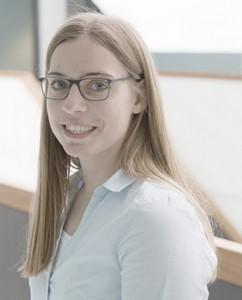
This is shown by Solveig Thrun’s research. She is a doctoral researcher at SFI Visual Intelligence, an AI centre at UiT.
She has developed an AI model to measure the risk of getting breast cancer within 1 to 5 years.
Thrun believes it could become a valuable tool in the battle against breast cancer.
“Better chance to get healthy again”
Every year, around 5000 women in Norway develop breast cancer, which is one the most common types of cancer in and outside of Norway.
Although the cancer is often detected early, it is sometimes diagnosed too late. At worst, it may have spread to other parts of the body, such as the brain, lymph nodes, the lungs, or bones.
The AI model could help doctors detect more cases of breast cancer earlier.
“The earlier the cancer is detected, the faster the patients can get the treatment they need,” says Thrun.
“Then they have a better chance of getting healthy again,” she adds.
Shorter waiting time for high-risk patients
The goal is to develop AI which can be used in BreastScreen Norway, which offers all women in Norway aged 50 to 69 the opportunity to undergo mammography: an X-ray examination of the breasts.
Then they are invited to new examinations every other year, regardless of how high or low their risk of getting breast cancer is.
The screening programme is not very personalized. This can be a disadvantage for women with the highest risk.
“Some women might have a risk of getting cancer within a year after the examination. If they return two years later for their next screening, the cancer may have developed and worsened,” Thrun explains.
With the AI model, the follow-up examinations can be tailored to the patient based on their risk level.
“This could lead to shorter follow-up intervals for women at high risk,” says Thrun.
The earlier the cancer is detected, the faster the patients can get the treatment they need. Then they have a better chance of getting healthy again
Fewer unnecessary screenings
The model could also help women at low risk get screened less frequently. This could mean that they do not have to undergo as many examinations.
"If a woman is invited for screening every third year instead of every second year, she is exposed to less X-ray radiation. It is also reassuring to know that you don't have to be screened as often," she says.
The model can analyze the images in just a few seconds. Thrun says this could give doctors more time to help patients.
"This means healthcare professionals can spend more time following up and treating women with the highest risk," she says.
"Thinks" like a radiologist
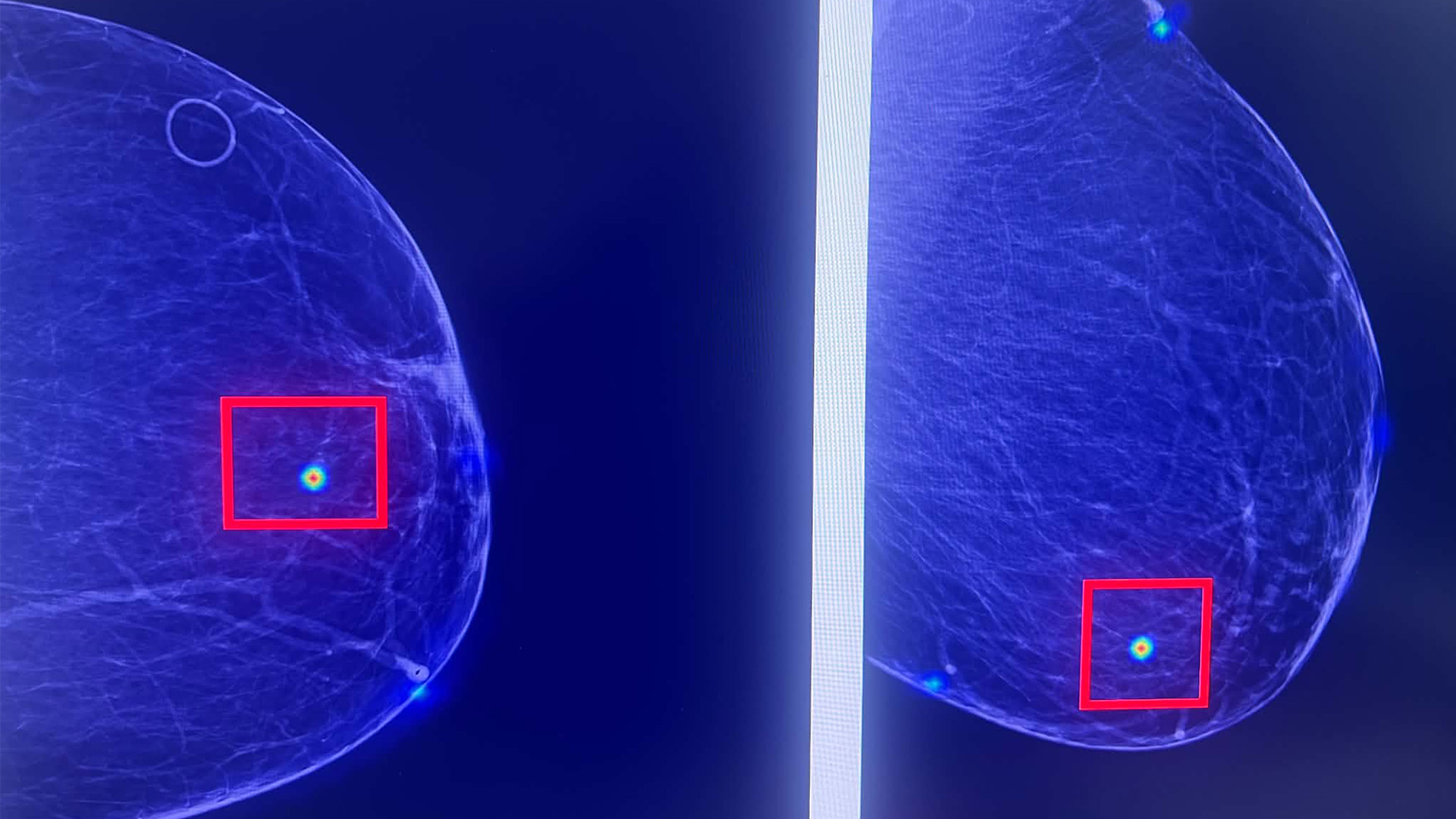
The AI model is trained on thousands of X-ray images of breasts. This way, it knows how the breasts look and what could be potential signs of breast cancer.
It measures the risk by comparing X-ray images from previous examinations with images from the most recent screening.
This allows it to detect how the breast tissue has changed – similarly to how doctors do.
"The AI model knows what to look for. In many ways, it imitates how radiologists work in practice," she says.
Cancer Registry of Norway: "Very promising"
The project is a collaboration with the Cancer Registry of Norway at the Norwegian Institute of Public Health (NIPH), which heads BreastScreen Norway.
Solveig Hofvind, head of BreastScreen Norway and adjunct professor in radiography at UiT, believes Thrun's research is very promising.
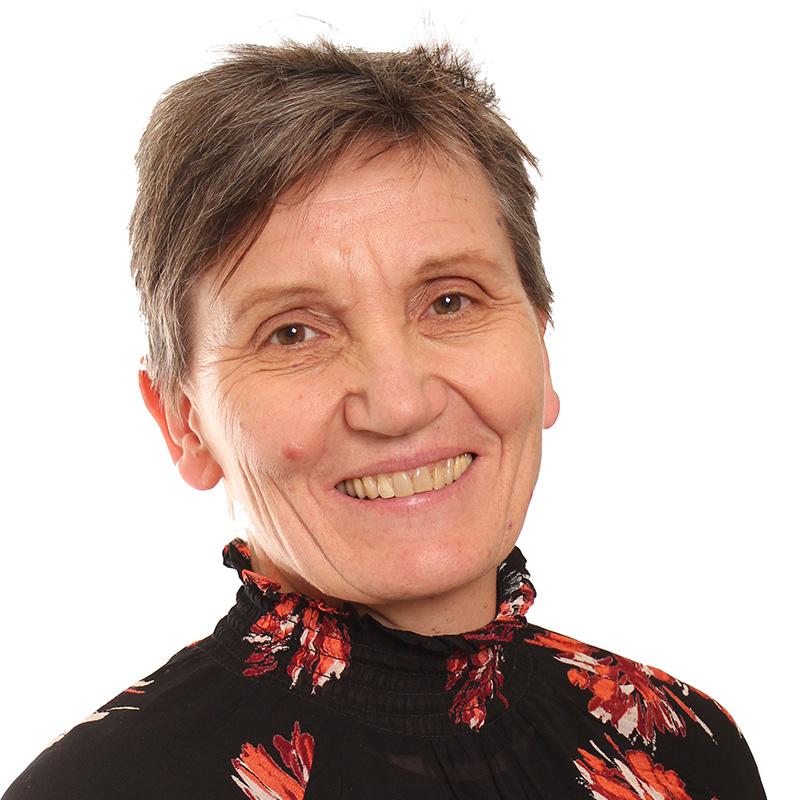
"It will be very exciting to follow this research," says Hofvind.
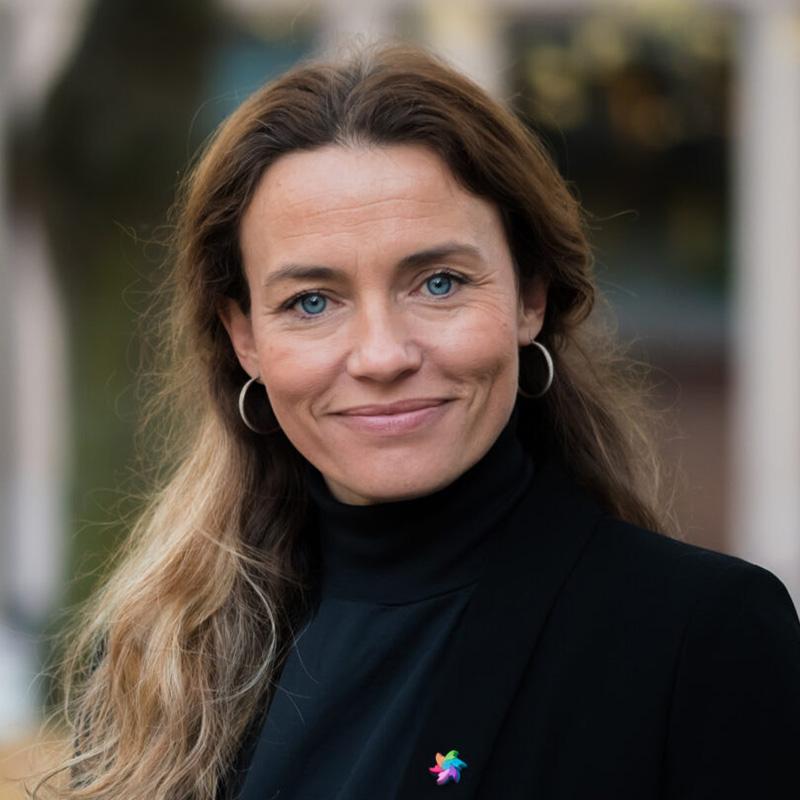
Ingrid Stenstadvold Ross, general secretary at The Norwegian Cancer Society, believes AI and this type of research will be more meaningful in the future.
"AI will without a doubt be an important tool for diagnosing cancer," says Stenstadvold Ross.
Thorough testing is important
Hofvind and Stenstadvold Ross say that there is still a long way to go before these models can be put into use.
This is to ensure that they are properly tested and fulfill strict health, environment, and safety requirements.
"We need to be absolutely sure that AI models provide women with a service that is at least as good as, or better than, what is currently offered. They must also be CE-marked before they can be used in BreastScreen Norway," Hofvind explains.
"The technology is developing rapidly. There is a significant need for thorough testing before implementation and continuous evaluation after AI models are put into use," says Stenstadvold Ross.
Will not replace doctors
Many people are worried that AI will take over doctors' jobs. Could Thrun's model eventually replace healthcare professionals?
Not at all, says the researcher.
"The point of the model is to help doctors. Just like humans, AI can also make mistakes," says Thrun.
"There will always be a need for doctors who can examine and assess the X-ray images", she says.
"AI is meant to be a tool that makes breast cancer screening better and safer, not a shortcut that goes on the expense of its quality," says Ingrid Stenstadvold Ross.
Thrun's research is published as an article for the research conference MICCAI 2026.
The point of the model is to help doctors. Like humans, AI can also make mistakes. There will always be a need for doctors who can examine and assess the X-ray images
Sources:
Solveig Thrun, et.al: Reconsidering Explicit Longitudinal Mammography Alignment for Enhanced Breast Cancer Risk Prediction. 28th International Conference on Medical Image Computing and Computer-Assisted Intervention (MICCAI 2025), 2025.
Solveig Thrun, et.al: Longitudinal Multi-View Breast Cancer Risk Prediction. 29th International Conference on Medical Image Computing and Computer-Assisted Intervention (MICCAI 2026), 2026.
Zijun Sun, et.al: From Exams to Trajectories: Neural Controlled Differential Equations for Longitudinal Mammography Vision-Language Pretraining. 29th International Conference on Medical Image Computing and Computer-Assisted Intervention (MICCAI 2026), 2026.
About SFI Visual Intelligence
- A centre for research-based innovation (SFI) that aims to devlop new deep learning methods for extracting important information from different and complex image data.
- The centre aims to develop better AI tools, for example to detect heart diseases and cancers, surveil and detect natural resources, and monitoring the environment, climate, and potential natural disasters.
- The centre has an interdisciplinary approach. Methodologies developed for a particular research area can be often be applied to other disciplinary areas.
- The centre's research partners are UiT – The Arctic University of Norway, the University of Oslo, and the Norwegian Computing Center.
- The centre also consists of a consortium of user partners, such as the University Hospital of Northern Norway, the Cancer Registry of Norway, Equinor, Institute of Marine Research, GE Vingmed Ultrasound, Kongsberg Satellite Services, and Aker BP.
- Visual Intelligence is one of two SFI centres at UiT. The other one is Dsolve.
Read more about Visual Intelligence here.
-
Fiskeri- og havbruksvitenskap - bachelor
Varighet: 3 År -
Fiskeri- og havbruksvitenskap - master
Varighet: 2 År -
Akvamedisin - master
Varighet: 5 År -
Bioteknologi - bachelor
Varighet: 3 År -
Arkeologi - master
Varighet: 2 År -
Musikkteknologi
Varighet: 1 År -
Computer Science - master
Varighet: 2 År -
Geosciences - master
Varighet: 2 År -
Technology and Safety - master
Varighet: 2 År -
Physics - master
Varighet: 2 År -
Mathematical Sciences - master
Varighet: 2 År -
Computational chemistry - master
Varighet: 2 År -
Luftfartsfag - bachelor
Varighet: 3 År -
Arkeologi - bachelor
Varighet: 3 År -
Informatikk, datamaskinsystemer - bachelor
Varighet: 3 År -
Informatikk, sivilingeniør - master
Varighet: 5 År -
Geovitenskap- bachelor
Varighet: 3 År -
Samfunnssikkerhet - bachelor
Varighet: 3 År -
Automasjon, ingeniør - bachelor (ordinær, y-vei)
Varighet: 3 År -
Samfunnssikkerhet - master
Varighet: 2 År -
Farmasi - master
Varighet: 2 År -
Romfysikk, sivilingeniør - master
Varighet: 5 År -
Bærekraftig teknologi, ingeniør - bachelor
Varighet: 3 År -
Forkurs for ingeniør- og sivilingeniørutdanning
Varighet: 1 År -
Anvendt fysikk og matematikk, sivilingeniør - master
Varighet: 5 År -
Praktisk-pedagogisk utdanning for trinn 8-13 - årsstudium
Varighet: 2 År -
Internasjonal beredskap - bachelor
Varighet: 3 År -
Datateknikk, ingeniør - bachelor (y-vei)
Varighet: 3 År -
Droneteknologi, ingeniør - bachelor
Varighet: 3 År -
Bygg, ingeniør - bachelor
Varighet: 3 År -
Bygg, ingeniør - bachelor
Varighet: 3 År -
Bygg, ingeniør - bachelor (y-vei)
Varighet: 3 År -
Datateknikk, ingeniør - bachelor
Varighet: 3 År -
Datateknikk, ingeniør - bachelor
Varighet: 3 År -
Elkraftteknikk, ingeniør - bachelor
Varighet: 3 År -
Elektronikk, ingeniør - bachelor
Varighet: 3 År -
Elektronikk, ingeniør - bachelor (y-vei)
Varighet: 3 År -
Maskin, ingeniør - bachelor
Varighet: 3 År -
Maskin, ingeniør - bachelor
Varighet: 3 År -
Maskin, ingeniør - bachelor (y-vei)
Varighet: 3 År -
Satellitteknologi, ingeniør - bachelor
Varighet: 3 År -
Satellitteknologi, ingeniør - bachelor (y-vei)
Varighet: 3 År -
Applied Computer Science - Master
Varighet: 2 År -
Electrical Engineering - master
Varighet: 2 År -
Engineering Design - Master
Varighet: 2 År -
Industrial Engineering - Master
Varighet: 2 År -
Aerospace Engineering - master
Varighet: 2 År -
Bygg og miljø, sivilingeniør - master
Varighet: 2 År -
Bibliotek- og dokumentasjonsvitenskap - årsstudium
Varighet: 1 År -
Datateknikk - videreutdanning
Varighet: 1 År