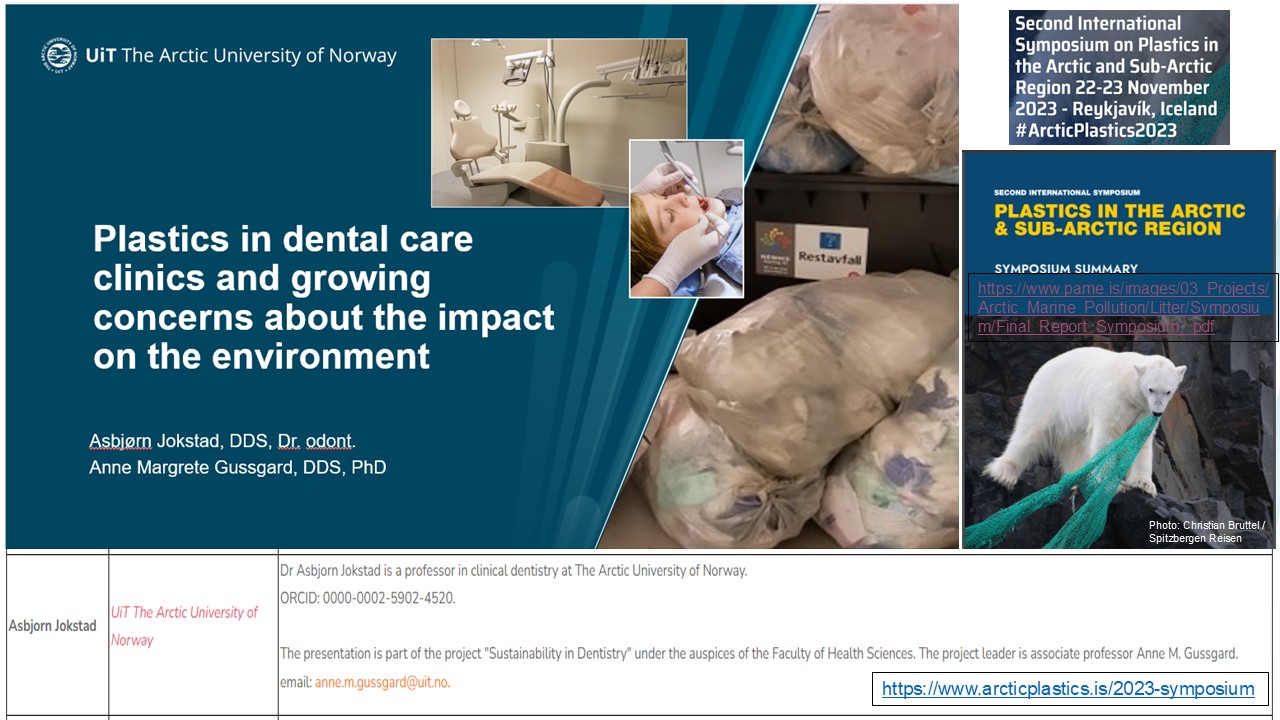
Lecture at the Second International Symposium on Plastics in the Arctic and Sub-Arctic Region
Abstract
Background: Oral care professionals use large quantities of plastics for multiple purposes. There is a growing concern about the environmental impact. One aspect that came into focus in the past years is that while clinics have always generated large quantities of plastic waste, the amount was inflated during the covid pandemic caused by increased employment of personal protection equipment, plastic film coverages and single-use devices made from plastics. Mitigation strategies must address better practices, reuse of devices, recycling, and better waste handling. A second aspect is that the environmental impact of the increasing use of resin-based composites (RBCs) as restorative materials has received little attention. Emerging data suggest RBCs have higher global warming potential than alternative restorative materials. Best practices are therefore required for handling technique-sensitive RBCs with short shelf-life and sustainable management to avoid material waste. Materials and methods: Two investigators independently searched the scientific literature and media to identify publications on environmental aspects of plastics used in the oral care health sector. The scientific papers were critically appraised to estimate the quantity and best practices for waste management, reducing microplastic aerosol generation during material handling and minimising the wear and degradation of RBC restorations intraorally. Results: Data were extracted from 32 scientific articles about plastic pollution in dental clinics. Earlier findings concerning levels of estrogenic xenobiotics leakage of bisphenol-A residues from RBCs have not been reconfirmed. New products promoted as “dental nanocomposites” show acceptable occupational and patient risk profiles, but environmental aspects remain undocumented. Dust and aerosols generated from grinding devices made from certain plastics remain an occupational hazard for dental personnel and require special measures regarding ventilation. Conclusion: Plastics use in the dental care sector is high, with a largely unknown environmental impact. Our understanding of effective mitigation strategies to minimise pollution is currently limited.
When: 23.11.23 at 09.20–00.00
Where:
Reykjavik, Iceland
Location / Campus: Tromsø
Target group: Students, Guests, Invited, Unit, Employees