
– Urfolksmasteren ble en døråpner inn i et nytt fagfelt for meg
Eli-Anita Øivand Schøning
Read the interview
Why do Indigenous peoples share historical and contemporary experiences across the globe, despite their diversity? How does colonisation and decolonisation illuminate both particularities and commonalities of Indigenous peoples’ relations to states and majority societies? Our master’s programme in Indigenous Studies provides a multidisciplinary approach to understanding Indigenous issues. Designed to develop academic and practical skills, enhance critical thinking, and build knowledge, this program prepares students to fill an important role in an increasingly globalised world. We welcome students from both Indigenous and non-Indigenous backgrounds, creating an exciting cross-cultural teaching and learning environment.
Students who have successfully completed the MIS programme, are expected to have achieved the following learning outcomes:
Knowledge
Advanced knowledge of:
Skills
Capacity to:
General competence
Ability to:
– Urfolksmasteren ble en døråpner inn i et nytt fagfelt for meg
Eli-Anita Øivand Schøning
Read the interview


The Master's programme in Indigenous Studies introduces students to Indigenous Studies as a distinctly multidisciplinary field. The objectives of the programme include:
Possible propects
Our graduates thrive in work fields that require understanding of global and local Indigenous issues, international experiences as well as analytical thinking, communication, and project implementation skills. The Master’s programme prepares students for exciting careers in multiple academic, public and business environments. Job opportunities include:
Academic Careers
The Master's programme provides an excellent foundation for pursuing a PhD in relevant fields, such as Political Science and Governance, Anthropology, Environment and Development Studies, Language, Cultural and Religious Studies, and Education, to name just a few. Many of our graduates were successful in attaining competitive PhD positions and research fellowships.
Professional Careers
As a graduate from the Master in Indigenous Studies, you would gain general conceptual, critical and evaluative skills which are required in many senior jobs in the government and public sectors, civil society organizations, project management and education institutions. The skills to analyze public policy, plans and development projects make our graduates highly qualified candidates for working both in the public and private sectors at all levels, providing institutions and organizations with knowledge, critical thinking and advice in a wide range of processes.
The international nature of the programme connects our students in a global network that helps them develop a global outlook and competence to make high-level critical comparisons of Indigenous realities on the ground. As a graduate from the Master in Indigenous Studies your in-depth analyses of Indigenous peoples own experiences locally, nationally and internationally could be of critical importance for Indigenous and marginalized communities worldwide. This expertise makes you qualified for work both with international and local stakeholders, contributing to frame, voice and disseminate their interests and concerns, and co-design suitable courses of action.
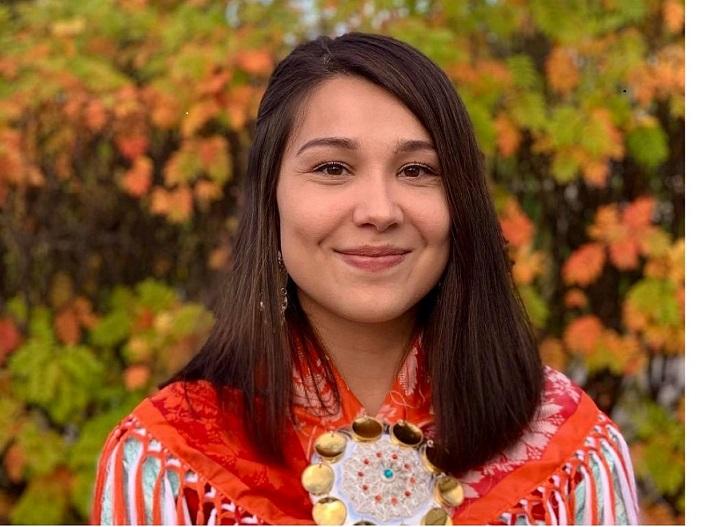
– I also see the significance and importance of local and traditional knowledge in the work.
Read the interview
The organisation of teaching will depend on the character and the content of each course. More information about teaching and examination is specified in the description of each individual course.
Seminars in methodology, methods and thesis writing run parallel to the other courses throughout the studies.
The courses in methodology and methods tie together the different courses and disciplinary approaches. This constitutes the basis both for the development of the students' individual research design and for the integration of Indigenous perspectives in research.
Every student will be assigned a thesis supervisor in the first year of the study. Supervision is given through seminars and individual tutorials.
This study programme requires compulsory attendance to the introductory meeting. See this web page for more information.
The language of instruction and syllabi is English.
Students can carry out fieldwork/data gathering abroad with basic financial support from the Centre for Sami Studies. If you are considering an exchange period, we recommend that the exchange is combined with fieldwork during the second and / or third semester (April-December) at a partner university.
The Master's programme in Indigenous Studies has bilateral exchange agreements with universities abroad where the students may take modules that will subsequently be approved as part of the degree. We recommend our students to use these agreements. There are certain reservations concerning what modules the partner university has to offer. UiT has several open agreements that also can be used by students in Indigenous Studies. Check student mobility at UiT. Information about exchange programmes will be given by contacting the Centre for Sami Studies.
Bachelor's degree (180 ECTS), or an equivalent qualification, with a minimum of 80 ECTS within social sciences, humanities, education or the social practice of law.
Applicants must have a minimum grade average comparable to a Norwegian C (2,5) in the ECTS scale.
Specific academic requirements:
A special interest in Indigenous issues is a precondition. Experience from work related to Indigenous peoples and/ or studies will be an advantage.
Please note that recommendation letters are not required.
Admission capacity:
20 places
Find out which applicant category you belong to and which documents you need to upload.

Følg @uitstudent på Instagram eller TikTok for å få et enda bedre innblikk i hvordan det er å studere på UiT. Her viser studentene fram sin studiehverdag, deler tips og nyttig informasjon, og du kan stille spørsmål om alt du måtte lure på.
Sjekk også @uitnorgesarktiske på Instagram eller TikTok for info om studier, jobbmuligheter og forskning.