A shared future for the mackerel and coastal nations?
Migratory fish stocks in search of colder seas have become an increasingly recognised political and legal challenge. How should catches and quotas be distributed when the fish move northwards? Norway must now take responsibility for establishing sound, long-term agreements that ensure sustainable fishing.
When ocean temperatures rise, it leads to noticeable changes beneath the surface. Changes that we cannot see with the naked eye, yet which significantly affect us. Research shows that climate change has a major impact on our marine ecosystems, increasing the vulnerability of the marine environment. Furthermore, scientists have documented that climate change brings a range of consequences for our fish stocks. It is now well-established that the distribution of key fish stocks has shifted towards polar regions. The combination of climate change and overfishing has negative consequences for both the stocks and marine ecosystems.
Political tensions and overfishing
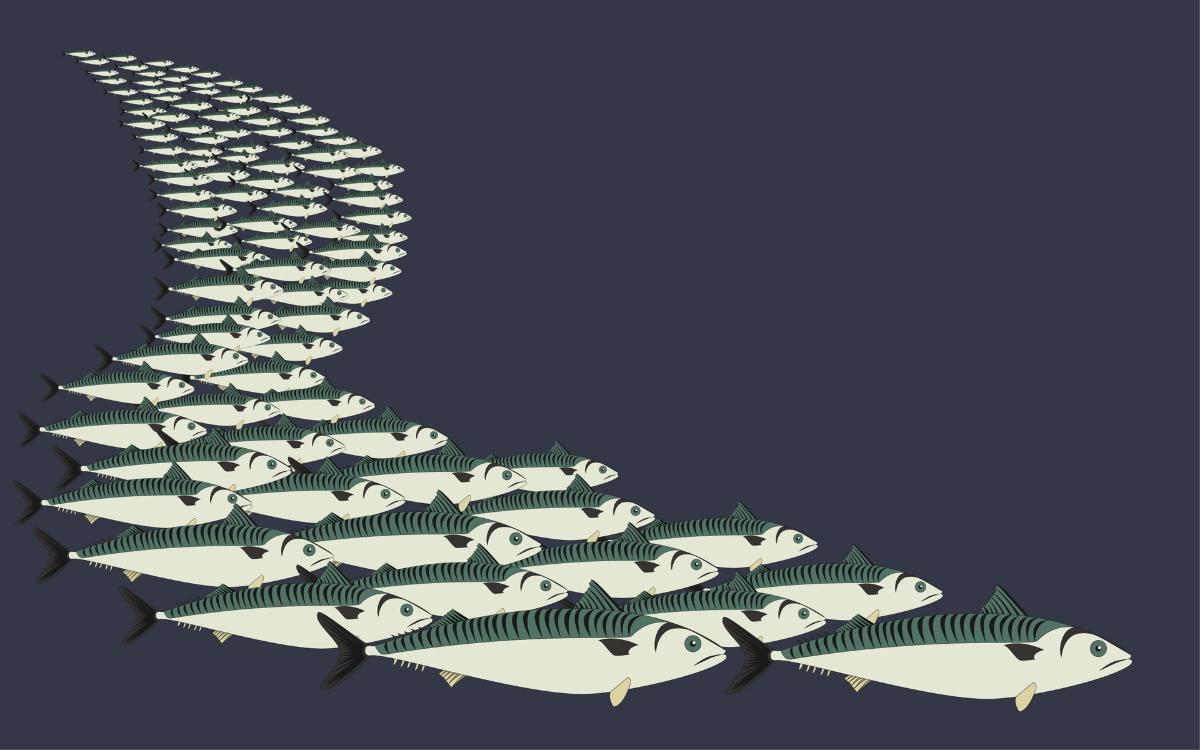
In the Northeast Atlantic, home to several of our fish stocks, overfishing of the region's mackerel stock is ongoing. This situation has persisted for over a decade. Since 2007, political tensions have arisen, preventing the countries fishing for mackerel from reaching an agreement on quota allocations for the stock. An already contentious situation is now further complicated by the effects of climate change. Research shows that the distribution of mackerel has extended towards Iceland. Should Iceland be entitled to a larger share of the quota as the stock increasingly occupies their waters?
The combination of climate change and overfishing has negative consequences for both the stocks and marine ecosystems.
The legal framework regulating fishing in the Northeast Atlantic currently does not provide answers on how quotas should be distributed when climate change causes fish to alter their distribution patterns.
However, the United Nations Convention on the Law of the Sea is clear: states fishing the same stock must cooperate to manage these resources. When research shows that stock distribution is shifting, we must take action to ensure sustainable utilisation in light of the actual changes. This is essential to prevent continued overfishing of the stocks.
A tarnished reputation
Disagreements over the allocation of mackerel quotas are increasingly attracting international attention. Norway is among the countries criticised for not doing enough to ensure the sustainable exploitation of the stock. Since 2010, the combined total of individual mackerel quotas set by the countries has exceeded the recommendations of scientists. According to the International Council for the Exploration of the Sea (ICES), catches during this period have, on average, exceeded the advice by 40 per cent. This is despite the fact that the countries fishing the stock possess the necessary knowledge about its biological conditions.
As a result of the overfishing, consumers in England are now advised by the Marine Conservation Society not to purchase mackerel caught in the Northeast Atlantic. The stock also lost its MSC certification in 2019. In other words, mackerel fishing in the Northeast Atlantic has gained a poor international reputation. Similarly, two other key stocks in the Northeast Atlantic, herring and blue whiting, have also lost their MSC certification due to the lack of an agreement on quota allocation among the participating fishing nations.
The collaboration concerning mackerel is now internationally described as dysfunctional—a label we believe Norway, as a fishing nation, should not accept.
Regional cooperation on shared fish stocks among the coastal nations of the Northeast Atlantic has deteriorated since around 2005.
The collaboration concerning mackerel is now internationally described as dysfunctional—a label we believe Norway, as a fishing nation, should not accept. If the countries fishing in the Northeast Atlantic fail to agree on a fair and sustainable distribution of fish stocks, we all stand to lose.
History shows us that fish stocks subjected to overfishing over time can collapse. However, the solution is right in front of us and seems clear: we must now change the way we cooperate with our northern neighbours to ensure a shared future for mackerel and Norway’s mackerel fishery, and we must begin to think long-term.
The need for decisive action
The United Kingdom, Norway, and other Nordic countries are the key participants in mackerel fishing, accounting for more than 75 per cent of the catch in 2023. These are democratic nations with which Norway generally enjoys close and positive cooperation. We therefore believe that the foundation for reaching a long-term and sustainable agreement is strong.
Norway is a proud maritime nation. With this comes both rights and responsibilities under the Law of the Sea. The latter obliges us to act when fish stocks are threatened by and subjected to overfishing. There is now a need for decisive political action—and quickly. We believe Norway should take the lead in finding effective solutions during a time of rapid change, and that new agreements on quota allocation in the Northeast Atlantic should be a political priority in the time ahead.


-
Fiskeri- og havbruksvitenskap - bachelor
Varighet: 3 År -
Fiskeri- og havbruksvitenskap - master
Varighet: 2 År -
Akvamedisin - master
Varighet: 5 År -
Bioteknologi - bachelor
Varighet: 3 År -
Peace and Conflict Transformation - master
Varighet: 2 År -
Computer Science - master
Varighet: 2 År -
Geosciences - master
Varighet: 2 År -
Biology - master
Varighet: 2 År -
Computational chemistry - master
Varighet: 2 År -
Law of the Sea - master
Varighet: 3 Semestre -
Biologi - bachelor
Varighet: 3 År -
Nordisk - årsstudium
Varighet: 1 År -
Historie - årsstudium
Varighet: 1 År -
Luftfartsfag - bachelor
Varighet: 3 År -
Arkeologi - bachelor
Varighet: 3 År -
Pedagogikk - master
Varighet: 2 År -
Informatikk, datamaskinsystemer - bachelor
Varighet: 3 År -
Informatikk, sivilingeniør - master
Varighet: 5 År -
Allmenn litteraturvitenskap - årsstudium
Varighet: 1 År -
Geovitenskap- bachelor
Varighet: 3 År -
Samfunnssikkerhet - bachelor
Varighet: 3 År -
Farmasi - master
Varighet: 2 År -
Romfysikk, sivilingeniør - master
Varighet: 5 År -
Bærekraftig teknologi, ingeniør - bachelor
Varighet: 3 År -
Filosofi - bachelor
Varighet: 3 År -
Anvendt fysikk og matematikk, sivilingeniør - master
Varighet: 5 År -
Arctic Nature Guide - one year programme
Varighet: 1 År -
Arktisk friluftsliv og naturguiding - bachelor
Varighet: 3 År -
Arktisk friluftsliv - årsstudium
Varighet: 1 År -
Grunnskolelærerutdanning for 1.-7. trinn - master
Varighet: 5 År -
Governance and Entrepreneurship in Northern and Indigenous Areas - master
Varighet: 4 År -
Internasjonal beredskap - bachelor
Varighet: 3 År -
Landskapsarkitektur - master
Varighet: 5 År -
Grunnskolelærerutdanning for 5.-10. trinn - master
Varighet: 5 År -
Ph.d.-program i naturvitenskap
Varighet: 3 År -
Environmental Law - master
Varighet: 2 År -
Ph.d.-program i humaniora og samfunnsvitenskap
Varighet: 3 År -
Nordic Urban Planning Studies - master
Varighet: 2 År -
Ph.d.-program i realfag
Varighet: 3 År -
Ph.d.-program i nautiske operasjoner: Fellesgrad
Varighet: 3 År -
Samfunnsøkonomi med datavitenskap - master
Varighet: 2 År -
Luftfartsvitenskap - master
Varighet: 3 År -
PhD Programme in Science
Varighet: 3 År -
PhD programme in Nautical Operations
Varighet: 3 År -
Filosofi - årsstudium
Varighet: 1 År -
Lektor i språk og samfunnsfag trinn 8-13 - master
Varighet: 5 År -
Fysikk og matematikk - bachelor
Varighet: 3 År -
Nautikk - bachelor
Varighet: 3 År -
Ocean Leadership - Executive master
Varighet: 3 År -
Havteknologi, ingeniør - bachelor (ordinær, y-vei)
Varighet: 3 År