Støre Presents the Mohn Prize to Canadian Researcher
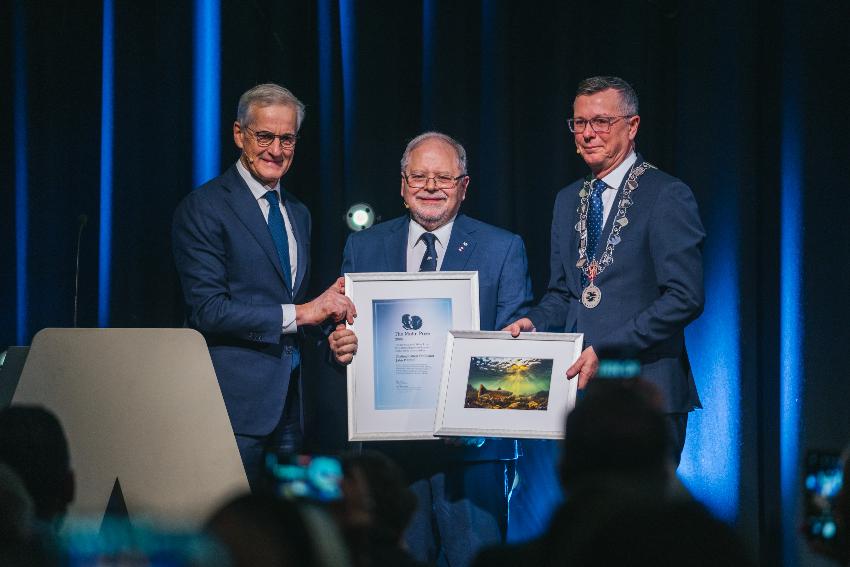
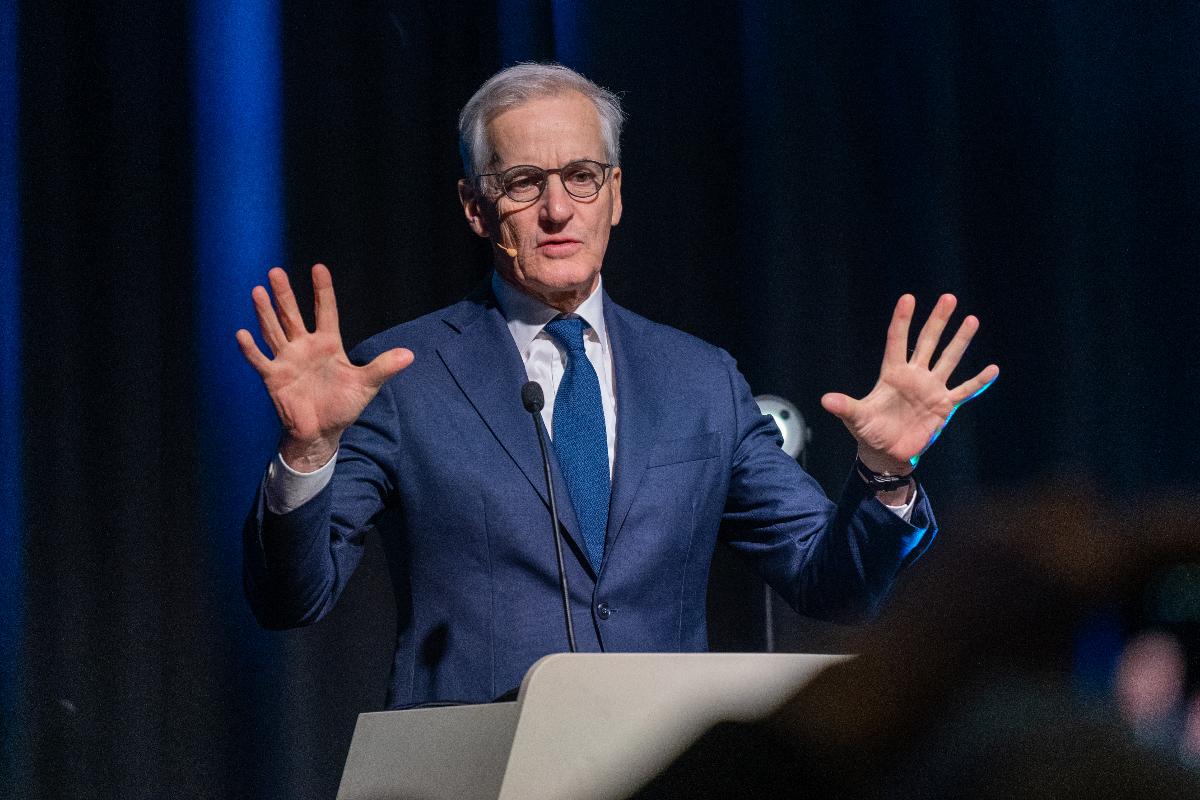
Professor John P. Smol was today given the Mohn Prize by Prime Minister Jonas Gahr Støre. "You are a true leader and an important contributor," said the Prime Minister to the prize winner.
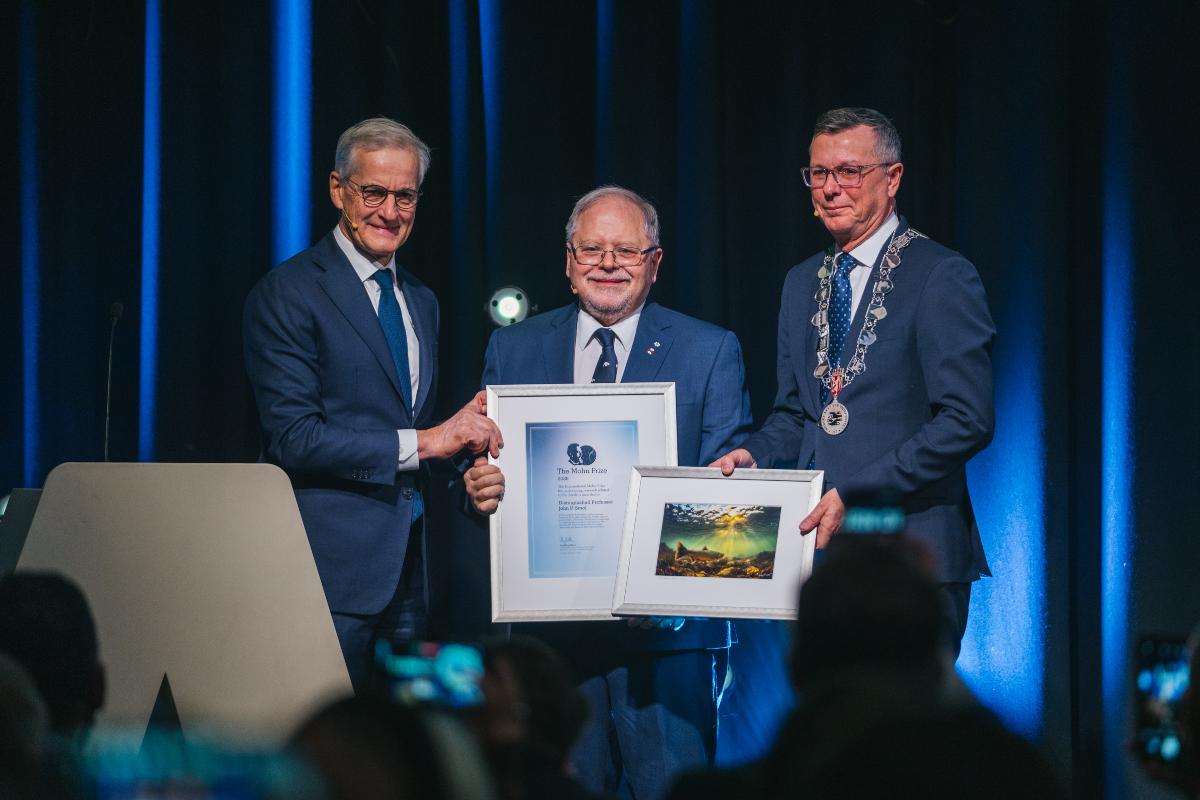

John P. Smol, a professor at Queen's University in Canada, received the prize for his role in identifying the factors driving environmental changes in the Arctic. The international Mohn Prize is awarded every two years for outstanding research related to the Arctic.
"Professor Smol’s career illustrates the role that science can and should play: solving real world challenges and communicating them to decision-makers so they can act," said Støre in his speech.
The Mohn prize
- The international Mohn Prize for Outstanding Research Related to the Arctic was established in collaboration between Academia Borealis – The Academy of Sciences and Letters of Northern Norway, Tromsø Research Foundation, and UiT The Arctic University of Norway.
- The prize, worth 2 million NOK, is awarded every two years at Arctic Frontiers.
- John Smol is the fifth laureate, after Eddy Carmac (2018), Dorthe Dahl-Jensen (2020), John Walsh (2022) and Oran Young (2024).
Smol emphasised that science is a team effort, comparing himself to an ice hockey coach when receiving awards. "It’s the team that wins, but I get to lift the trophy," he said.
"I have always had excellent teams of students and collaborators. Their contributions to our research have been remarkable," Smol added.
Støre praised Smol for his ability to collaborate and nurture new talent:
"By continuously highlighting and supporting everyone you work with, you demonstrate true leadership in research. For that, we thank you," said Støre.
.jpg "mohnpris utdeling foto david jensen (2).jpg")
Why Did Smol Receive the Prize?
The awarding of the Mohn Prize to Smol is more than an academic recognition—it is a tribute to a method that unlocks the past, enabling us to navigate the future.
Smol is a scientific detective. His crime scene: Arctic lakes. His clues: microscopic remnants of life, preserved in sediment layers at the bottom of lakes. By reading these layers—some hundreds of thousands of years old—like the pages of a history book, he reveals how ecosystems have responded to changes over centuries.
His work has provided methods to identify early warning signs of ecological disruptions. By studying diatoms and other microscopic organisms, he can precisely document when a lake became more acidic, when pollution first appeared, or how aquatic life changed as the climate warmed.
.jpg "mohnpris-utdeling-260204 (2).jpg")
This is not just academic curiosity—it is knowledge with immense practical value. Smol’s research has delivered concrete findings that have led to action against acid rain and pollution, with impacts far beyond local communities. He provides decision-makers with what they need most: a solid, scientific foundation for action.
Smol has a unique ability to bridge the past and the present. He shows us that lakes have a memory. This memory is our best reference for assessing the changes we see today. Without a clear picture of what an ecosystem looked like before industrial impact, we are fumbling in the dark when setting goals for management, restoration, and conservation.
When Prime Minister Jonas Gahr Støre presented the prize to Professor John P. Smol today at Arctic Frontiers, it was because Smol has shaped his field and inspired scientists worldwide. He has shown us that the small, often overlooked lakes of the Arctic are sensitive archives of the planet’s health.
His work also carries a profound societal dimension. The knowledge he generates informs national and international negotiations. It is relevant to discussions on sustainable development, Indigenous rights, and the management of the fragile northern regions.
-
Arkeologi - master
Varighet: 2 År -
Peace and Conflict Transformation - master
Varighet: 2 År -
Geosciences - master
Varighet: 2 År -
Biology - master
Varighet: 2 År -
Technology and Safety - master
Varighet: 2 År -
Law of the Sea - master
Varighet: 3 Semestre -
Biologi - bachelor
Varighet: 3 År -
Nordisk - årsstudium
Varighet: 1 År -
Luftfartsfag - bachelor
Varighet: 3 År -
Pedagogikk - bachelor
Varighet: 3 År -
Arkeologi - bachelor
Varighet: 3 År -
Likestilling og kjønn - årsstudium
Varighet: 1 År -
Historie - bachelor
Varighet: 3 År -
Geovitenskap- bachelor
Varighet: 3 År -
Samfunnssikkerhet - bachelor
Varighet: 3 År -
Samfunnssikkerhet - master
Varighet: 2 År -
Kunst - bachelor
Varighet: 3 År -
Kunsthistorie - master
Varighet: 2 År -
Religionsvitenskap - årsstudium
Varighet: 1 År -
Romfysikk, sivilingeniør - master
Varighet: 5 År -
Sosialantropologi - bachelor
Varighet: 3 År -
Historie - master
Varighet: 2 År -
Anvendt fysikk og matematikk, sivilingeniør - master
Varighet: 5 År -
Barnevernsarbeid - master
Varighet: 2 År -
Forfatterstudium 2 - årsstudium
Varighet: 1 År -
Fine Art - master
Varighet: 2 År -
Barnevern - bachelor
Varighet: 3 År -
Arctic Nature Guide - one year programme
Varighet: 1 År -
Sosialt arbeid - bachelor
Varighet: 3 År -
Arktisk friluftsliv og naturguiding - bachelor
Varighet: 3 År -
Arktisk friluftsliv - årsstudium
Varighet: 1 År -
Grunnskolelærerutdanning for 1.-7. trinn - master
Varighet: 5 År -
Kunsthistorie - årsstudium
Varighet: 1 År -
Governance and Entrepreneurship in Northern and Indigenous Areas - master
Varighet: 4 År -
Fagdidaktikk for lærere - master
Varighet: 4 År -
Vernepleie - bachelor
Varighet: 3 År -
Internasjonal beredskap - bachelor
Varighet: 3 År -
Barnevern - bachelor
Varighet: 3 År -
Vernepleie - bachelor
Varighet: 4 År -
Landskapsarkitektur - master
Varighet: 5 År -
Grunnskolelærerutdanning for 5.-10. trinn - master
Varighet: 5 År -
Kvensk og finsk - bachelor
Varighet: 3 År -
Nordisk språk og litteratur - bachelor
Varighet: 3 År -
Russisk og russlandsstudier - bachelor
Varighet: 3 År -
Ph.d.-program i naturvitenskap
Varighet: 3 År -
Russisk og russlandsstudier - master
Varighet: 2 År -
Environmental Law - master
Varighet: 2 År -
Nordisk språk og litteratur - master
Varighet: 2 År -
Kvensk og finsk - master
Varighet: 3 År -
Ph.d.-program i realfag
Varighet: 3 År