Better gastric ulcer treatment on the horizon
Plagued by stomach cramps and reflux? Researchers have just come up with a clever trick that could solve the problem in the not-too-distant future.

Between 50 to 100 percent of people in countries with poor access to clean water are infected with a bacterium called Helicobacter pylori. This particular bacterium is a leading cause of ulcers in the stomach, and it can even cause gastric cancer.
There is already treatment available in order to remove the bacterium from the stomach, and in that way remove the cause of the ulcers. But - the existing treatment requires large amounts of several antibiotics taken at the same time. And a rigorous medication regimen for about a week, or even more.
The results are often good, but this traditional treatment can give us both significant side effects and wreak havoc on our gut microbiome.
Using a lot of antibiotics also increases the risk of developing antimicrobial resistance, or AMR for short.
The "unfolding" medicine
The clever trick that researchers at UiT The Arctic University of Norway have thought out - and tested with success - is to combine a natural polymer from algae, long chains of molecules, together with a synthetic polymer. Then they added the antibiotic Ciprofloxacin and folded the whole thing to pack it neatly into a capsule.
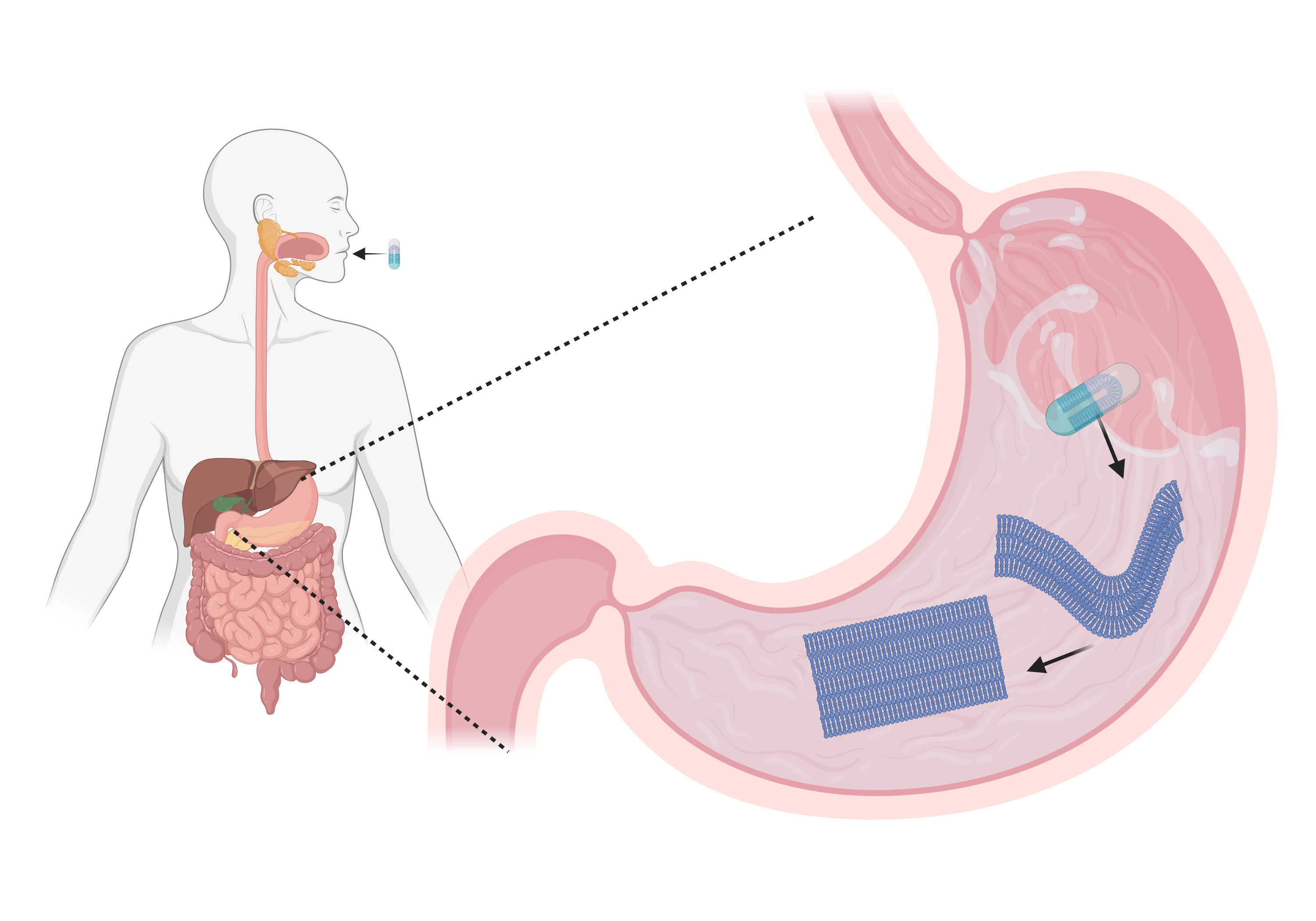
The point is that the capsule dissolves when you swallow it and it reaches the acids of your stomach. The polymers that are laced with antibiotics unfold themselves and return to the shape of a large film that cannot cross from the base of the stomach, through the opening into the intestines called the narrow pyloric sphincter.
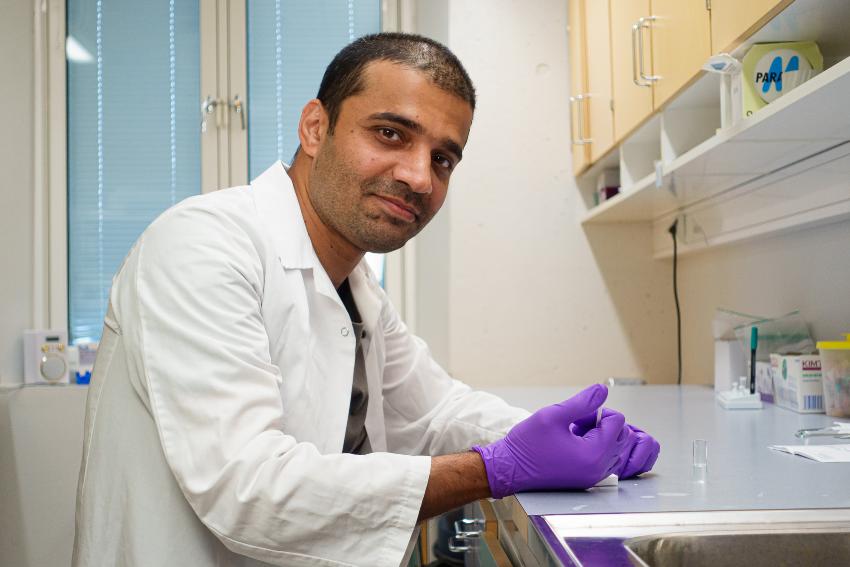
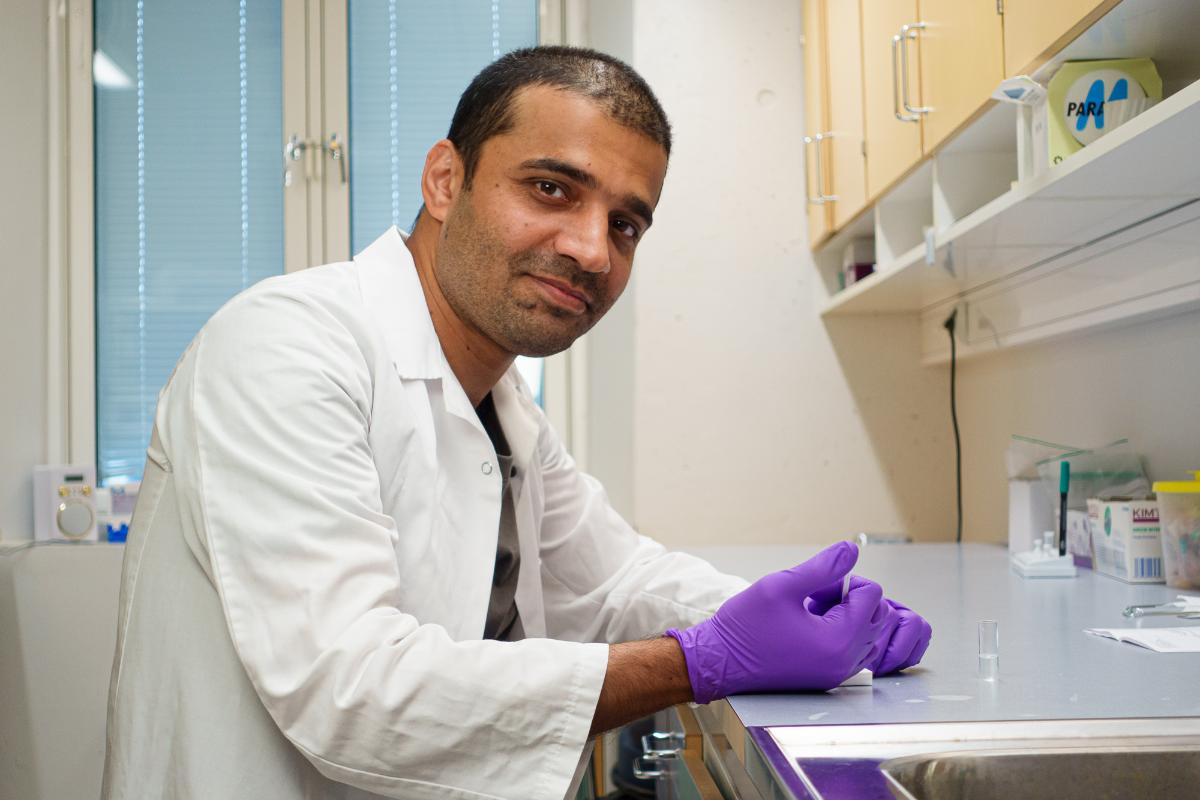
– This property lets the films stay in the stomach for a long time so that they can release the antibiotics directly to the infection site, says Postdoctoral fellow Ali Raza from the Department of Pharmacy at UiT.
The films can withstand the squeezing forces of the stomach for at least 48 hours, making them far more effective at dosing out the antibiotics than taking tablets that rush through your intestines in a couple of hours.
Appears to be safe
Now the all-important question is of course: Is it safe? It certainly seems so.
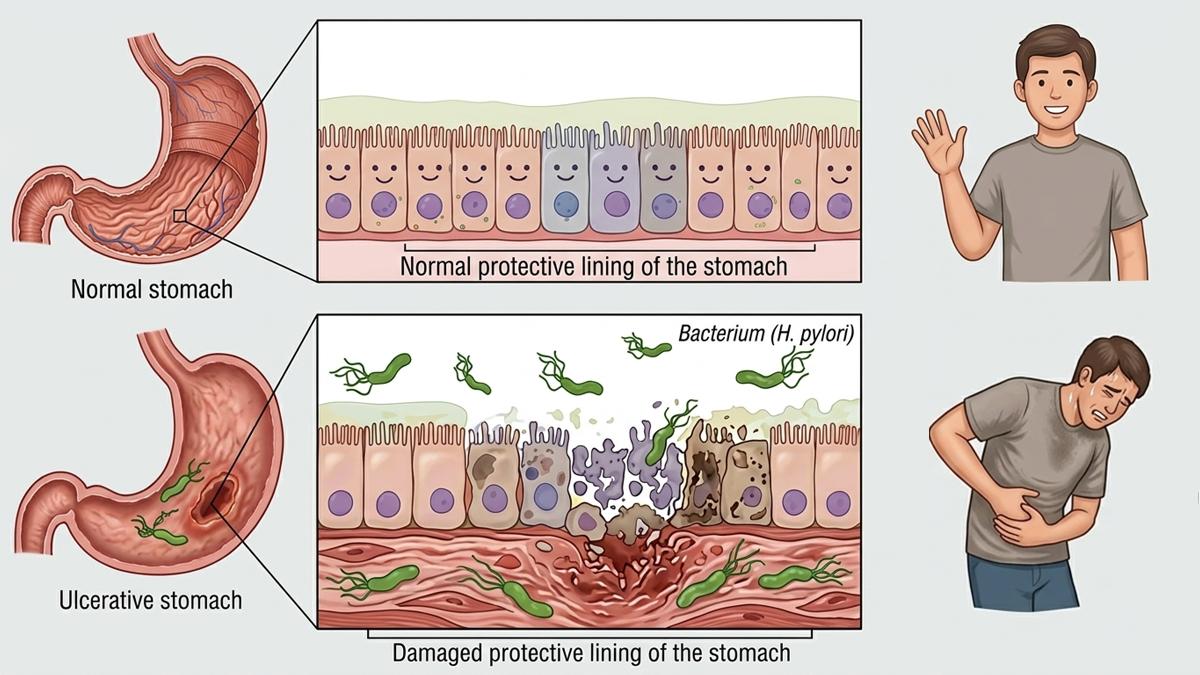
– Safety is always the main concern when introducing any medical innovation. We tested the hydrogel films on human cells and found them to be safe, as over 90% of the cells survived various concentrations, Raza explains.
To sum up, the research provided a new, effective and advanced approach to treating Helicobacter pylori infections by delivering antibiotics locally in the stomach over a prolonged time, instead of choking your whole body with large amounts of antibiotics.
– Some limitations remain that should be addressed before considering testing it on patients in a clinical setting, such as validating how effective and exactly how safe it is, Raza explains.
The study was supported by Tromsø Research Foundation (TFS), UiT's Centre for New Antibacterial Strategies (CANS), and others.
Polymer facts
Polymers are long molecular chains made up of many small, repeating units (monomers) linked together. Imagine a string of beads, where each bead is a tiny building block (called a monomer), and the whole string is the polymer.
The main ingredients of the products are alginate and PEGDA (polyethylene glycol diacrylate). Alginate is a natural polymer. Its beads are sugar molecules, and it comes from seaweed. PEGDA is a man-made polymer. Its beads are like tiny, soft plastic beads that can be linked together to form a stretchy, jelly-like material.
Scientific reference
" Alginate/polyethylene glycol diacrylate shape memory hydrogel films for gastric retention and antibiotic delivery in H. pylori infection".
Carbohydrate Polymer Technologies and Applications, Volume 12, December 2025.
https://www.sciencedirect.com/science/article/pii/S2666893925003081
-
Public Health - master
Varighet: 2 År -
Medisin profesjonsstudium
Varighet: 6 År -
Nordisk - årsstudium
Varighet: 1 År -
Pedagogikk - bachelor
Varighet: 3 År -
Bioingeniørfag - bachelor
Varighet: 3 År -
Informatikk, sivilingeniør - master
Varighet: 5 År -
Likestilling og kjønn - årsstudium
Varighet: 1 År -
Biomedisin - bachelor
Varighet: 3 År -
Psykologi - bachelor
Varighet: 3 År -
Ergoterapi - bachelor
Varighet: 3 År -
Fysioterapi - bachelor
Varighet: 3 År -
Radiografi - bachelor
Varighet: 3 År -
Samfunnssikkerhet - master
Varighet: 2 År -
Farmasi - bachelor
Varighet: 3 År -
Farmasi - master
Varighet: 2 År -
Psykologi - årsstudium
Varighet: 1 År -
Odontologi - master
Varighet: 5 År -
Tannpleie - bachelor
Varighet: 3 År -
Sykepleie - master
Varighet: 2 År -
Barnevern - bachelor
Varighet: 3 År -
Sosialt arbeid - bachelor
Varighet: 3 År -
Idrettsvitenskap - master
Varighet: 2 År -
Sosialt arbeid - master
Varighet: 2 År -
Vernepleie - bachelor
Varighet: 3 År -
Barnevern - bachelor
Varighet: 3 År -
Vernepleie - bachelor
Varighet: 4 År -
Ernæring - bachelor
Varighet: 3 År -
Videreutdanning i krisehåndtering og traumebehandling
Varighet: 1 År -
Videreutdanning om vold i nære relasjoner
Varighet: 1 År -
Videreutdanning i rus og psykisk helse
Varighet: 1 År -
Paramedisin - bachelor
Varighet: 3 År -
Nordisk språk og litteratur - bachelor
Varighet: 3 År -
Fysioterapi - master
Varighet: 3 År -
Aldring og geriatrisk helsearbeid - master
Varighet: 3 År -
Helsefaglig utviklingsarbeid - master
Varighet: 3 År -
Psykisk helsearbeid - master
Varighet: 3 År -
Helsesykepleie - master
Varighet: 3 År -
Jordmorfag - master
Varighet: 2 År -
Klinisk ernæring - master
Varighet: 2 År -
Velferdsendring - erfaringsbasert master
Varighet: 4 År -
Ph.d.-utdanning i helsevitenskap
Varighet: 3 År -
PhD Programme in Health Sciences
Varighet: 3 År -
Sykepleie - bachelor
Varighet: 3 År -
Psykologi profesjonsstudium
Varighet: 6 År -
Sykepleie - bachelor
Varighet: 4 År -
Samisk sykepleie - bachelor
Varighet: 4 År -
Trening, prestasjon og helse - bachelor
Varighet: 3 År -
Trening, prestasjon og helse, personlig trener - årsstudium
Varighet: 1 År -
Medisin profesjonsstudium - forskerlinje
Varighet: 7 År -
Psychology - master
Varighet: 2 År