AI can help detect heart diseases more quickly
UiT researchers have developed an AI to automatically measure the heart's structure – both quickly and accurately. They believe it can help doctors detect and treat cardiovascular diseases faster.


Artificial intelligence (AI) may become a helpful tool for detecting and treating cardiovascular diseases.
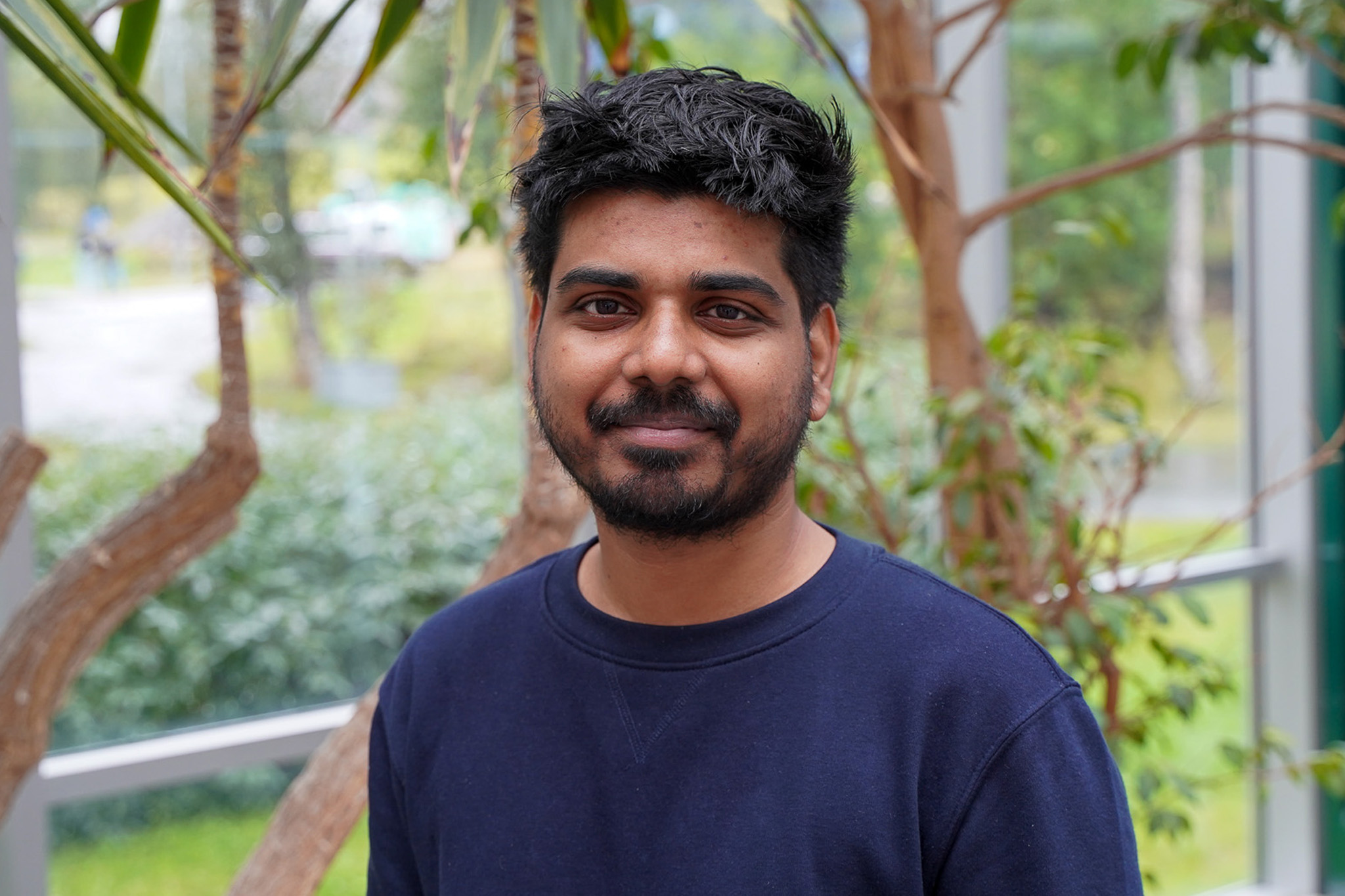
This is shown by findings from Durgesh Kumar Singh's doctoral thesis – which he defended this fall. He is a researcher at the AI centre SFI Visual Intelligence at UiT The Arctic University of Norway.
Singh examined how to use AI to measure the heart's left ventricle (LV) – one of the four heart chambers – based on heart ultrasound images. These images are obtained using an ultrasound probe which is placed on the patient's chest.
Important for detecting heart diseases
The LV is the heart's main pumping chamber and serves an important function – to pump out oxygen-rich blood to the aorta, which carries the blood to the rest of the body.
If not enough blood is pumped out, the organs won't receive enough oxygen to function properly. This may happen due to diseases or conditions which change the LV's size, thickness, or overall shape – such as high blood pressure and heart-muscle diseases.
The measurements give doctors valuable information about the LV's size and pumping capacity. This is used to detect potential signs of heart disease.
Singh's results show that his AI method can measure the heart chamber more quickly and accurately. He believes it could become a promising tool for healthcare services in and outside Norway.
“We show how deep learning can be used to measure the LV on ultrasound images more accurately and consistently by making the AI more aware of the heart's structure,” Singh says.
A helpful assistant
Deep learning involves teaching machines to perform specific tasks without direct human instructions. Based on this, Singh trained an AI model using thousands of LV ultrasound images. The data set was obtained from GE HealthCare and contains images from hospitals worldwide.
Through this process, the AI taught itself what the LV looks like. It uses this knowledge to find the most important parts of the image for measuring the heart chamber.
"Think of it as an assistant which automatically lays the ruler at the correct place. The computer first finds the best measuring line by itself by outlining the heart's shape. The ruler is then used to read the size along that line," Singh explains.
Saves valuable time and resources
Measuring the LV is usually done manually by a cardiologist. This involves examining the ultrasound image, drawing a straight line across the LV, and placing measurement points on that line. However, it is a time-consuming and delicate process, even for experienced cardiologists.
"It is careful, repetitive work that takes a lot of time. The measurements may also vary depending on the patient's heart anatomy and the person doing the examination," Singh says.
Singh's AI method can measure the LV in a matter of seconds. This provides many potential benefits – from faster answers for patients to less workload for doctors.
"Automating the most time-consuming parts means that results can be ready during the exam – speeding up diagnosis and treatment. Accurate measurements can also help track subtle heart changes more reliably over months and even years," Singh explains.
Fewer unnecessary ultrasound exams
An ultrasound examination may cost hospitals and patients up to several thousand Norwegian kroner. Consistent measurements also mean fewer unnecessary exams.
"More accurate and repeatable measurements reduce do-over exams, saving patients' and the healthcare system's time and money," he says.
To examine how well it measures the heart chamber, Singh compared his method to other AI models on the market. The results show that it outperforms these models – both in terms of placing measurement points accurately and overall agreement with human experts.
Works on different types of ultrasound images
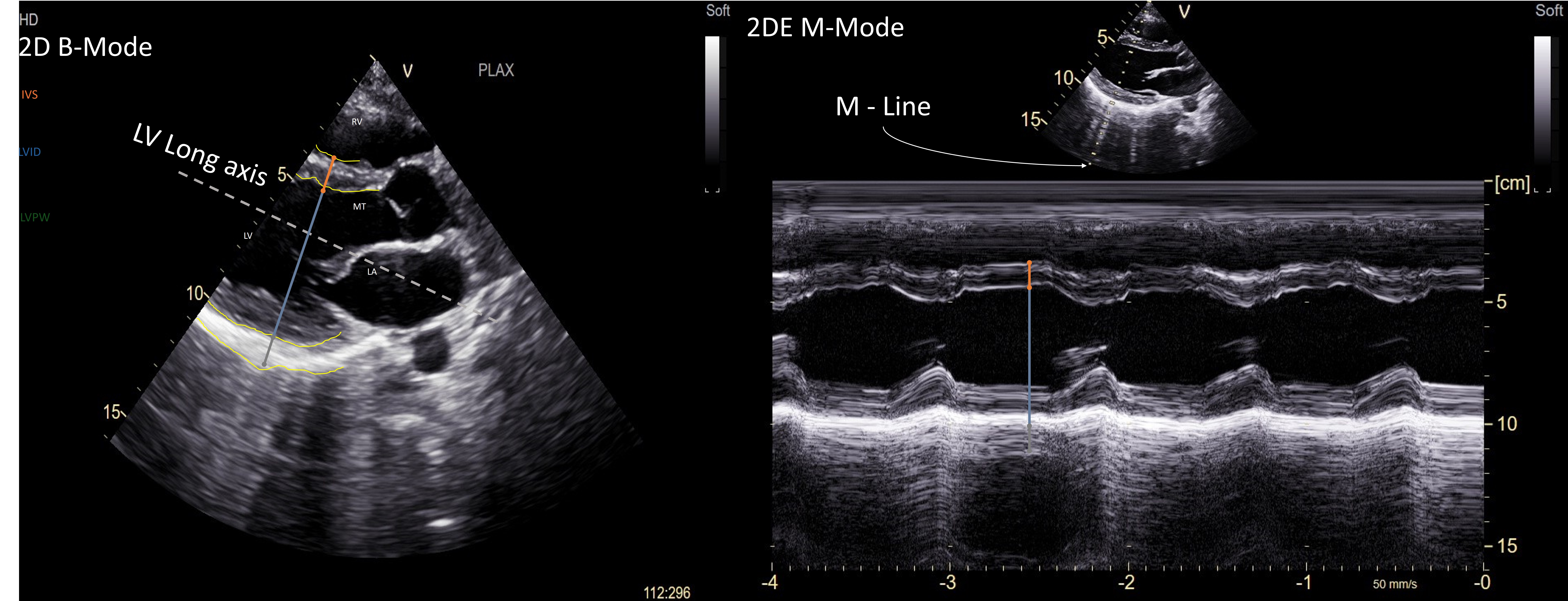
Clinicians measure the LV using two types of ultrasound images: so-called B-mode and M-mode images. B-mode images represent the ultrasound waves as a two-dimensional grayscale image, while M-mode images display the heart wall's motions through a scanline.
Singh's method works on both types of ultrasound images, making it more useful and applicable in real clinical scenarios.
"Depending on the doctor's needs or preferences, the measurements can be displayed on either image type," Singh says.
Close collaboration with medical industry
Singh collaborated closely with GE Healthcare – one of several industrial partners in SFI Visual Intelligence. A goal of the project was to develop an AI-based algorithm which can be integrated into GE HealthCare's ultrasound scanners.
Erik Steen is a chief engineer at GE HealthCare, and says there's a need to increase the productivity of these examinations. He believes Singh's work could contribute to this.
"This need is echoed by several clients and experts worldwide. Durgesh's work can contribute to increased productivity by automating measurements needed to uncover heart diseases like thickened heart wall," Steen says.
Planned tests in controlled environments
Based on this potential, GE HealthCare plans to test Singh's AI method in a controlled and safe environment. They hope his work may eventually be incorporated into their scanners.
But it will require several rounds of testing before that happens, Steen says. This is to ensure that the method consistently measures the heart chamber correctly.
"It's important for us to check that these methods are robust and work on a large number of patients with varying image quality. We also need to document that they are just as good as or better than human experts who measure by hand," Steen explains.
“The doctors still keep control”
Singh's findings show how useful this technology could be for detecting and treating heart diseases. But what will happen to the doctors? Will they eventually be replaced by artificially intelligent algorithms?
Singh assures us that this is not the case. AI is meant to assist doctors with their clinical work. The doctors will always be there to make sure that the AI does the job properly.
"It's designed to help, not replace. The technology's purpose is to remove the most tedious and time-consuming steps. The doctors are still keeping control," Singh says.
Professor Michael Kampffmeyer is Singh's main supervisor and played a key role in the doctoral project. He is impressed by Singh's work and believes it can significantly benefit both patients and doctors worldwide.
"His research is a clear example of how AI can make the healthcare system more efficient – in this case, for detecting cardiovascular diseases more quickly. We look forward to seeing how the testing at GE HealthCare will go," Kampffmeyer says.
Reference:
Durgesh Kumar Singh: Towards more accurate and label-efficient Left Ventricle Automatic Measurements. Doctoral Dissertation at UiT The Arctic University of Norway, 2025. Summary.
About SFI Visual Intelligence
- A centre for research-based innovation (SFI) that aims to devlop new deep learning methods for extracting important information from different and complex image data.
- The centre aims to develop better AI tools, for example to detect heart diseases and cancers, surveil and detect natural resources, and monitoring the environment, climate, and potential natural disasters.
- The centre has an interdisciplinary approach. Methodologies developed for a particular research area can be often be applied to other disciplinary areas.
- The centre's research partners are UiT – The Arctic University of Norway, the University of Oslo, and the Norwegian Computing Center.
- The centre also consists of a consortium of user partners, such as the University Hospital of Northern Norway, the Cancer Registry of Norway, Equinor, Institute of Marine Research, GE Vingmed Ultrasound, Kongsberg Satellite Services, and Aker BP.
- Visual Intelligence is one of two SFI centres at UiT. The other one is Dsolve.
Read more about Visual Intelligence here.
Kortnytt fra Department of Physics and Technology, Faculty of Science and Technology
-
Fiskeri- og havbruksvitenskap - bachelor
Varighet: 3 År -
Fiskeri- og havbruksvitenskap - master
Varighet: 2 År -
Akvamedisin - master
Varighet: 5 År -
Bioteknologi - bachelor
Varighet: 3 År -
Arkeologi - master
Varighet: 2 År -
Musikkteknologi
Varighet: 1 År -
Computer Science - master
Varighet: 2 År -
Geosciences - master
Varighet: 2 År -
Technology and Safety - master
Varighet: 2 År -
Physics - master
Varighet: 2 År -
Mathematical Sciences - master
Varighet: 2 År -
Computational chemistry - master
Varighet: 2 År -
Luftfartsfag - bachelor
Varighet: 3 År -
Arkeologi - bachelor
Varighet: 3 År -
Informatikk, datamaskinsystemer - bachelor
Varighet: 3 År -
Informatikk, sivilingeniør - master
Varighet: 5 År -
Geovitenskap- bachelor
Varighet: 3 År -
Samfunnssikkerhet - bachelor
Varighet: 3 År -
Automasjon, ingeniør - bachelor (ordinær, y-vei)
Varighet: 3 År -
Samfunnssikkerhet - master
Varighet: 2 År -
Farmasi - master
Varighet: 2 År -
Romfysikk, sivilingeniør - master
Varighet: 5 År -
Bærekraftig teknologi, ingeniør - bachelor
Varighet: 3 År -
Forkurs for ingeniør- og sivilingeniørutdanning
Varighet: 1 År -
Anvendt fysikk og matematikk, sivilingeniør - master
Varighet: 5 År -
Praktisk-pedagogisk utdanning for trinn 8-13 - årsstudium
Varighet: 2 År -
Internasjonal beredskap - bachelor
Varighet: 3 År -
Datateknikk, ingeniør - bachelor (y-vei)
Varighet: 3 År -
Droneteknologi, ingeniør - bachelor
Varighet: 3 År -
Bygg, ingeniør - bachelor
Varighet: 3 År -
Bygg, ingeniør - bachelor
Varighet: 3 År -
Bygg, ingeniør - bachelor (y-vei)
Varighet: 3 År -
Datateknikk, ingeniør - bachelor
Varighet: 3 År -
Datateknikk, ingeniør - bachelor
Varighet: 3 År -
Elkraftteknikk, ingeniør - bachelor
Varighet: 3 År -
Elektronikk, ingeniør - bachelor
Varighet: 3 År -
Elektronikk, ingeniør - bachelor (y-vei)
Varighet: 3 År -
Maskin, ingeniør - bachelor
Varighet: 3 År -
Maskin, ingeniør - bachelor
Varighet: 3 År -
Maskin, ingeniør - bachelor (y-vei)
Varighet: 3 År -
Satellitteknologi, ingeniør - bachelor
Varighet: 3 År -
Satellitteknologi, ingeniør - bachelor (y-vei)
Varighet: 3 År -
Applied Computer Science - Master
Varighet: 2 År -
Electrical Engineering - master
Varighet: 2 År -
Engineering Design - Master
Varighet: 2 År -
Industrial Engineering - Master
Varighet: 2 År -
Aerospace Engineering - master
Varighet: 2 År -
Bygg og miljø, sivilingeniør - master
Varighet: 2 År -
Bibliotek- og dokumentasjonsvitenskap - årsstudium
Varighet: 1 År -
Datateknikk - videreutdanning
Varighet: 1 År