Exploring the Ripple Effects of Multilingualism
The dominance of the English language and migration create new challenges for society as a whole. Research on multilingualism can contribute to new solutions for language learning, but also uncover the barriers we face.
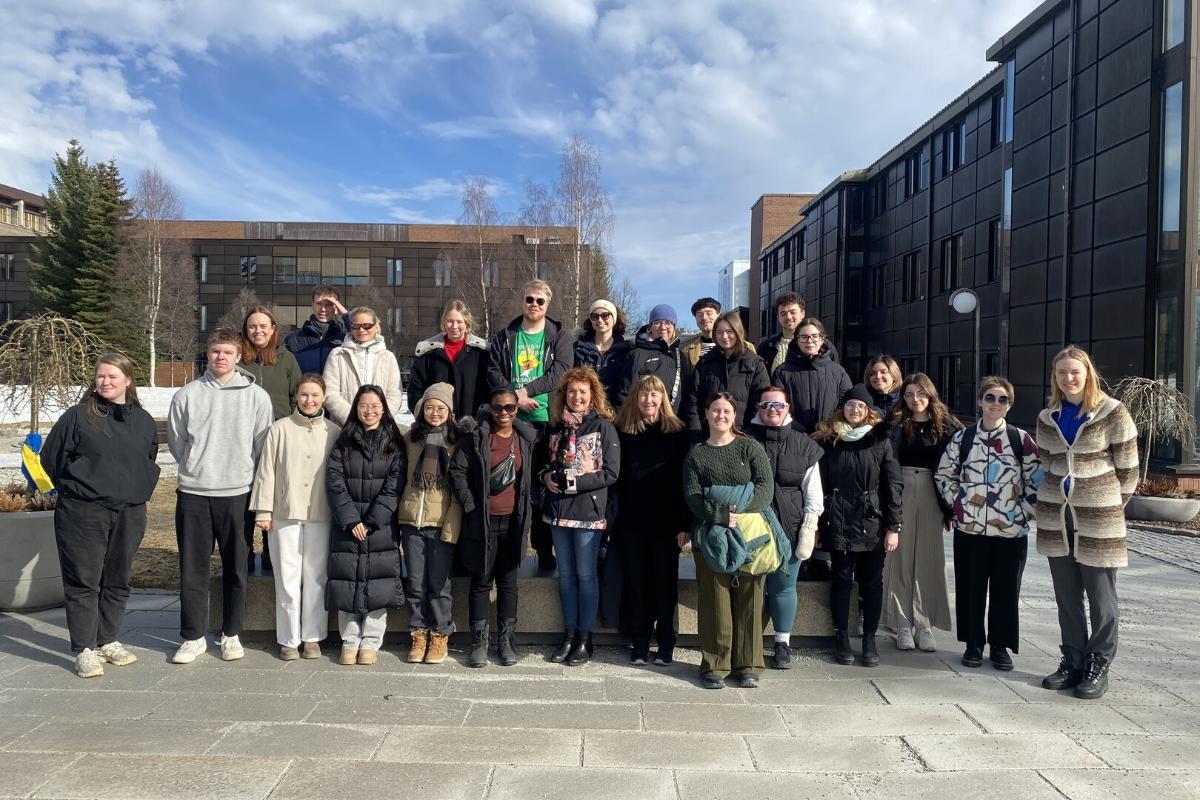

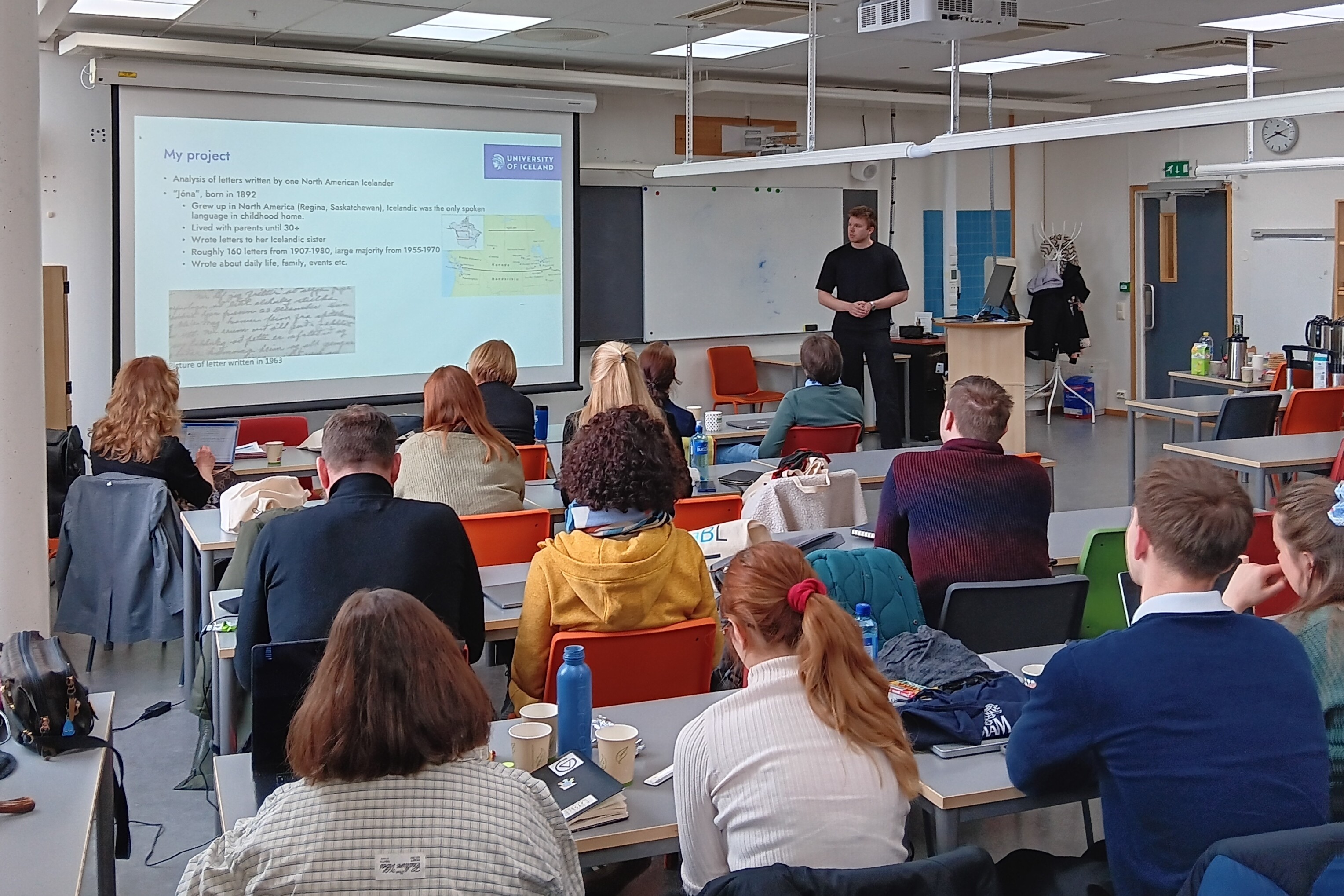
Recently, a BIP course (Blended Intensive Programme) was held at UiT, bringing together both master's students and researchers from Poland, Iceland, and Germany.
The participants explored the ripple effects of contact with new languages. They examined how cultural context, exposure, and age are influencing factors, what language attrition entails, and the development of language awareness.
A Need for Greater Knowledge
Natalia Mitrofanova, a professor of English linguistics at the Department of Language and Culture, was the course coordinator. She believes that research on multilingualism and language contact provides valuable insights across several areas.
"In an increasingly globalised and multilingual world, it is crucial to understand how language users switch between multiple languages. We need to gain more knowledge about the consequences this has for multilingual children and adults, for an individual's multilingual competence and identity, and for society as a whole," she says.
Icelandic vs English
Language research can also shed light on how language policies and education can be adapted to support multilingual societies. Mitrofanova believes we can learn a great deal from how Icelandic has developed.
"Although English has a clear influence on vocabulary, recent research shows that its impact on Icelandic grammar is relatively limited. Icelandic has proven to be a robust language, even though proficiency in English has increased significantly compared to previous generations," she points out.
International Course on Multilingualism at UiT
- UiT hosted the Blended Intensive Programme (BIP) course titled "Multilingualism and Language Contact".
- The course was funded with support from Erasmus+.
- It was held from 8th to 14th April at UiT in Tromsø.
- Participants and lecturers came from the University of Poznań, the University of Iceland, and the University of Konstanz.
- They had backgrounds in fields such as theoretical linguistics, phonetics and phonology, grammar theory, socio- and psycholinguistics, and teacher education.
- Key topics during the course included heritage and foreign language learning, English as a global language, language attrition, and the role of age and exposure.
Problem-Solving and Relationship-Building
She highlights that linguistic differences across cultures can influence how we conceptualise and relate to the world.
"It can affect how we solve problems, build relationships, and make decisions, depending on the language we use. Multilingualism gives us access to multiple cultures, enriching our perspectives and ways of understanding the world," she says.
Neurology and Brain Research
During the course, neurolinguistics and the cognitive and neurological effects of multilingualism on the brain were key topics.
The course participants visited UiT’s C-LaBL, where they learned how eye-tracking, electroencephalography (EEG), and magnetic resonance imaging (MRI) can reveal how languages are processed in the brain.
Creating New Opportunities
Mitrofanova believes the course helps to promote interdisciplinary collaboration and facilitates a more holistic understanding of multilingualism as a field of study.
"It gives students the opportunity to compare different cases from various linguistic and cultural contexts, learn about new theories and methods, and find innovative solutions to challenges related to language policy, education, and integration," she emphasises.

Finding Patterns and Solving Puzzles
One of the course participants was Barış Bay, a master's student at the University of Konstanz. Back home in Germany, Bay studies the syntax and morphology of the Icelandic language on a daily basis. He found the course to be highly beneficial.
"It’s important for me to be here and get immediate help, rather than doing this over the internet, which would have taken much longer," he says.
For Bay, a key starting point is the idea that, although there are many differences among the world’s languages, we share a universal grammar.
"Finding patterns, piecing them together, and solving puzzles collectively actually makes it possible to uncover the mechanisms behind how we process language," Bay concludes.
Kortnytt fra Faculty of Humanities, Social Sciences and Education, Department of Language and Culture
-
Fiskeri- og havbruksvitenskap - bachelor
Varighet: 3 År -
Fiskeri- og havbruksvitenskap - master
Varighet: 2 År -
Visual and Multimodal Anthropology - Master
Varighet: 2 År -
Arkeologi - master
Varighet: 2 År -
Peace and Conflict Transformation - master
Varighet: 2 År -
Indigenous Studies - master
Varighet: 2 År -
Technology and Safety - master
Varighet: 2 År -
Sosiologi - master
Varighet: 2 År -
Strategisk ledelse og økonomi - erfaringsbasert master
Varighet: 5 Semestre -
Engelsk - årsstudium
Varighet: 1 År -
Samfunnsplanlegging - bachelor
Varighet: 3 År -
Pedagogikk - bachelor
Varighet: 3 År -
Sosiologi - bachelor
Varighet: 3 År -
Arkeologi - bachelor
Varighet: 3 År -
Spansk - årsstudium
Varighet: 1 År -
Statsvitenskap - bachelor
Varighet: 3 År -
Pedagogikk - master
Varighet: 2 År -
Likestilling og kjønn - årsstudium
Varighet: 1 År -
Samfunnsplanlegging - master
Varighet: 2 År -
Økonomi og administrasjon - bachelor
Varighet: 3 År -
Samfunnssikkerhet - bachelor
Varighet: 3 År -
Økonomi og administrasjon, siviløkonom - master
Varighet: 2 År -
Ledelse, innovasjon og marked - bachelor
Varighet: 3 År -
Ergoterapi - bachelor
Varighet: 3 År -
Grunnskolelærerutdanning for 1.-7. trinn - master
Varighet: 5 År -
Grunnskolelærerutdanning for 5.-10. trinn - master
Varighet: 5 År -
Samfunnssikkerhet - master
Varighet: 2 År -
Kunst - bachelor
Varighet: 3 År -
Kunsthistorie - master
Varighet: 2 År -
Musikkutøving - bachelor
Varighet: 4 År -
Religionsvitenskap - årsstudium
Varighet: 1 År -
Russisk - årsstudium
Varighet: 1 År -
Samfunnsøkonomi med datavitenskap - bachelor
Varighet: 3 År -
Sosialantropologi - bachelor
Varighet: 3 År -
Organisasjonsdesign og ledelse - master
Varighet: 2 År -
Statsvitenskap - master
Varighet: 2 År -
Historie - master
Varighet: 2 År -
Kunsthistorie - bachelor
Varighet: 3 År -
Tysk - årsstudium
Varighet: 1 År -
Filosofi - bachelor
Varighet: 3 År -
Kvensk - årsstudium
Varighet: 1 År -
Barnehagelærer - bachelor
Varighet: 3 År -
Forfatterstudium 2 - årsstudium
Varighet: 1 År -
Sosialt arbeid - bachelor
Varighet: 3 År -
Bedriftsøkonomi - årsstudium
Varighet: 2 År -
Ledelse - årsstudium
Varighet: 2 År -
Sosialt arbeid - master
Varighet: 2 År -
Ledelse, innovasjon og marked - master
Varighet: 2 År -
Governance and Entrepreneurship in Northern and Indigenous Areas - master
Varighet: 4 År -
Praktisk-pedagogisk utdanning for trinn 8-13 - årsstudium
Varighet: 2 År