PhD Course "Security, Geopolitics, and Governance Challenges in relation to Arctic Extractive Industries" in Iceland
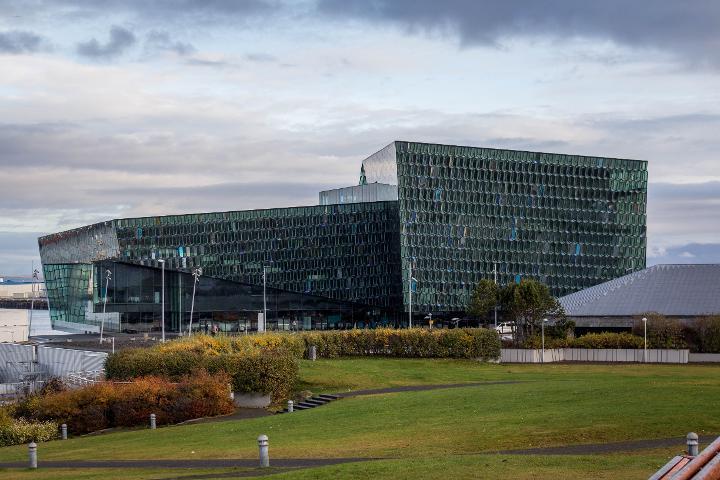
The course began with the participation in the "Arctic Circle 2017 Assembly", one of the larges international conferences on the Arctic, taking place every year in the city of Reykjavik, Iceland. Students participated in sessions related to the thematic focus of the course, which formed the basis for discussion, analysis and exchange of opinions on security, governance and geopolitics in the Arctic during the remaining days of the course. The Arctic Circle Assembly with its multiple presentations from governments, science, business and international organisations provided perfect 'raw material' for such debates.
During the second part of the course, students presented their own work and exposed it to scrutiny by senior researchers and fellow-participants. The course was wrapped up by discussions about the thematic linkages to the current tendencies in Arctic governance, security and geopolitics all the way from the local village in the Arctic to the international arena.
"We were pleased to realise how the work of participants who had completed two or three courses at the post-graduate school had evolved, which showed that the programme in general has been a success." - Prof. Gunhild Hoogensen Gjørv - Course Coordinator
Topically, the course touched upon issues such as: What does security in all its facets mean in the Arctic? What the roles of science, track one and track two diplomacy in Arctic geopolitics? What role will the Arctic Council or China play in the future of Arctic governance? How might good scholarship help solving specific problems of indigenous and local communities in the Arctic as well as how can industries take better into account the interests of indigenous people?
"In past courses, this programme had set itself not only professional tasks, but also social ones. We continued this line also in Iceland, facilitating the meeting of the future scholarly elite in Arctic Studies with each other, to exchange ideas and make friends." - Prof. Gunhild Hoogensen Gjørv - Course Coordinator
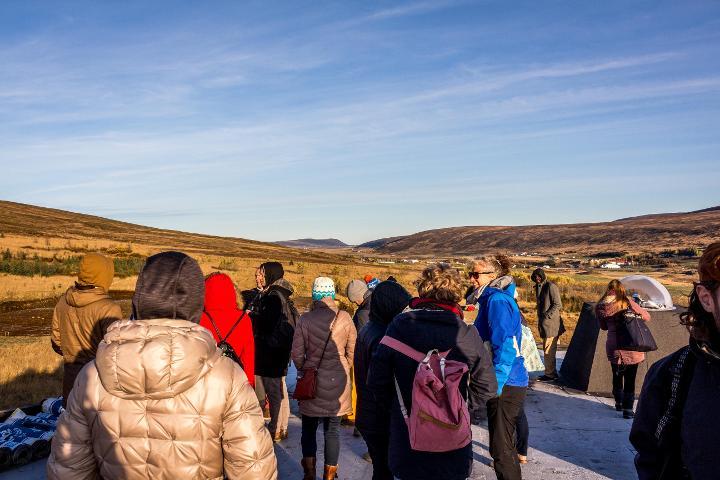
Excursions are particularly useul for this, especially when you can tour the stunning Icelandic North and bath in the famous hot springs. Of course, the excursion was not just entertaining: it was a great idea of main organiser Gunhild Hogenson to organized it around a visit of the Chinese-Icelandic Aurora observatory "CIAO" close to Akureyri under construction. This facility is being built in Iceland with Chinese investments, for scientific research in the Arctic. Marc Lanteigne's lectures on the bus set this in very good scence as an example of Chinese track two diplomacy in the Arctic. Afterwards in the waters of hot springs we actively discussed the role of non-Arctic states in Arctic geopolitics, and how honest is Chinese scientific investment for the sake of science and not just for getting access to Arctic resources or transport routes.
Course participants shared the view that both in the classroom and beyond, courses like this are a good opportunity to get a broader understanding of Arctic issues beyond their own narrowly defined topics, to expose their work to peers and tp receive useful feedback from experienced senior researchers from all across the Arctic region.