Tara Polar Station Overwintering Test Campaign in Oulu, Finland
A team of SEDNA researchers spent two weeks in December on board the Tara Polar Station to test equipment and deployment protocols in winter conditions. Read more about their experience and the lessons they learnt here:
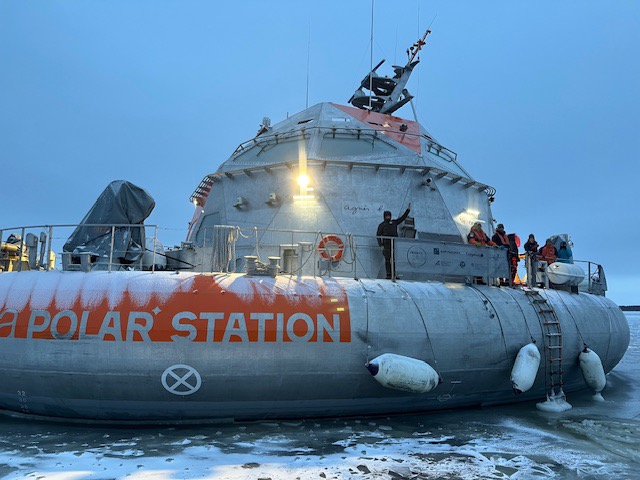
How do you make sure you don’t forget anything crucial on a 15-month journey, drifting frozen in ice through one of the world’s most remote places?
Easy: you test, test, test - and then test some more.
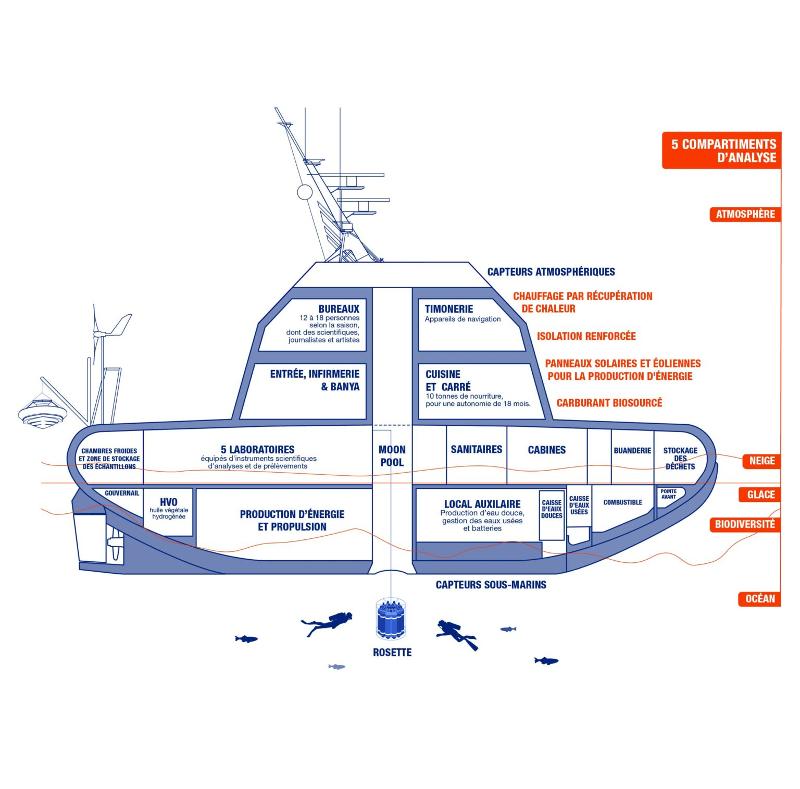
During the recent Tara Polar Station (TPS) overwintering test campaign in the Baltic Sea near Oulu, Finland, a team of SEDNA researchers did exactly that. While the sea ice was unseasonably late this year, this did not deter the team’s work. The primary focus was testing equipment that will be launched through the vessel’s moon pool, a circular opening in the hull that provides direct access to the water below.
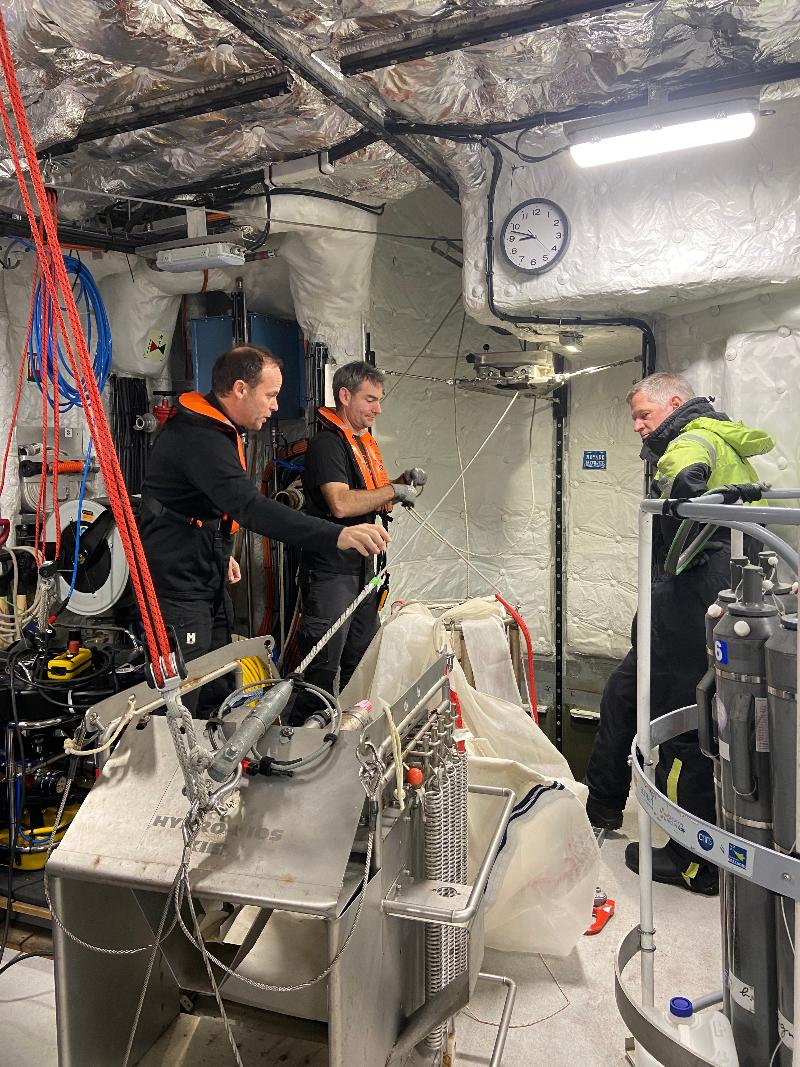
Working within the confined space of the TPS wet lab requires significant modifications to conventional deployment protocols. On larger research vessels, instruments such as the Multinet and WP2 zooplankton nets and sediment traps to capture sinking particles are typically deployed in the open from a large A-frame at the stern. On the TPS, however, deployment protocols must be compatible with the station’s compact interior. Limited personnel to help with deployments will be another constraint: during the eight-month overwintering leg, the station will operate with a crew of just 12 people (six sailors and six scientists), meaning that every task must be meticulously planned and timed to create a manageable operations schedule.
In addition, the researchers checked equipment kits for completeness, brainstormed the optimal spatial configurations for storage, and identified critical components that require backups in case of loss or malfunction. Time on board was also used to learn and exchange protocols across teams, including how to operate a remotely operated vehicle (ROV) for under-ice observations. Another SEDNA researcher was tasked with setting up the onboard molecular lab, where samples for environmental DNA, metagenomics and metatranscriptomics will be filtered and processed for long-term storage.
While a great deal of trial and error and a good dose of creativity was needed to overcome the challenges posed by a unique research platform like the TPS, the research team and crew worked closely together to develop procedures that are both safe and operationally feasible under these constraints. There is still a long way to go, and countless things left to prepare, but slowly, Tara Polaris I is taking shape.
Learn more about the instruments:
MultiNet: The MultiNet is a Multi Plankton Sampler with 5 net bags that are opened and closed via a battery powered motor unit to facilitate depth-dependent vertical collections in a water column. It is equipped with two electronic flow meters to determine the filtered water volume.
WP2: The WP2 is a closing net based on the UNESCO Working Party 2 design for vertical plankton sampling, which will be used to collect microzooplankton organisms and as a back-up for the MultiNet. It is equipped with a weight-triggered closing mechanism to collect samples from a desired depth range.
Sediment Traps: Sediment traps are cylindrical containers placed horizontally in the water to collect particles falling from the water surface or sea ice towards the sea floor. They will be used to quantify the vertical flux of sinking organic particles to better understand the biological carbon pump in the Central Arctic Ocean.