About the study
Have you ever wondered how animals cope with climatic variability, extreme light-dark cycles and large seasonal fluctuations in food availability? Or how it is possible for aquatic birds and mammals to dive for extended periods of time? By studying Arctic Animal Biology you will be able to explore research questions like these!
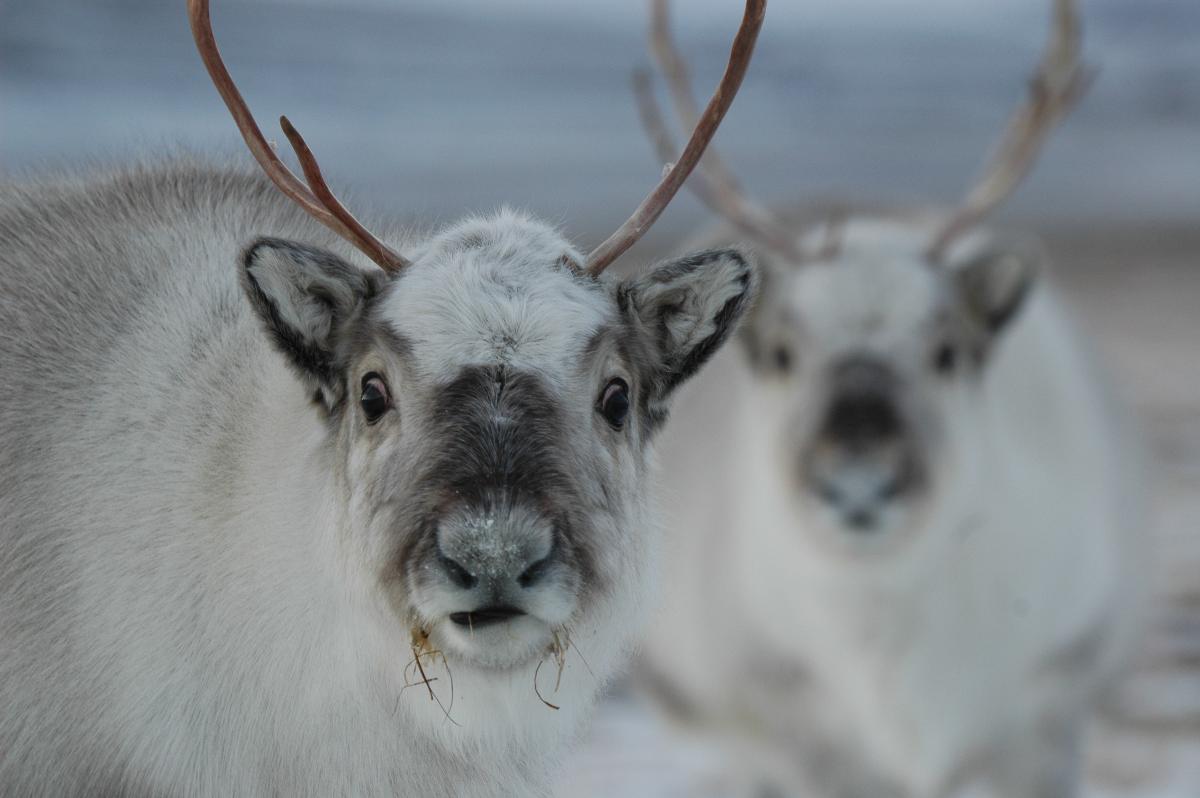
What will you learn?
By completing a master of science in biology with this specialization you will have advanced knowledge of integrative biology and its importance for understanding ecological adaptation, with an emphasis on arctic contexts.You will cain insight in many aspects of animal physiology and behaviour, including bioenergetics, thermoregulation, photobiology, chronobiology, endocrinology, reproductive physiology, thermoregulation, nutrition/digestion, cardiovascular physiology.
The integrative approach will give you insights into animal biology linking eco-evolutionary demands and constraints with physiological adaptation and whole-organism, organ, cellular and molecular levels.You will also be able to critically evaluate information from a variety of sources and to transpose acquired knowledge and competency to issues relevant for society e.g., environmental change and management of natural resources, food production (aquaculture), human and animal health.
Programme description
The Arctic Animal Biology specialization focuses on ecophysiology, studying how animals' physiological processes interact with and adapt to their environment. It examines how factors like climate, nutrients, and ecological conditions affect their functions, growth, and survival.
The programme covers many aspects of animal physiology and behaviour, including bioenergetics, thermoregulation, photobiology, chronobiology, endocrinology, reproductive physiology, thermoregulation, nutrition/digestion, cardiovascular physiology. The integrative approach will develop insights into animal biology linking eco-evolutionary demands and constraints with physiological adaptation and whole-organism, organ, cellular and molecular levels. Students will have the opportunity to gain intellectual appreciation and practical know-how at all these levels. For these purposes, the training environment offers globally unique access to field stations, research cruise vessels, specialized research facilities for experimental, hands-on work on arctic animal species, and advanced biosciences laboratories.
Students will be an integral part of the Arctic Chronobiology and Physiology (ACP) Research Group and are expected to participate actively.
For a complete overview of the learning outcomes, please see the programme study plan.
Program Structure
Destinations for studies abroad
Related professions
Do you have any questions?



Følg @uitstudent på Instagram eller TikTok for å få et enda bedre innblikk i hvordan det er å studere på UiT. Her viser studentene fram sin studiehverdag, deler tips og nyttig informasjon, og du kan stille spørsmål om alt du måtte lure på.
Sjekk også @uitnorgesarktiske på Instagram eller TikTok for info om studier, jobbmuligheter og forskning.
