Facing the Future with Critical Imagination
To what extent are major societal challenges human problems, shaped by culture, history, language, and meaning? This question was explored in April by European researchers from the humanities at UiT.
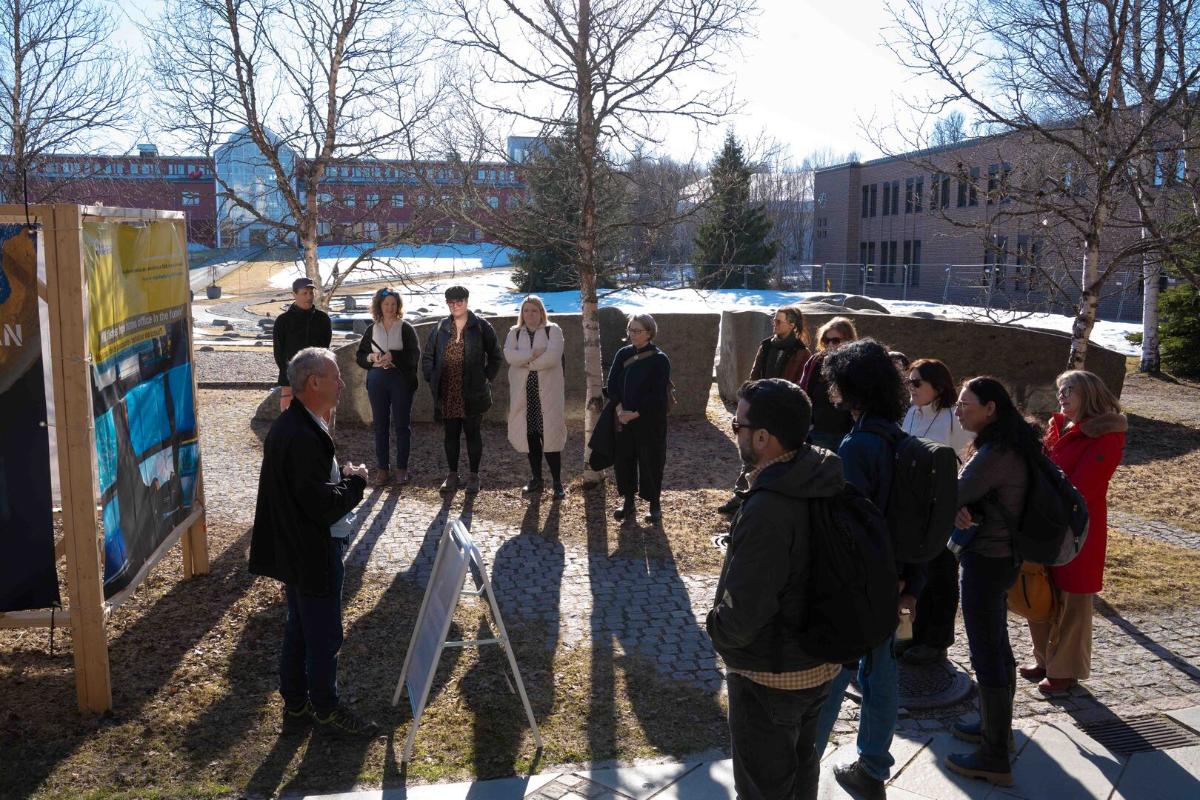

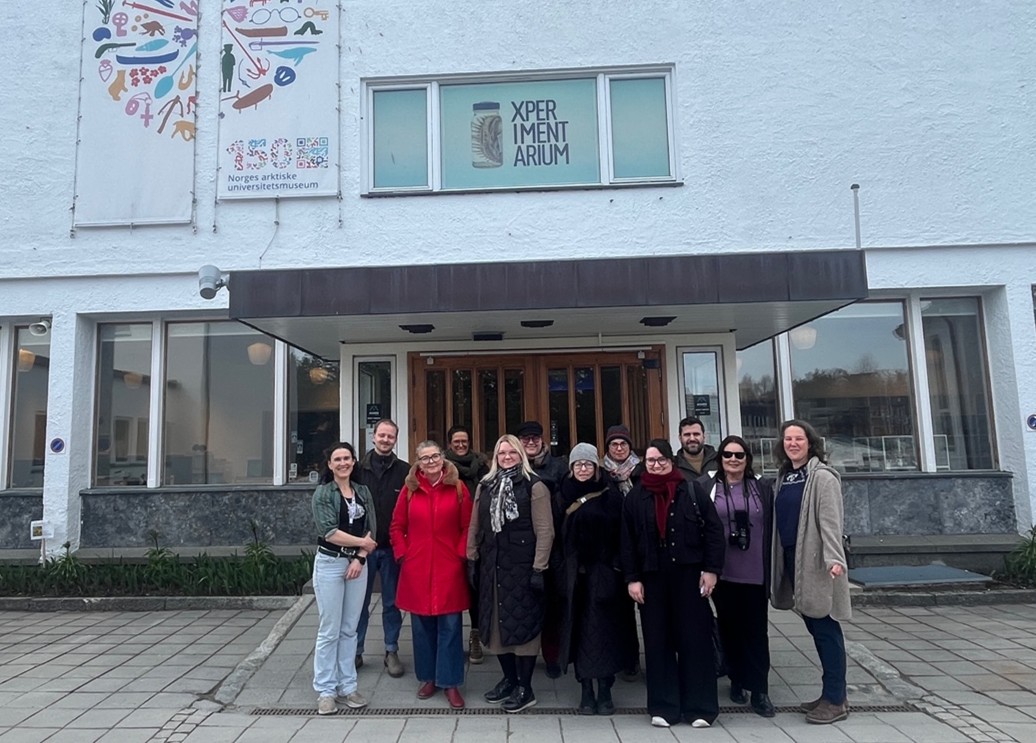
Researchers from seven countries gathered in Tromsø for a week-long course titled Integrating Co-Creativity into Research, Education, and Science Communication.
It was held in the format of a Blended Intensive Programme (BIP), organised by UiT's Centre for Arctic Humanities, in collaboration with The Arctic Six and UArctic.
An important basis for the programme was the advancement of scholarship in the humanities through interpersonal encounters. In this context, the BIP served as an arena where different disciplinary perspectives had to be explained, negotiated, and reimagined.
Interdisciplinary Exploration
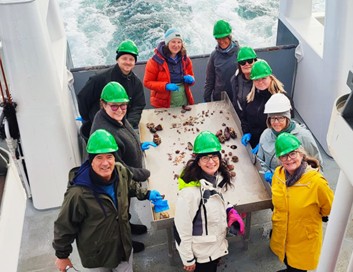
Activities at the BIP ranged from object-handling sessions with Sámi collections at the Arctic University Museum to a day sailing in Balsfjord, storytelling workshops, and explorations of historical map collections.
The programme featured walks and guided tours of exhibitions, including Living with the Ocean, Queering Polar History at the Polar Museum, and Rávdnji – The Strong Current, which focused on Sámi life and culture.
Participants also engaged with UiT research communities, including the Craft Lab, the Environmental Humanities research group, Arctic Auditories, Creating the New North, and SamForsk.
The programme emphasised that major societal challenges are human problems shaped by culture, history, language, and meaning. It also addressed how to foster integrated platforms for interdisciplinary collaboration to explore what this entails.
Creativity is Not a Luxury
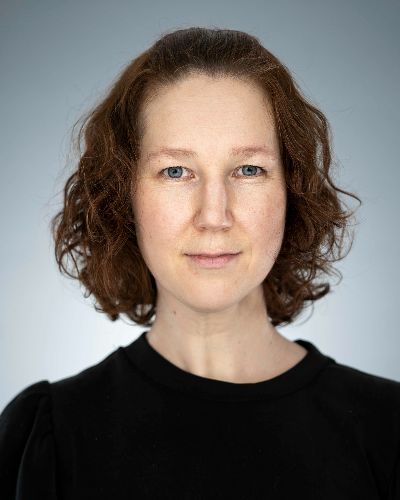
The BIP was designed by the participants and led by academic coordinator Lilli Mittner, Associate Professor at the Centre for Women's and Gender Research. She believes the humanities have a particular role to play in transforming how universities think and work. For her, the humanities can provide crucial tools to interrogate assumptions, navigate differences, and ask what kind of knowledge we are producing and for whom.
“Humanists do more than critique; they create. Through narrative, interpretation, artistic practice, and critical imagination, they generate new ideas and communicate them in ways that reach beyond the academy. This creativity is not a luxury. It is precisely what future universities need if they are to remain relevant, responsible, and alive to the complexities of the world,” says Mittner.
According to her, when the arts and humanities collaborate with the sciences, they do not merely translate findings; they reframe the questions themselves.
Humanists do more than critique; they create. Through narrative, interpretation, artistic practice, and critical imagination.
Lilli Mittner, Associate Professor at Centre for Women's and Gender Research
Humanities and Societal Challenges
Mittner points out that climate change, social inequality, displacement, and the erosion of trust in institutions and in knowledge itself are major challenges of our time, and that they are not merely technical problems.
International Course on Creativity in Academia
- The BIP Integrating Co-Creativity into Research, Education, and Science Communication was held in Tromsø from 13–17 April.
- The course was co-funded by Erasmus+.
- An important goal of arranging the BIP was to foster creativity and interdisciplinary exchange between the humanities and other science disciplines.
- Participants could explore of marine life during a sailing trip in Balsfjord.
- They also delved into storytelling workshops, film discussions, and explorations of historical map collections at the Polar Museum and Arctic University Museum.
- Participating universities included UiT, University of Umeå, University of Gothenburg, University of Milan, Friedrich Schiller University Jena, University of Groningen, University of Bremen, and Lapland University of Applied Sciences.
“They are human problems, shaped by culture, history, language, and meaning. The humanities are uniquely equipped to engage with this depth. They help societies understand where they come from, imagine where they might go, and recognise the value of what risks being lost along the way. A university that marginalises the humanities marginalises its own capacity to think about what matters,” Mittner emphasises.
Sharing Perspectives and Knowledge
The programme aligns with UiT's strategic priorities as an international Arctic university. With 18,000 students representing 110 nationalities and staff from 80 countries, UiT has positioned itself as a hub for cross-cultural exchange and Arctic knowledge production.
“The university’s growing interest in BIPs emphasises that when scientists and administration work together, the initiative demonstrates UiT’s commitment to fostering international collaboration while anchoring research in Arctic contexts and questions,” says Sigrid Ag, Head of UiT’s International Cooperation Section.
Senses and Books
The participants at the BIP took home different experiences. Many of them found the interdisciplinary and intercultural approach beneficial for broadening their horizons.
“This experiential and hence innovative learning about and being in the Arctic enabled co-creative thinking and doing that build connections across disciplines and between book-based and sense-based research. I will take home the confidence that I can trust creative and cross-disciplinary methodologies and research environments,” says Professor Kerstin Knopf, at the University of Bremen.
Synergy and Trust
Another participant, UiT Professor Kate Maxwell, experienced the BIP as a chance to break out of a work environment she believes is too often siloed into rather narrow spaces.
“Learning together in a museum, on a boat, in a kitchen, around a co-writing table, while studying old maps of the Arctic, or while holding unknown objects, gives rise to the synergy and trust that are needed to form new collaborations and to think differently together,” she concludes.
If you want to learn more about the BIP, you can click here.
Kortnytt fra Faculty of Humanities, Social Sciences and Education, Academy of Arts, The University Library, Centre for Women's and Gender Research, Institute of philosophy and first semester studies
-
Fiskeri- og havbruksvitenskap - bachelor
Varighet: 3 År -
Fiskeri- og havbruksvitenskap - master
Varighet: 2 År -
Akvamedisin - master
Varighet: 5 År -
Bioteknologi - bachelor
Varighet: 3 År -
Visual and Multimodal Anthropology - Master
Varighet: 2 År -
Arkeologi - master
Varighet: 2 År -
Instrument 2
Varighet: 1 År -
Hørelæredidaktikk - master
Varighet: 2 År -
Peace and Conflict Transformation - master
Varighet: 2 År -
Indigenous Studies - master
Varighet: 2 År -
Theoretical Linguistics - master
Varighet: 2 År -
Geosciences - master
Varighet: 2 År -
Biology - master
Varighet: 2 År -
Technology and Safety - master
Varighet: 2 År -
Physics - master
Varighet: 2 År -
Mathematical Sciences - master
Varighet: 2 År -
Biomedicine - master
Varighet: 2 År -
Computational chemistry - master
Varighet: 2 År -
Biologi - bachelor
Varighet: 3 År -
Medisin profesjonsstudium
Varighet: 6 År -
Sosiologi - master
Varighet: 2 År -
Nordisk - årsstudium
Varighet: 1 År -
Strategisk ledelse og økonomi - erfaringsbasert master
Varighet: 5 Semestre -
Engelsk - årsstudium
Varighet: 1 År -
Luftfartsfag - bachelor
Varighet: 3 År -
Samfunnsplanlegging - bachelor
Varighet: 3 År -
Pedagogikk - bachelor
Varighet: 3 År -
Sosiologi - bachelor
Varighet: 3 År -
Arkeologi - bachelor
Varighet: 3 År -
Spansk - årsstudium
Varighet: 1 År -
Statsvitenskap - bachelor
Varighet: 3 År -
Pedagogikk - master
Varighet: 2 År -
Informatikk, datamaskinsystemer - bachelor
Varighet: 3 År -
Informatikk, sivilingeniør - master
Varighet: 5 År -
Likestilling og kjønn - årsstudium
Varighet: 1 År -
Geovitenskap- bachelor
Varighet: 3 År -
Biomedisin - bachelor
Varighet: 3 År -
Samfunnsplanlegging - master
Varighet: 2 År -
Økonomi og administrasjon - bachelor
Varighet: 3 År -
Samfunnssikkerhet - bachelor
Varighet: 3 År -
Økonomi og administrasjon, siviløkonom - master
Varighet: 2 År -
Ledelse, innovasjon og marked - bachelor
Varighet: 3 År -
Matematikk - årsstudium
Varighet: 1 År -
Ergoterapi - bachelor
Varighet: 3 År -
Fysioterapi - bachelor
Varighet: 3 År -
Radiografi - bachelor
Varighet: 3 År -
Grunnskolelærerutdanning for 1.-7. trinn - master
Varighet: 5 År -
Grunnskolelærerutdanning for 5.-10. trinn - master
Varighet: 5 År -
Samfunnssikkerhet - master
Varighet: 2 År -
Kunst - bachelor
Varighet: 3 År