Group Members
Edda Marie Rainer
 Edda is a researcher in the Biological Chemistry and Bioinformatics (BCB) group at UiT, with a fascination for enzymatic and biological processes in cold environments. After completing her Master's in Biotechnology at the University of Natural Resources and Life Sciences, Vienna, she relocated to Tromsø for her doctoral studies. In her PhD thesis, titled "Response and resilience of the microbial methane filter to ecosystem changes in Arctic peatlands", she investigated the effects of warming and grazing on methane-oxidizing bacterial communities in Svalbard. Since 2019, she has progressed from a research technician to a researcher, contributing to various projects within the enzyme discovery and design group. Currently, she leads several work packages in the ongoing innovation projects UltraZyme and MarRec. Additionally, she serves as the main supervisor for several master's students at the Department of Chemistry. To maintain a healthy work-life balance, Edda has a strong passion for a variety of mountain activities. She can often be found skiing, climbing, hiking, or biking amidst the beautiful landscapes of Northern Norway.
For her publication record and CV, find Edda on ResearchGate and LinkedIn.
Atle Noralf Larsen
 Atle is a senior scientist working in the field of Biotechnology/enzyme technology. He completed his PhD on cold-adapted proteinases in 2005 at the UiT – The Arctic University of Norway. He then worked as a post-doc at the Norwegian College of Fishery Science at UiT for 3 years in the field of molecular immunology to combat viral and bacterial diseases in Atlantic cod farming, having a lead role in the FUGE financed project (2007-2011) Bacterial flagellin: a novel adjuvant for vaccine strategies. He then (2008-2013) worked as a thematic group leader in the enzyme group at the SFI MabCent – Centre on Marine Bioactives and Drug Discovery where his passion for working with nucleases and polymerases arose. After that he has been the project leader or had lead roles in several innovation driven projects at the Research Council of Norway (OptiZyme, MDxPol and MarSynth). In these projects enzymes from the marine Arctic and Subarctic region have been discovered and developed for use in molecular and synthetic biology and molecular diagnostics. He has also led a multitude of smaller innovation projects both at the RCN, Mabit and at UiT. Currently he leads or has lead roles in UltraZyme and AdEPT which involves developing enzymatic tools and technology for usage in molecular viral diagnostics and RNA therapeutics. He also leads the upcoming MarRec project financed by Mabit. He has received the innovation price at UiT in 2018 for his innovative research on DNA polymerases. He has several granted patents on nucleotide metabolizing enzymes including DNA polymerases and nucleases, and has the last decade contributed to six license agreements with biotech industry resulting in several successfully commercialized enzymes within molecular biology and diagnostics.
His research has led to the following products on the market:
- PhD project (2000 – 2005): Endopeptidase – Commercialized by ArcticZymes AS (ArcticZymes Proteinase is an unspecific endopeptidase)
- MabCent SFI (2008 – 2013): Heat labile exonuclease – Commercialized by ArcticZymes AS (https://arcticzymes.com/technology/hl-exol/)
- OptiZyme (2013-2016): DNA polymerase – Commercialized by ArcticZymes AS – IsoPol™(https://arcticzymes.com/technology/isopol-dna-polymerase/)
- MDxPol (2016-2018): Modified DNA polymerases – Commercialized by ArcticZymes AS – IsoPol™ SD+ and IsoPol™ BST+ (https://arcticzymes.com/technology/isopol-sd/) and (https://arcticzymes.com/technology/isopol-bst/)
Greta Daae Sandsdalen
 Greta Daae Sandsdalen is a researcher and PhD student at UiT The Arctic University of Norway, where she splits her time between advancing her doctoral studies and contributing to innovative research projects. She holds a Master's degree in Science Education (Grades 8-13) from UiT, where she completed her thesis under the supervision of Professor Peik Haugen. Her Master's research focused on developing the PsyXpress expression system through expression plasmid design. Greta embarked on her PhD journey in 2019 under the guidance of Professor Hanna-Kirsti Schøder Leiros at the Department of Chemistry, UiT. Her doctoral research is part of the FISH&CRISPR project, aiming to discover and characterize novel CRISPR-Cas enzymes for genome editing at low temperatures. In 2024, Greta began her role as a researcher at the Department of Chemistry, UiT. She collaborates with ArcticZymes and SINTEF on the AdEPT project. The primary objective of AdEPT is to develop improved enzyme prototypes and solutions for sustainable, cost-effective, and high-quality biomanufacturing of RNA vaccines and RNA therapeutics.
Karoline Scheen Edvardsen
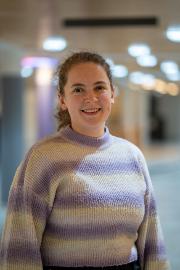
Eiril Texmo Limstrand

Former Members
Scientific Staff
- Typhaine LeDoujet, Research Technician, MarSeq, 2026
- Nanna Jensen, Research Technician, MarRec 2025-2026.
- Felix Schwab, Research Technician, Ultrazyme I, 2024-2025
Master Students
- Karoline Scheen Edvardsen, Master's Thesis in Molecular Science (2026): Investigating strand displacement activity and reverse transcriptase activity on secondary RNA structures in a marine DNA polymerase
- Eiril Texmo Limstrand, Master's Thesis in Marine Biotechnology (2026): Development of an Aliivibrio wodanis 03/09/160 (DE3) Strain as a Psychrophilic Expression Host for Cold-Adapted Enzymes: A Case Study Using the Cold- Adapted Nuclease MgRecJ
- Alice Myers, Master's Thesis in Marine Biotechnology (2026): Engineering a Cold-Adapted Marine DNA Polymerase possessing a 3’-5’ Exonuclease domain for RNA-Dependent DNA Synthesis
- Nanna Jensen, Master's Thesis in Molecular Science (2025): Investigating changes in substrate specificity caused by amino acid modifications in two marine nucleases
- Marius Czech, Master's Thesis in Molecular Science (2025): "How DNA Polymerases Stay on Track": Exploring the effect of two DNA-binding-domains on DNA polymerase Processivity