Sahel par lui-même
The Sahel on Sahel project, through its Sahel par lui-même initiative, seeks to develop more inclusive dialogue with and within Sahelian communities through filmmaking.
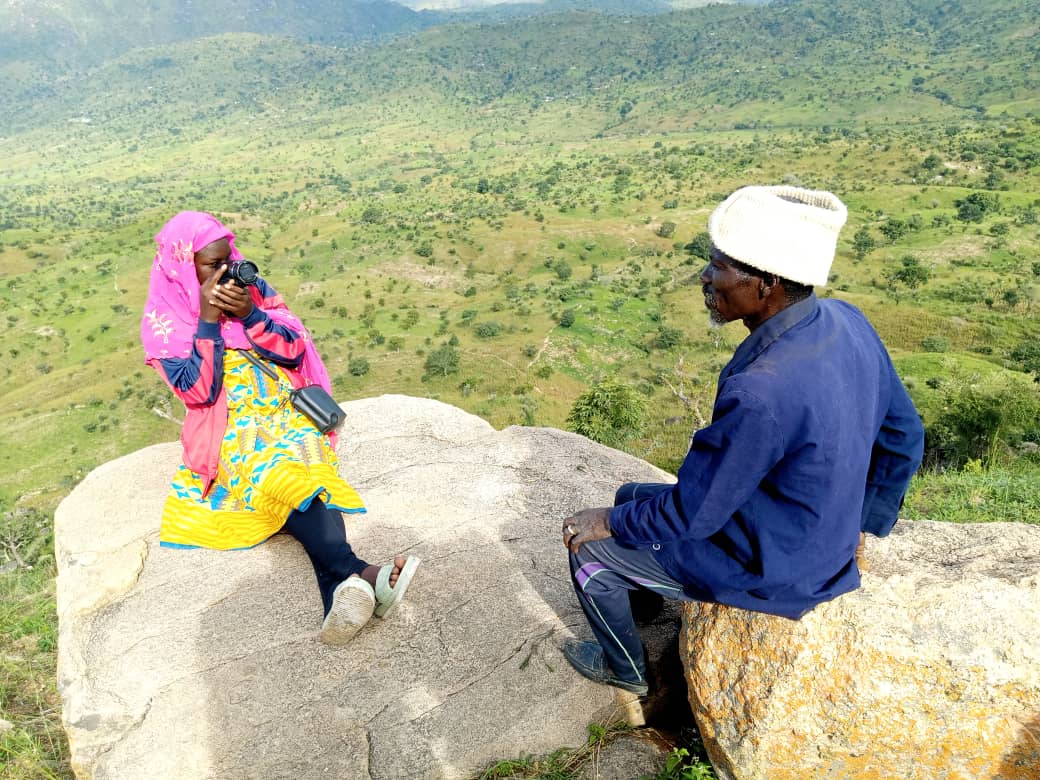
Sahel par lui-même is an action research initiative that aims to experiment with visual tools to engage local populations in dialogues on their life situations and futures, by training “community filmmakers”. The initiative involves people whose lives are often characterised by violence, "radicalisation," migration, and poverty. Visual narratives will focus on the issues that define people’s lives. This will be achieved through the “Sahel par lui-même methodology”: organising film-training courses to educate individuals selected by their communities to make films about their lives. either individually or collectively. Filmmaking is intended to provide a creative space for reflection and storytelling.
The outcome of these reflections; the films and ethnographic knowledge, is intended to be used in various ways, to various audiences and stakeholders, locally, regionally and internationally. In local commuites, villages, in classrooms in schools and universities, at filmfestivals and other sorts of filmscreenings
This page intend is one way we are trying to initate such dialouges
We have compiled a selection of films below, showcasing not only productions from this project in the Sahel, but also earlier collaborations.
We have organised the films by topic and provided an introduction to each topic or theme. Then, for each film, there is a series of questions. We hope that you, as the audience, will find these questions inspiring. We hope they will inspire you to reflect on them and discuss them with others, whether they are family members, neighbors, schoolmates, or colleagues.
The films can be watched independently or by topic. Enjoy!
Africa South of Sahara is the region where cities are growing the fastes in the world
UN fears in serveral report for increased violence and anarchy in fastgrowing cities in Africa
Through a selection of films that are made by African and European resarchers and students are we here giving examples on how life is lived in some selected urban settngs.
We are aksing what are happening in these cities? How is intergration going on?
Selection on ethnographic films dealing with topic connected to fast growing cities can be watched here:
Films:
Les Mairuuwas - The Masters of Water
– Trond Waage
Good formal education for all is seen as the key to a better long-term future for the Sahel region. Education improves employability and incomes, narrows gender gaps, lifts families out of poverty, strengthens institutions, and yields benefits that echo to the next generation.
Millions more children in school, yet access to quality education remains a challenge. The good news is that the region has taken the important first steps toward building this future. Over the past 15 years, many more children have been able to access education: enrollment in the region has nearly doubled in primary education and tripled in secondary education. Governments have launched numerous initiatives and announced high-level commitments in support of education.
Still, many children remain out of school, and those who are in school learn far less than they should. In several regions in the Sahel have Jihadist groups prevented schools to stay open.
Only 12% of the children are enrolled in school and can read and comprehend an age-appropriate passage by the end of primary school. In every Sahel country, fewer than 50% of adult females are literate, compared with 59% in Sub-Saharan Africa as a whole.
Traditional education
And what to do when you have gotten your education but not a job?
In this folder have we collected 6 films that in diverse ways talk about education. 5 films from Cameroon and 1 from Mali
Films:
The Principal’s Fight
– Sidy Lamine Bagayoko
IS WHAT THEY LEARN WORTH WHAT THEY FORGET
– Lisbet Holtedahl
THE MASTER SAID THAT
– Trond Waage
Juarke : Boys made men in Mboum society
– Saliou Mohamadou
DJEBBA'S CABARET
– Ghislaine Magouo Tainon
Pourqoui pas moi
– Yaodam Angèle
Entre 2022-mi 2023, sept ateliers "Sahel par lui même" ont été organisés par les anthropologues visuel à Maroua au Cameroun. Au total, 40 films ont été réalisés. Nous en avons sélectionné trois de chaque atelier, soit un total de 21 films.
https://vimeo.com/showcase/10417294
Films:
Derrière la masque
– Asta Méré Rachel
Le Desilusión du Manga
– Juvintus Guimaye
Le dilemme des instants
– Atouna Michel
"Is it a boy or is it a girl?" Posed at the first moment of life this question expresses, embeds, and underlined the common dispostions toward the path of life for the newborn. It signals the order and the terms of wich gender established itself at the moment of birth. Life is gendered. And so it is in every corner of the world.
From the litterature in social science and humanities we know that that there are few studies about women in the Sahelian region. With the Sahel on Sahel project are we trying to tell some of these stories. Made by Sahelian students, by women and men themselves.
At the bottom of this page will you find a series of short films who portray how women and men live their lives in a specific part of the world, The Far North Region in Cameroon . These films which in various ways portrays lived lives where the common issue might be seen as the cultural expectations to women and mens behaviour are touched upon. The films raises a series of question on the importance of traditions, religion, economy, globalisation and so on.
SAHEL PAR LUI MEME INITIATIVE IN MAROUA, FAR NORTH CAMEROON
The films presented here are made by Cameroonian students, either as a part of their master or phd training, or by trained Cameroonian Visual Anthropologists teaching filmmaking in communities on topic which interests those involved.
To each film have we developed a set of questions that can be used to trigger discussions and debate in communities and classrom, for different kind of audiences and steakholders.