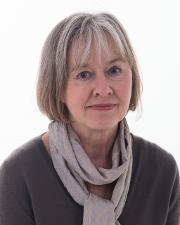
I research the gendered dimensions of human thinking, acting, creating and relating. I came to gender studies through the history of women's cultural agency, and that background still shapes how I work: I attend to sound, gesture, timing and performance wherever relations come into being, in institutions, in archives, in artistic practice, in care work, and in the ways we come to understand one another.
Situated artistic interventions are my principal research method. I also work with archival studies, multimodal and diffractive analysis, discourse and policy analysis, interviews and ethnographic fieldwork, and I collaborate across disciplines and transdisciplinarily with artists, social scientists and natural scientists.
Creative methods run through every phase of my projects: in designing the study, in generating and analysing the material, and in communicating the findings. This matters because knowledge is always situated: who asks, from where, with which body and which history, shapes what we are able to know. By working across art and science, I explore how materiality, meaning and power are entangled.
Co-creation, citizen science and posthumanist feminist theory are the organising principles of this work. Research designed together with participants makes research ethics a question of relation and consent throughout the whole project. The same commitment runs through my work with open publishing, exhibitions, street galleries and public events, because who can reach and contribute to knowledge is a question of equality.
What I am specifically interested in
- Ageing, dementia and living in difference together. How we can think differently about ageing and dementia by looking to what happens between people, to feminist care as a shared practice, and to growth and a good life as something we make with one another.
- Planetary health and coastal cultures. How gender, labour and knowledge are organised along northern coastlines, and what feminist and Indigenous perspectives contribute to understanding ocean pasts and futures.
- Feminist historiography and performative research. Recovering and re-performing the histories of women's cultural work, and treating historiography itself as a performative act that makes certain pasts possible.
- Co-creativity as a rigorous concept. What distinguishes genuinely shared authorship of knowledge from participation and art as decoration.
Expertise
- Ageing and Dementia
- Citizen Science
- Coastal Cultures
- Co-creativity
- Creative Methods
- Gender and Gender Equality
- Historiography and Storytelling
- Open Research
- Research Communication
- Research Ethics
- Sound and Music
Member
- UArctic Thematic Network on Gender in Arctic Knowledge Production
- UArctic Thematic Network on Environmental Humanities
- International Research Network Arts & Dementia